
Team owners, of course, reject this kind of analysis. Stadium funding doesn’t come directly out of school budgets but through mechanisms such as hotel and alcohol taxes and state lotteries. Owners argue that stadiums are good investments because they create jobs and boost the local economy. Occasionally, they do. But economists overwhelmingly conclude that the projections they use are often too rosy, and that, for cities, stadiums are almost never worth the costs. The public funding may not be siphoned out of library budgets, but shortfalls have to be covered somehow. And sources of public funding can be brutally regressive, derived from taxes on items like lottery tickets, which are bought disproportionately by the poor.
So why do people stand for it? Polls suggest that most people want owners to pay for their own stadiums, but sports teams are desired and beloved, a source not only of entertainment but also of civic pride. The politicians who make these deals know that when franchises leave on their watch, some of the blowback lands on them. They hate to be blamed for making a man cry.
In 2023, the Chicago Bears purchased a few hundred acres of land in Arlington Heights, a suburb about twenty-five miles north of downtown Chicago, where the team currently plays, for about two hundred million dollars. For more than fifty years, the Bears have been renting Soldier Field, a neoclassical colosseum on the shores of Lake Michigan with sweeping views of the city skyline, one of the most iconic sites in the N.F.L.—but also the league’s smallest stadium, with a capacity of just over sixty thousand. And it lacks many of the luxury amenities that most N.F.L. stadiums now boast. And since the Halas family, who own the Bears, owns neither the structure nor the land surrounding Soldier Field, it doesn’t generate a ton of non-football revenue for them. So, like many Americans, the Bears were dreaming of a home of their own. But unlike most Americans, they thought they could get their neighbors to pay for much of it.
Developers came up with a plan to build a suburban multi-use entertainment complex around a domed stadium—one that would keep out the snow and wind and allow for lucrative events year-round. Projected price tag: three billion dollars, far more than the Halas family, whose wealth is mostly tied up in the Bears, could pay outright. So the team asked for eight hundred and fifty million dollars in infrastructure improvements to make the property viable, along with property-tax relief in Arlington Heights. They cut a deal to freeze property-tax assessments, allowing them to negotiate reduced payments, for up to forty years. Illinois lawmakers had yet to vote on that plan when news broke that Indiana lawmakers had unanimously approved an amendment to allow for a publicly financed stadium in Hammond, about thirty miles to the southeast of downtown Chicago.
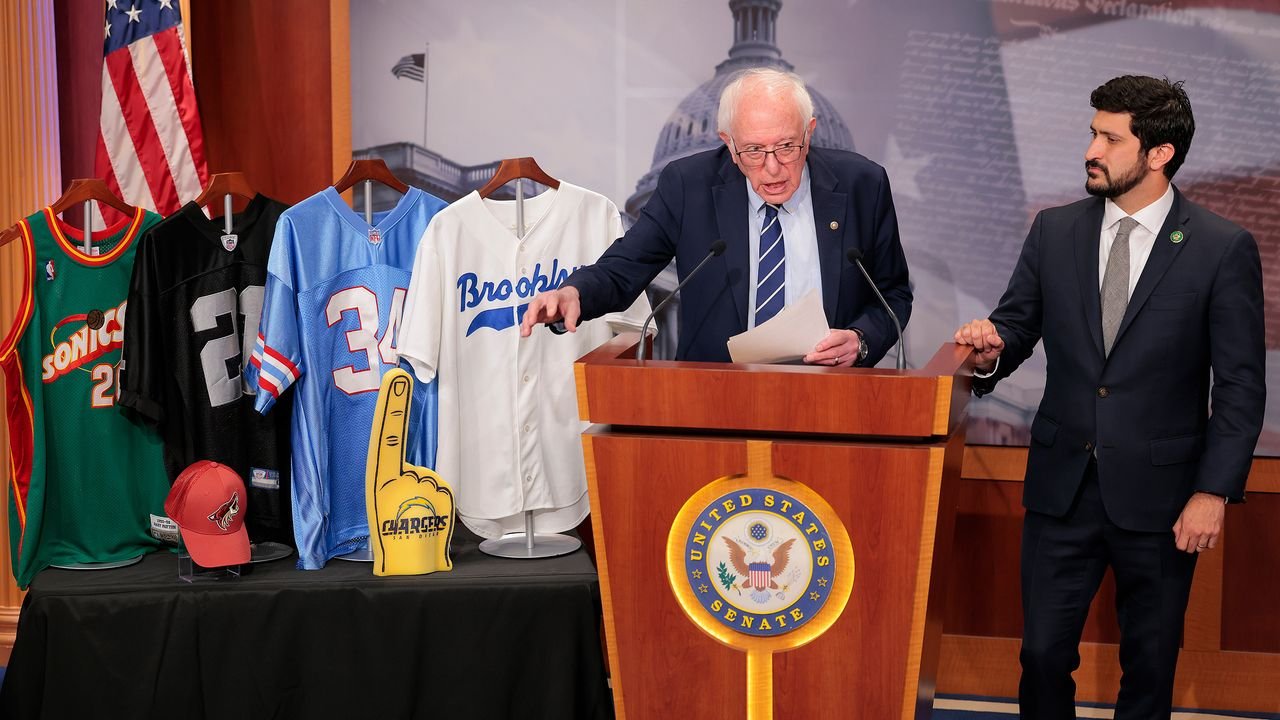
How much will it matter if the Bears move to Indiana? Practically speaking, maybe not much. The San Francisco 49ers play in Santa Clara. The New York Giants and the New York Jets play in New Jersey. And Hammond is roughly the same distance from downtown Chicago as Arlington Heights; whichever direction the team moves, leaving windswept Soldier Field for the artificial environment of a dome means abandoning some of the proud misery that defines Bears football. What bothered Greg Casar, though, when he heard about the competition between the two cities, was that one group of taxpayers was being leveraged against another, and the people who stood to benefit from that competition were the owners of a nearly nine-billion-dollar team.
Casar emphasized to me that he isn’t against public funding altogether. There are reasons a community might want to subsidize a sports team, he said. Cities pay for the arts. They build libraries without demanding direct economic benefits. Some of the value that sports teams offer to communities is intangible and incalculable. They help shape a region’s identity and give it a sense of cohesion, even in fractious times. But when owners threaten to bolt if they don’t get public money, he said, communities feel forced into bad deals benefitting billionaires. And Casar doesn’t believe that communities should be offering subsidies “with a gun to their heads,” he said.



