
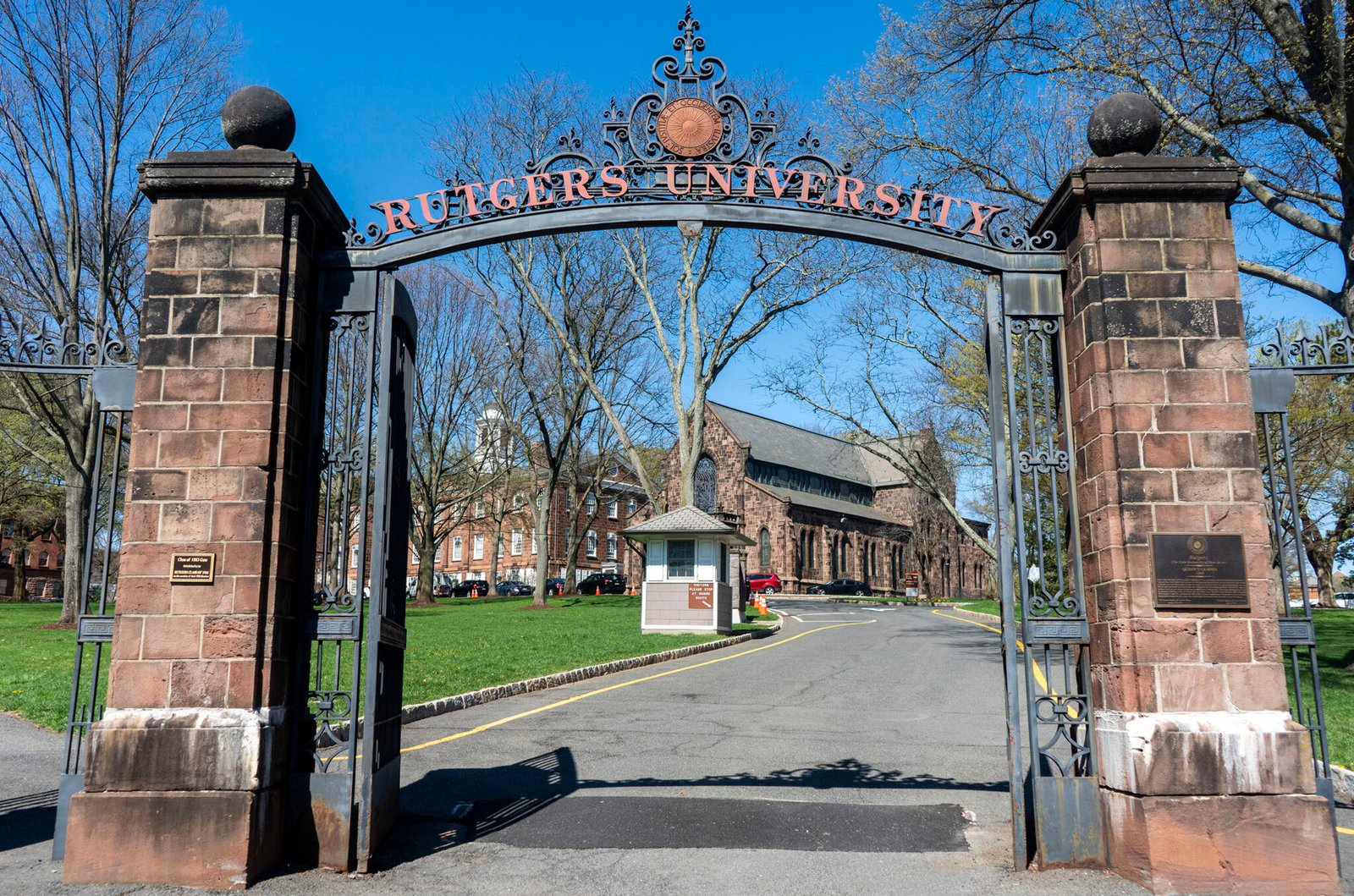
Gov. Mikie Sherrill’s first budget proposal seeks to narrow the state’s deficit in part by reining in state aid to the state’s public four-year universities.
Not counting $35 million lawmakers approved last year to effectuate a merger between Kean University and New Jersey City University and a $7 million line item to stabilize the latter school amid a fiscal crisis, Sherrill has proposed reducing institutional support for New Jersey’s four-year universities by about $94 million.
Sherrill’s $60.7 billion plan would leave the schools’ operating aid flat at levels approved last June, but rising health benefit expenses and inflation would mean that money won’t go as far as it did in the current fiscal year.
“It’s a cut,” said Sen. Joe Cryan (D-Union), who chairs the chamber’s Higher Education Committee. “You can’t have a state health benefits crisis in terms of insurance and health care costs and not understand what we’re doing is actually a cut, and we all know that.”
New Jersey’s public worker health plans are in distress, and though the state worker plan that university employees are eligible for is healthier than the plan for local government workers, it has faced steep cost increases in recent years. State actuaries on Monday said they expect another year of double-digit increases for state workers’ public health plan in 2027.
Cryan said he worries that flat operating aid and cuts to other state aid for New Jersey’s four-year universities could presage another round of tuition hikes. According to state data, in-state tuition and fees for undergraduate degrees in New Jersey have risen by nearly 15% over the past four years, prompting affordability concerns.
“From what I’ve seen so far, many of the universities simply default to a late-June, early-July tuition hike, which I think is terrible,” Cryan said. “There needs to be an understanding that that’s exactly what’s going to occur here.”
The New Jersey Association of State Colleges and Universities represents seven New Jersey public four-year colleges. Jennifer Keyes-Maloney, its executive director, said schools would try to constrain tuition growth but warned rising costs would likely preclude keeping tuition level.
“My schools, I know, will do their very best to ensure that we limit any type of increase in terms of tuition, but the pressures on them both in terms of labor costs and, honest to God, utilities, like everybody, is extraordinary,” she said.

Sherrill, a Democrat who took office in January, has made no secret of seeking to tighten New Jersey’s belt. Though her spending proposal marks an increase from her predecessor’s final budget, it also includes a slew of cuts meant to narrow the state’s structural deficit, the gap between its recurring revenue and its spending.
To control costs, she has proposed cuts across state government that would, among various other things, end aid to a series of health organizations and reduce eligibility and award sizes under a marquee property tax program championed by Assembly Speaker Craig Coughlin (D-Middlesex).
Sherrill’s budget plan is now in the hands of the Legislature, which must finalize a budget before sending it to Sherrill for her signature by July 1.
Spokespeople for Sherrill declined to comment and deferred to the governor’s budget address, where she urged fiscal constraint to avoid future strain amid an affordability crisis and uncertainty at the federal level.
For Cryan, belt-tightening isn’t necessarily unwelcome even if it affects program funding sought by state universities.
“I think it’s a consequence of a governor trying to clamp down on, quite frankly, what’s been a free-for-all,” Cryan said. “This budget process needs tightening, I think, by any reasonable standard, and some guard rails are effective.”
The governor’s budget plan would boost overall funding for need-based tuition aid grants by about $2.5 million but would cut the full $21 million appropriation for summer tuition aid grants for the fiscal year that begins July 1.
Funding for summer tuition assistance would still be available in the term that begins this June because it starts before the end of the current fiscal year, but the cut to summer grants could knock some students off the graduation pathway, Keyes-Maloney warned.
“The more certainty you can provide to students up front … the better chance a student continues to move forward educationally and doesn’t necessarily have those pauses that end up potentially impacting their educational journey,” she said.
Before summer tuition aid grants had their own line item, money appropriated to other tuition aid grant programs could be used for summer courses, but language in Sherrill’s proposal bars that.
Sherrill’s proposal would also cut funding to a slew of specific programs or centers based in universities.
Those include, among numerous others, an $8 million cut that would zero out state aid to Rowan University’s nascent veterinary school — the only one in New Jersey — and a $1.7 million cut that would leave Rutgers’ Child Health Institute without a line item.
Further, her budget would deny a bevy of funding requests to pay for new or expanded offerings at the schools. Overall institutional support for public four-year universities in Sherrill’s proposal falls $364 million below the levels the schools requested.
An outsized $100-million request to construct a new building for Rutgers-Camden’s Center for Business, Innovation, and Entrepreneurship accounts for a significant chunk of that money.
Keyes-Maloney wasn’t surprised by the denials. They aren’t uncommon, she said, and Gov. Phil Murphy’s final budget proposal likewise denied many specific funding requests filed by universities, though some were restored as budget negotiations wore on.
Still, she said she hopes some of the funding can be restored before July 1, though restorations could require the universities to find money elsewhere.
“In talking with legislative leadership, it’s been very clear that the administration is asking for folks to find a requisite revenue source or cut that can make up for anything they’re asking for,” Keyes-Maloney said. “That’s somewhat challenging in our space.”
GET THE MORNING HEADLINES.



