
A newsletter about the state of the product job market recently went viral in the design corner of the internet. It’s exposing a widespread debate about whether the role of the designer is narrowing in the age of AI.
On March 24, Lenny Rachitsky, a former Airbnb product developer and author of the business Substack Lenny’s Newsletter, published an article featuring exclusive data on the state of tech hiring in early 2026. The data was collected by TrueUp, a tech job marketplace tracker. Overall, it paints a positive picture for the tech job market. But for designers it points to a moment of hiring uncertainty.
TrueUp found that design roles have plateaued since early 2023, and ever since then, demand for product managers (PMs), the professionals who help guide a product from ideation to completion, has risen. These findings have ignited a debate online about how AI might be fundamentally changing the organizational chart at tech companies—and whether it’s making designers obsolete.
Everyone from tech CEOs to designers at AI companies and Marc Andreessen, the cofounder of one of the world’s largest venture capital firms, are weighing in. Here’s what you need to know about the data and the larger debate.
Inside the data: Design roles are hitting a plateau
TrueUp’s data is collected by tracking job openings at “the majority of tech companies and top startups,” which includes more than 9,000 companies (not including consultancies or non-tech companies). According to Rachitsky, who has analyzed that data for the past four years, 2026’s outlook is, “surprisingly, the most optimistic” so far.
To start, open PM jobs are at the highest levels they’ve reached since 2022: around 7,300 roles globally. Software engineer jobs are also trending up since a recent low in 2023, with 67,000 jobs available globally and 26,000 in the U.S. alone. “We don’t know if there would have been more open roles if not for AI or if AI is actually leading to more open roles, but since the start of this year, the increase in open eng roles is accelerating even more,” Rachitsky’s newsletter reads.
And “AI jobs,” which include open roles at AI-driven companies as well as AI-specific roles at non-AI companies, are skyrocketing. There are currently 36,686 open AI jobs, compared to sub-10,000 numbers in early 2023.
Amidst this general upturn, design jobs are having a less optimistic moment. Unlike PM and engineering, Rachitsky’s analysis notes that open design jobs have been relatively flat since early 2023. At the time of the newsletter’s release, TrueUp found just 5,700 roles available globally. From a macro perspective, the ratio of demand for PMs versus designers has flipped: In mid-2023, open PM roles overtook open designer roles, and the disparity has been increasing ever since.
“I don’t know exactly what’s going on here, but it does feel AI-related,” Rachitsky writes in his newsletter. “Unlike PM and eng, which started growing in 2024 (two years post-ChatGPT), design didn’t. If I had to venture a theory, I’d say that because AI is allowing engineers to move so quickly, there’s less opportunity—and less desire—to involve the traditional design process.”
How the design community is responding
In the week following Rachitsky’s post on X, his analysis has been reposted hundreds of times and attracted an influx of discourse from the online community of designers, PMs, and engineers.
Some responders see this industry data as a signal that AI is fundamentally changing designers’ workflows, and those who fail to adapt to the times are getting left behind. “Designers have designed themselves out of the equation because of design systems,” Roger Wong, head of design at BuildOps, commented under Rachitsky’s original post. “But, IMHO, the secret sauce has never been the UI. It was the workflows and looking across the experience holistically.”
Claire Vo, founder of the AI copilot ChatPRD, added, “Often design teams & designers are the most resistant to change org in the EPD triad, with highly vocal AI opponents, and little skill or interest in the art of campaigning for influence or resources.” Most teams, she continued, treat design “like a tax they don’t want to pay.” “If a PM or engineer can get 85% there with tailwind and a dream, you better come to the table with more than ‘I represent the user,’” she concluded.
Others believe that, in the long run, a greater reliance on AI tools will make human designers more important as tastemakers. “Design seems to be viewed as dispensable in this very moment,” wrote Jordan Singer, CEO of the computing company Mainframe. “But the reality that will become clear, as time has shown, is that design is what will make you rise above the rest.”
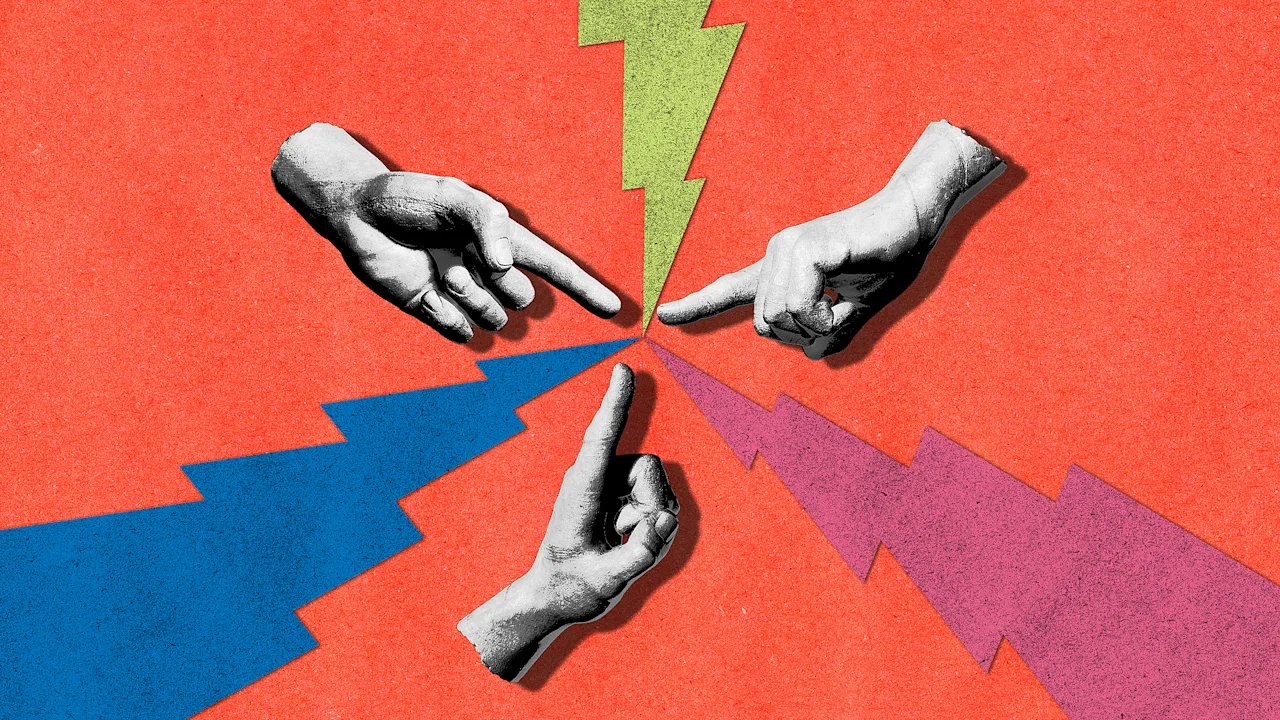
On March 30, Rachitsky followed up on his newsletter through an interview with Andreessen, cofounder of Andreessen Horowitz. Andreessen likened the current atmosphere to a three-way standoff among product engineers, designers, and coders: each side of the triad believes that AI has given them enough tools to subsume the roles of the other two.
“What’s so interesting about this Mexican stand-off is that they’re all kind of correct,” Andreessen said. “AI is actually now a really good coder, a really good designer, and a really good product manager.”
While the future of this stand-off remains murky, it seems clear that the industry is currently in the middle of an organizational flux. New AI tools are constantly blurring the lines between these three roles, creating new positions that blend elements of each. In the future, there will almost definitely still be need for human coding, designing, and product managing skills—but we may not define each of those jobs the same way.
In a recent interview for the Fast Company podcast By Design, Anthropic’s chief design officer, Joel Lewenstein, summed up this shift: “I think there’s a lot of role collapse at the very beginning, but there are still pretty clear swim lanes as things get into the later stages of product development.”
PMs are still the best at figuring out a product’s business case; engineers are still the best at deploying those products; and designers are still the best at tackling bigger human-computer interaction questions, he said. “It’s like a Venn diagram that’s coming closer together.”



