
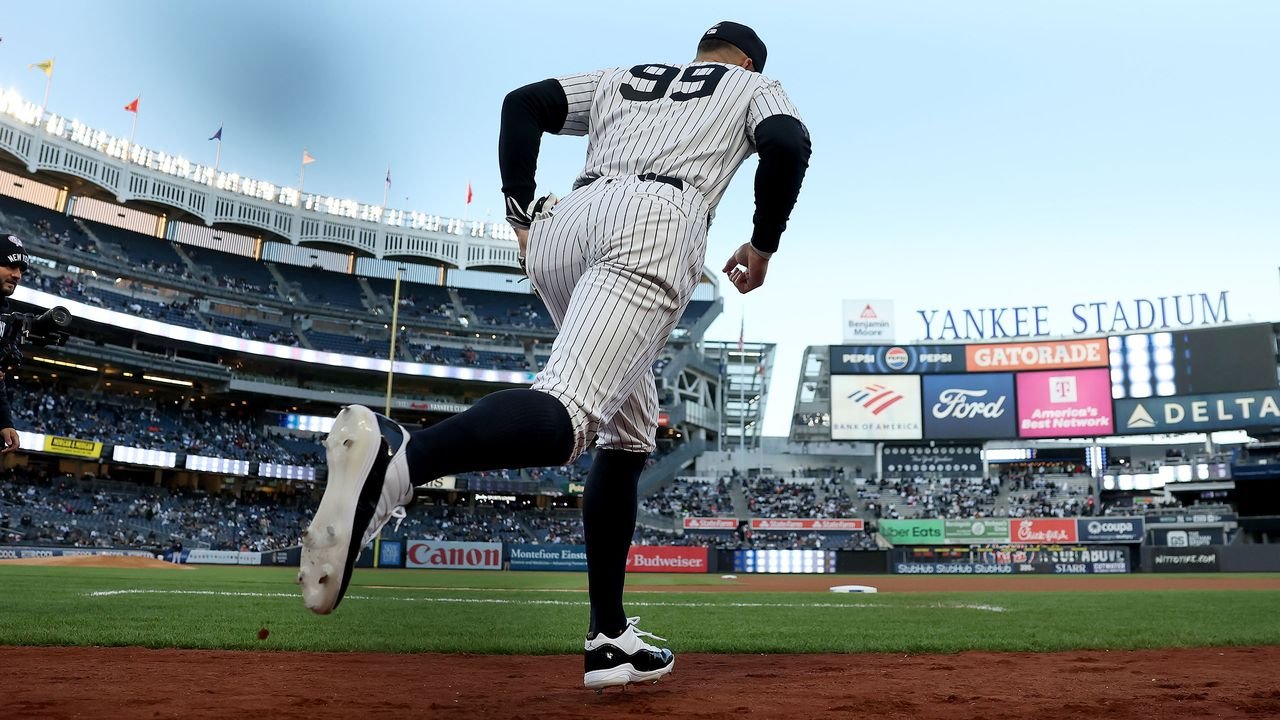
O’Brien was lucky, in a sense, that his presence back then was still pretty small. For a long time, Major League Baseball had a hard stance on copyright, claiming revenue from videos and forcing some non-licensed accounts to take the content down. O’Brien received his own share of letters from the league’s lawyers. Other leagues, particularly the N.B.A., were making cultural inroads in ways that M.L.B. was not. Eventually, the league started to see that influencers like O’Brien were gaining the young followers that the league wanted.
He may have been lucky, too, that he wasn’t too young himself. By his late twenties, O’Brien told me, when Jomboy’s audiences started to grow, he understood his voice and had no interest in the kind of easy attention that came with being controversial. “I think if I had started younger, it’s probably easier to try and be angsty or edgy,” he said. His company is often described as upbeat and light, the anti-Barstool—a reference to the popular personality-driven sports-content company known for being abrasive and sometimes outright offensive. There’s something to that. O’Brien will stop himself from doing a video if he reads someone’s lips and sees anything said that might genuinely get them in trouble. Recently, he quashed an idea to make merch quoting something that an injured Yankees’ catcher said, which sounded funny out of context but was part of a sad, longer quote. O’Brien isn’t interested in causing fights, but he’s also careful not to sound sanctimonious. He curses. He still likes reality TV. He enjoys content from companies that engage in all sorts of “nonsense,” as he puts it. (“I gobble it up,” he said.) He has built his career around “mostly covering people who are losing their minds, screaming and cursing and probably doing something they’re embarrassed of.” But he’s never forgotten that part of the fun of any story is in the retelling—and everyone, even the guy who’s losing his mind, likes to be in on the joke. The subjects of his videos generally “seem to get a kick out of it,” he said. So do increasing numbers of other people, even if they don’t consider themselves baseball fans.
O’Brien’s older sister, Courtney Hirsch, observed her brother’s fledgling media company with both pride and, as a businesswoman, a certain itch. Hirsch had followed a more traditional route than her brother and had become an ad-sales executive at Uber. She knew that ads were the quickest way to monetize content creation, and she was convinced that her brother and Storiale could be doing better. In 2020, O’Brien put out a feeler, through their mother and father, to see if Hirsch would help out. She responded that she’d only do it if she were fully committed. “I’m a very all-or-nothing person,” she told me. Before long, she became Jomboy Media’s C.O.O., and then, in March, 2025, the C.E.O. The company now has sixty employees (including O’Brien and Hirsch’s youngest brother, Luke) and is projecting revenues to surpass twenty million dollars this year—double what they were just two years ago. Last year, M.L.B. bought a minority stake in the company for an undisclosed sum, as part of its efforts to generate new fans.
Is that campaign working? Maybe so. In the past few years, baseball has felt more widely popular, and there are numbers to back it up. Partly, the league has leaned into the international demographics of its players to cultivate a more global audience. The final of the World Baseball Classic, in which Venezuela defeated the United States, was watched by nearly eleven million people on Fox and Fox Deportes, more people than the average audience for the 2025 N.B.A. Finals. Last fall, the World Series, between the Los Angeles Dodgers and the Toronto Blue Jays, recorded its highest average viewership (15.7 million) since 2017. The Dodgers’ generational superstar, Shohei Ohtani, is the rare type of athlete whose name is known by non-sports fans. And the league’s revenues are at a record high—in part because of its active efforts to engage younger viewers, after years of dealing with the perception that baseball was too old and too outdated to survive.



