
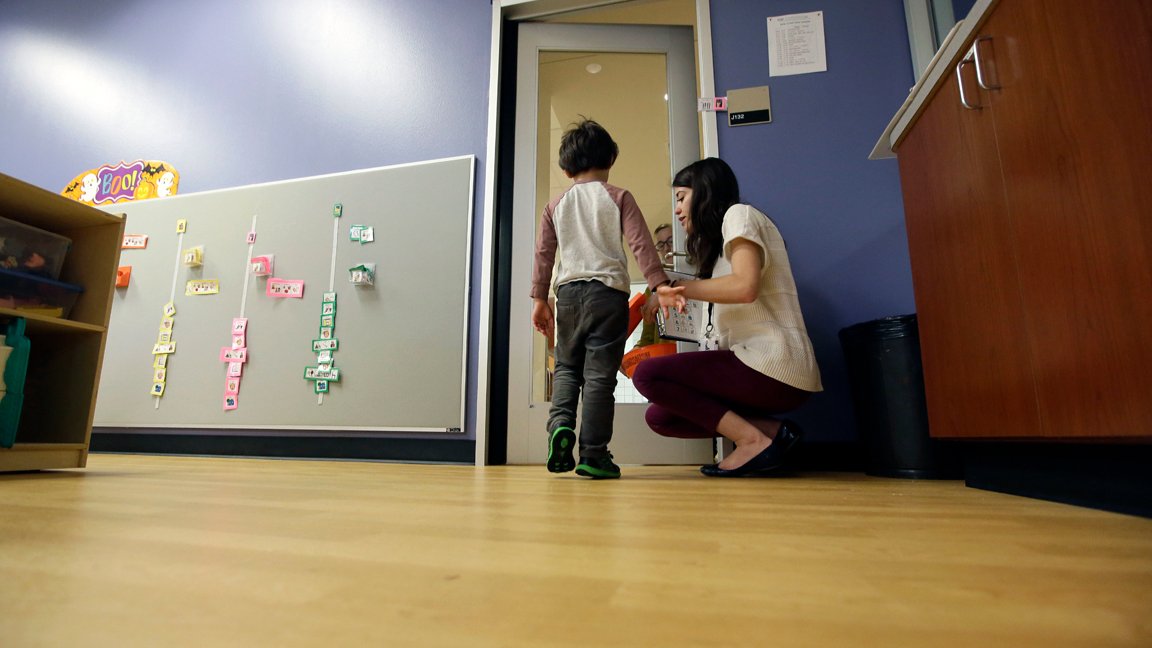
U.S. autism rates have reached a record high. About one in 31 children is diagnosed on the spectrum, according to a U.S. Centers for Disease Control and Prevention report, released last year, that evaluated health records of 8-year-olds across the country.
In New Jersey, the rate is higher: one in 29 children, according to Autism New Jersey.
April is Autism Acceptance Month. In an interview with NJ Spotlight News, advocate Kerry Magro shares what you should know about your neighbors with autism. This interview has been lightly edited.
Joanna Gagis, anchor: You’ve really become a prominent voice in the autism community, both here in New Jersey and as a consultant on a lot of film and TV shows. Tell us about your autism journey.
Kerry Magro: I was diagnosed in 1992 where there was still a lot not known about autism. It was about one in 1,000 in the U.S. and now it’s one in 31. Growing up, I actually didn’t start speaking in complete sentences until I was seven, but my parents found my two key interests, which are basketball and theater. That led me to gain a degree in sports management before I decided to change career paths.
I’ve been a full-time professional speaker for the past 15 years, using my voice to educate people on autism, neurodiversity and the importance of being empathetic and kind to everyone.
JG: What is it that you want people to know about those with autism? We know it’s a spectrum and folks present very differently and each situation is unique. But what do you want folks to know and understand about it?
KM: It is such a huge spectrum. Because of that, they’re going to be individuals like myself who might not present to have any symptoms of autism. But that doesn’t mean that I don’t go through daily challenges even as an adult today. Being kind to someone with autism isn’t being a hero. It’s being a decent human being. We need to do it not only in April, which is Autism Acceptance Month, but all year round, to focus more on human decency, especially during this climate.
JG: You said it. We have come a long way even in our lifetime — the understanding and the acceptance of autism. What do you believe are still some of the misconceptions that exist out there about people with autism?
KM: Oh, my gosh. How much time do you have? One of the biggest things is that autistic people lack empathy. Some autistic people I know are some of the most empathetic people in the world. Also, this misconception is still around about all autism being white males. I can’t tell you how many people just assume autism, even to this day in 2026, is “Rain Man” or “The Good Doctor” on ABC.
Those in Black, Hispanic and Asian communities are diagnosed one year later than their white counterparts. We need to have an honest, open conversation, especially around minorities in our community. But then also girls. Girls are diagnosed four times less often. This whole “Rain Man,” “Good Doctor” stigma that we sometimes have can be very deterring to so many in our community today.

JG: You have acted as a consultant on the Netflix show “Love on the Spectrum,” as well as a couple of films: “Joyful Noise,” “Jane Wants a Boyfriend,” and then HBO’s “Mrs. Fletcher.” Tell us what that consulting work looks like.
KM: I fell in love with theater when I was a kid, and that actually helped me find my voice from non-speaking to professional speaker. And one of the biggest things that helped me during that time was understanding that a lot of cast and crew didn’t really have a personal connection to autism before going into a film or TV show.
So I got my first big break when I was 23 with Warner Bros. on “Joyful Noise,” and it’s continued for the past 15 years. I do autism sensitivity trainings. I’m meeting every single crew member and cast member where they are, regardless if they have autism or not, while also getting the opportunity to rewrite scripts, get an opportunity to edit some of the episodes like “Love on the Spectrum U.S.,” to make sure we’re touching base on topics that are truly impacting our autism community today because it is such a huge spectrum.
JG: We follow these individuals on “Love on the Spectrum,” but how much are you influencing the conversation around it? Is that what you’re saying, the kind of the broader and bigger, more important conversations around autism?
KM: Yeah, absolutely. Because unfortunately today in our community, the majority of autistic adults are still unemployed or underemployed. I go into so many companies and I talk about the return-on-investment benefits of hiring talented autistic people in the workplace. A lot of autistic people are still having challenges finding relationships. They’re still having trouble with housing once they age out of high school. And then also guardianship, because some autistic people will need 24/7 care for their entire lives. And their stories matter just as much as us speaking today.
JG: Is there language that you’ve heard recently that you find concerning when it comes to autism?
KM: Yeah, I think there’s still a lot of talk about “curing” autism in our community. And what we realized today is that autism is a neurotype. There’s so many individuals in our community. It’s not “curing” someone of having autism, it’s helping an autistic person who’s struggling not have to struggle as much. Because I was that kid. I had severe sensory issues. I wore noise-canceling headphones for a while when I was growing up. And that can be really, really challenging for some on the spectrum. Meltdowns, overload, burnout. There’s so many things that can impact someone with autism, so deterring from our conversations from “cure” in 2026 to the importance of providing reliable autism resources across the lifespan to support our community.
JG: What’s your message to parents concerned about their kids, wherever they are in the age, wherever they are on the spectrum, and maybe to those kids themselves?
KM: Your child is the same child they were before the diagnosis as they are after the diagnosis. They just might have some more resources to help them thrive. Always treat them as a person first. Nurture their strengths.
And for the children who might have autism who are watching this, from someone who used to be that kid who had some struggles: Pursue your dreams. Gain opportunity to work with so many companies around the world, gain the opportunity to work in TV and film. I never expected this to be my life, but I like to say that autism can’t define me and I define autism. And I can only hope each and every single one of you watching this can go out there and define your lives and your journey in the way that you best see it every single day of your lives.



