
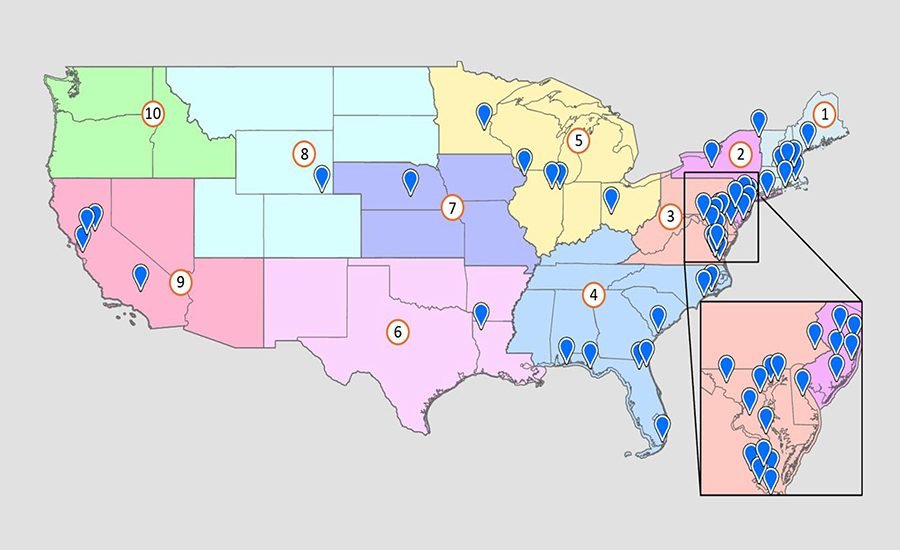
Two recent studies from the Office of the Inspector General at the U.S. Environmental Protection Agency sound the alarm over the risks Superfund sites face due to a variety of factors related to climate change—inland flooding and wildfires. A similar report, released last September, highlighted risks associated with sea-level rise.
The reports released last month examine natural disaster-related threats to federal facility Superfund sites across the country. The OIG report concluded that the release of contaminants affected by these extreme weather occurrences could negatively impact the health of millions of Americans and the environment.
“We issued these reports to bring attention to the potential threats posed to these sites and their surrounding communities and to urge the EPA to ensure that all federal facility Superfund sites assess potential impacts from natural disasters as part of their five-year reviews,” Kim Wheeler, a spokeswoman for EPA’s OIG office, told ENR.
Collectively, the three reports found that 49 of 157 federal Superfund sites—many near dense population areas—could be at risk from sea-level rise and storm surge. Also, 47 of 148 federal Superfund sites reviewed could be at risk from inland flooding, and 31 of 155 sites could be at risk from wildfires.
Failing to plan for the impacts extreme weather events could have on current Superfund sites could lead to the release of contaminants from the sites, potentially negating the effects of remediation already completed to date and as a result, wasting taxpayer dollars, Wheeler said. Millions of Americans could suffer health and environmental harms.
The studies build on analyses conducted by other organizations, including the U.S. Government Accountability Office, which in 2019 said up to 60% of non-federal sites could be at risk from extreme weather.
EPA Response
The most recent OIG reports did not include formal comments from EPA, but in an email, EPA said it is reviewing their findings, adding, “More generally, EPA’s Superfund program implements an approach that raises awareness of the impacts of extreme weather events and other hazards as a standard operating practice in the development and implementation of cleanup projects.” The approach involves screening of areas of vulnerability, then identifying and implementing measures to assure the resilience of solutions at Superfund sites.
Looking for quick answers on construction and engineering topics?
Try Ask ENR, our new smart AI search tool.
Ask ENR →
For example, in 2018, EPA reviewed the status of remedies already in place at 251 Superfund sites across three EPA regions that were exposed to tropical force winds or flooding that occurred during the busy hurricane season in 2017 with Hurricanes Harvey, Irma and Maria.
The analysis suggested that redundancies built into solutions implemented at the sites were critical in preventing contamination due to the extreme weather, even when work was temporarily suspended during and directly after the hurricanes.
But the 2019 GAO report noted that while EPA has taken a number of meaningful actions to address the risks associated with potential contamination following natural disasters, the agency had not at that time aligned its processes for managing risk with agency-wide goals and objectives, which do not mention climate change. “Without clarifying this alignment, EPA cannot ensure that senior officials will take an active role in strategic planning and accountability for managing these risks,” the GAO report concluded.
Source: www.enr.com



