
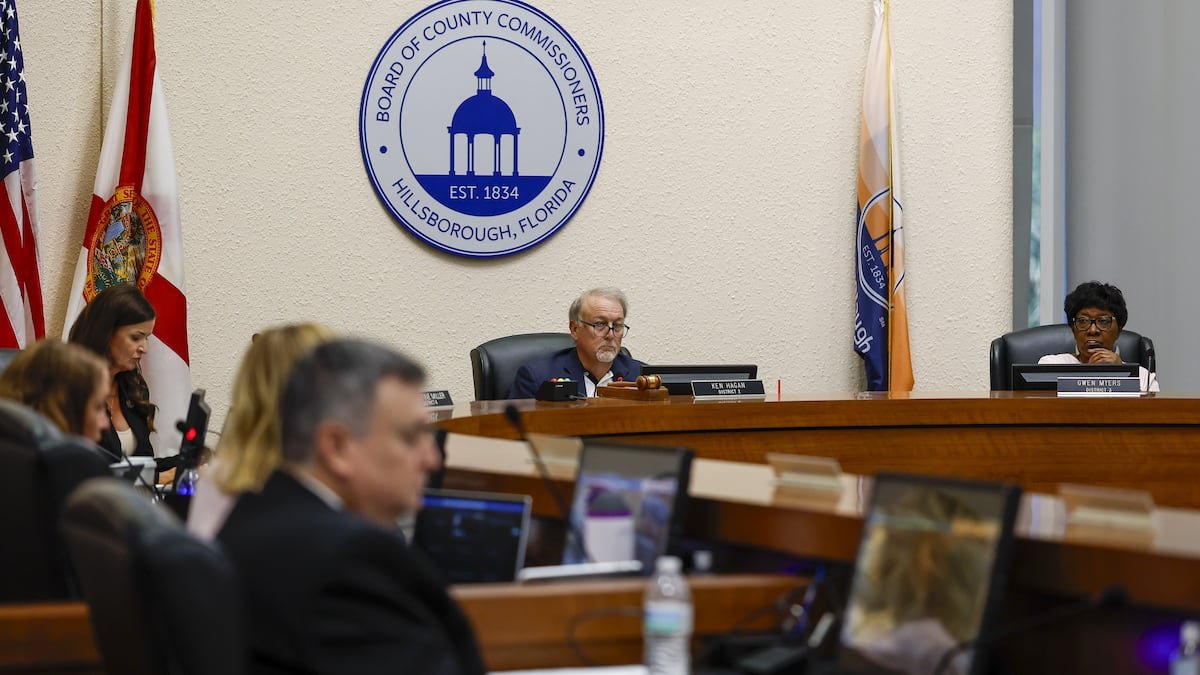
Hillsborough County has told the Tampa Bay Rays it is unlikely to meet the team’s deadline for the completion of a stadium deal, which could jeopardize the entire proposal.
Earlier this month, the Rays released a draft memorandum of understanding that set a strict deadline: June 1. That deadline, the team has said, is necessary not only for the ballpark to open in time for the 2029 Major League Baseball season, but for the deal to be feasible at all.
On Thursday, the county attorney’s office informed the team meeting such a deadline is improbable, according to a memorandum obtained by the Tampa Bay Times.
A timeline, the memo reads, cannot be established until all involved parties reach an agreement. After a preliminary agreement is reached, “it would likely take at least 60-90 days” to negotiate the deal’s development and funding obligations.
June 1 is in less than 45 days.
It was not immediately clear how this timing disagreement will be resolved.
In a letter to commissioners last week ahead of the county’s public workshop on stadium negotiations, Rays CEO Ken Babby described the deadline as an essential component.
“Time and action are of the essence,” Babby wrote. “The deadlines we have set are driven by practical constraints, not pressure tactics.”
Babby described meeting both the proposed public contribution and the team’s deadline as necessary to keep the Rays in Tampa Bay.
Failure to meet the deadline, Babby wrote, jeopardizes state funding that the deal is “economically infeasible” without.
“Should this commitment ultimately not be achievable, we would have no choice but to evaluate alternatives,” Babby wrote.
Gov. Ron DeSantis, who spoke out against taxpayer dollars for stadiums in 2022 but has been a staunch supporter of the Rays’ proposal, voiced his support last week. Patrick Zalupski, the leader of Rays’ new ownership group, donated $250,000 to DeSantis’ 2024 presidential campaign.
“As leaders in Hillsborough convene to forge a path that will keep MLB in Tampa Bay, I hope the commissioners keep an open mind and consider the potential of the full-spectrum vision for the site that goes beyond baseball—and which can enhance the economy and culture of Hillsborough County for years to come,” the governor wrote on X last Thursday.
At last week’s workshop, Greg Horwedel, deputy county administrator, and the county’s chief financial administrator, Tom Fesler, described to commissioners how a public contribution for a Tampa Bay Rays stadium could come together.
“This is a complex deal,” Horwedel said. “We’re not at the stage yet with staff where we feel comfortable with all the dollar amounts that are being proposed and how those might impact the county budget.”
Ownership of the stadium after the expiration of the Rays’ proposed lease term, the stadium’s potential effect on other sports facilities and the future of the tax collector’s office north of Hillsborough College’s Dale Mabry campus were among the unresolved issues Horwedel shared.
The financial specifics are not set, either.



