
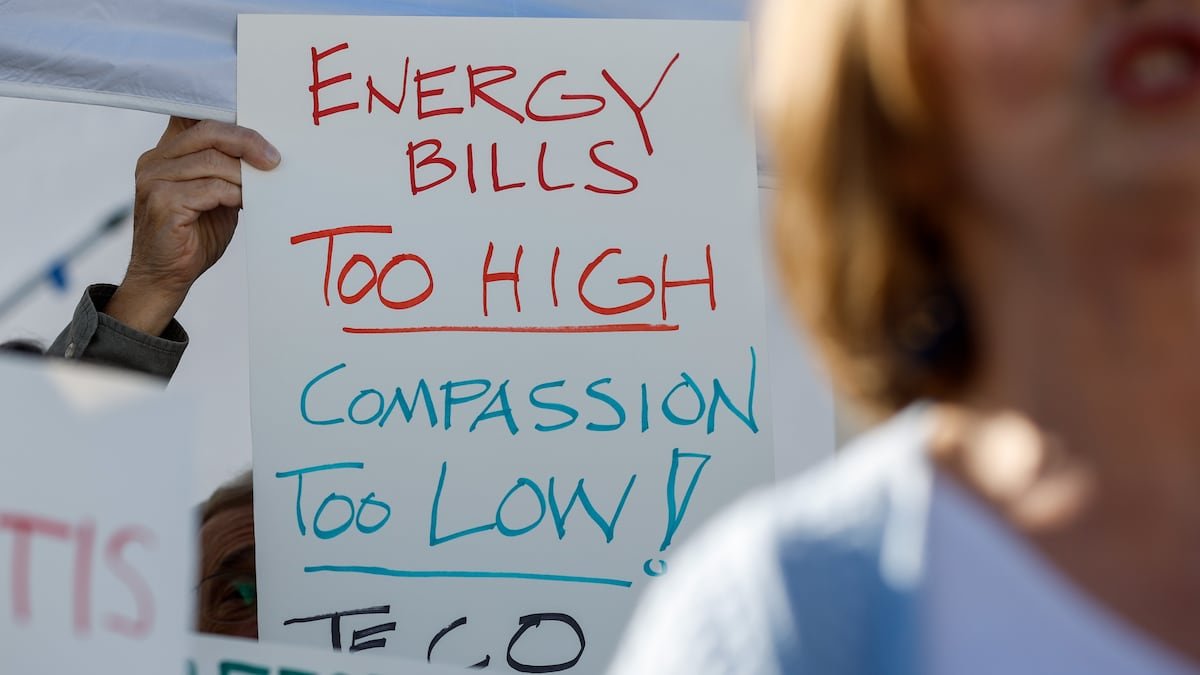
Floridians had their power turned off more than 2 million times because of unpaid bills in 2024, a figure that consumer advocates say quantifies a worsening crisis across the state.
The number comes from a first-of-its kind federal report released by the U.S. Energy Information Administration this month.
Florida had an average of 20 shutoffs each month for every 1,000 households, according to a Tampa Bay Times analysis of the government data — the third-highest rate in the nation. Only Texas and Oklahoma ranked higher.
Other populous states like California and New York, on the other hand, both had fewer than four.
Zayne Smith, senior director of advocacy for AARP Florida, said the report’s finding that utility companies sent out 12 million final notices in 2024 was also shocking, given how many more families were on the edge of having their power cut. AARP advocates for people over age 50, many of whom are on fixed incomes.
“That’s staggering, and should also sound an alarm bell for the utility regulators and lawmakers, frankly, to say we’ve got a problem when it comes to affordability for electric utilities in Florida,” Smith said. “The system is not working for the customers.”
The federal agency compiled the report using information provided by utility companies, after Congress funded the push to collect nationwide data. Unlike some other states, Florida utilities are not required to regularly disclose disconnection numbers to state regulators.
While the figures were appalling, Smith said they weren’t surprising, given how regulators have allowed Florida utilities to collect higher profit margins than the national average.
“It’s more the manifestation of what we’ve been fearing for more than 10 years,” she said.
Because the federal analysis relies on 2024 data, it also predates painful recent increases in Floridians’ electric bills, which came last year as a result of hurricane recovery fees, plus base rate hikes by Duke Energy Florida and Tampa Electric. Many residents around Tampa Bay have said that last summer’s electric bills were their highest ever.
Starting this year, Florida Power & Light customers have also started paying for a historic $7 billion rate hike. State regulators’ approval of both that hike and Tampa Electric’s are slated to be reviewed by the Florida Supreme Court.
Shelby Green, a research and communications manager for the utility watchdog group Energy and Policy Institute, said the new figures show not just how Floridians are struggling, but also how the state lacks protections for residents.
Florida has no law prohibiting shutoffs during extreme heat or cold, for example, which many other states have adopted. Additionally, 44 states other than Florida prohibit disconnections for certain vulnerable people, according to a federal database, like older adults or those whose health could be threatened.
“Customers are paying more and more to keep their lights on and millions are being priced out of an essential service, while utilities are making record-breaking profit, and then also using some of that profit to lobby” politicians against consumer protections, Green said.
Earlier this year, a bill in the Florida Legislature designed to curb utility profits to make bills more affordable died for the second year in a row after lobbying by Florida Power & Light, according to the bill’s sponsor, Republican Sen. Don Gaetz.
The Energy and Policy Institute also released a report this week detailing how compensation for utility CEOs has risen nationwide at pace faster than inflation.
Florida Power & Light CEO Armando Pimentel received $12.2 million in compensation including stock awards last year, according to paperwork the company filed to federal regulators. That was an increase of nearly $1 million from the previous year.
The utility’s parent company, NextEra Energy, paid chief executive John Ketchum about $24.2 million in total compensation last year, an annual raise of more than $2.5 million.
Florida Power & Light declined to comment on its executive pay figures. When asked about the shutoffs report, company spokesperson Andrew Sutton said electricity disconnections are an “absolute last resort” and that the company offers payment assistance programs.
Last year, Duke Energy got a new CEO, Harry Sideris, whose $13.7 million compensation was less than his longtime predecessor, company documents show.
Tampa Electric had not yet filed this year’s paperwork disclosing its executives’ pay.
• • •
The Tampa Bay Times launched the Environment Hub in 2025 to focus on some of Florida’s most urgent and enduring challenges. You can contribute through our journalism fund by clicking here.



