
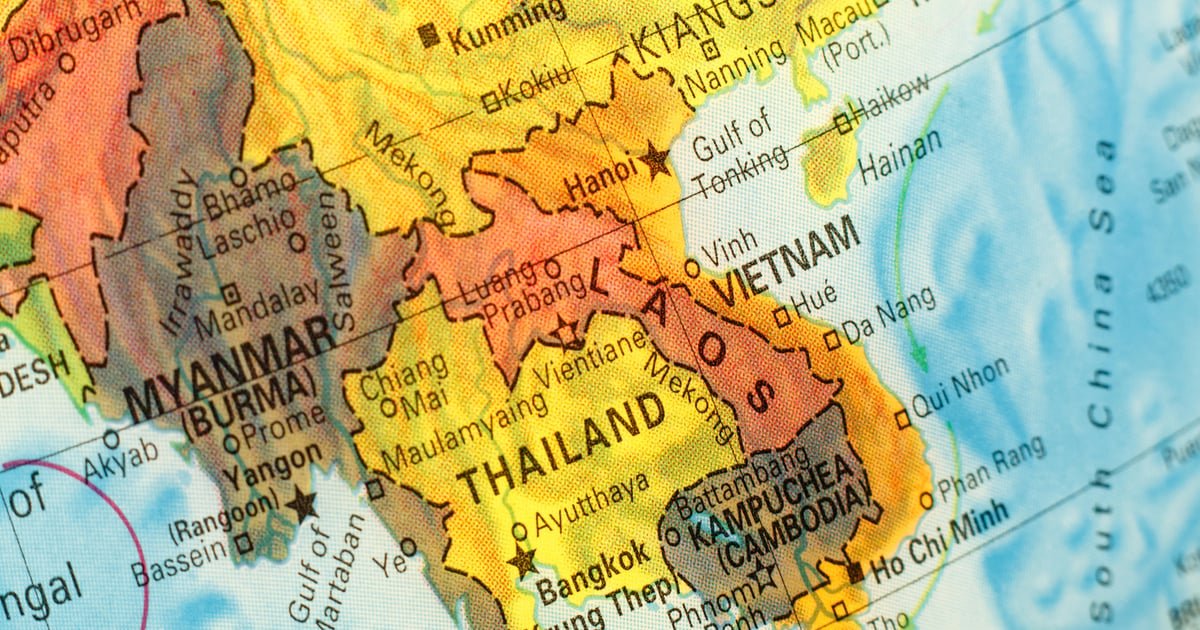
The US government has sanctioned a criminal network supporting Southeast Asian scam compounds, including one of Cambodia’s richest and most powerful men. Authorities also seized infrastructure supporting these scam operations and criminally charged two individuals associated with one large compound in Myanmar.
Often enough, the scammers who call and text you are enslaved persons in Southeast Asia. You ignore these entreaties, but plenty of vulnerable Americans don’t, and with well-trodden social engineering tactics the scammer-captives can convert a grandma into an ATM for the Asian criminal gangs that run these rackets.
In 2024, the US Secret Service and FBI teamed up in “Operation Level Up,” aimed at identifying and stopping cryptocurrency scams in their tracks. Last year, the Trump administration coordinated a Scam Center Strike Force to combat the gangs behind so many of these scams. Government figures suggest that these initiatives have found great success so far. According to the Department of Justice, Operation Level Up has intervened in nearly 9,000 cases of crypto fraud, saving victims an estimated $562 million.
“The Scam Center Strike Force has produced some concrete early results,” says Martin Zugec, technical solutions director at Bitdefender. “But to put that figure in perspective: the UN estimates this industry at roughly $64 billion annually, larger than Cambodia’s entire GDP, and reported American losses rose from 2023 to 2025. The enforcement successes are real, but the scale of the problem is larger.”
To chip away at the larger scale of the problem, this week the Strike Force revealed a coordinated series of actions against the Asian scam centers themselves. Those actions included two new indictments, sanctions against 29 individuals — including a Cambodian senator — and seizure of a Telegram channel and more than 500 .com Web domains tied to fake investment sites.
America Takes On an Asian Scam Ring
In November 2025, the Burmese army seized the Shunda scam compound near the country’s border with Thailand. FBI agents deployed to Thailand reviewed the evidence leftover, and pieced together the operation’s digital and organizational structure.
Like all of these scam compounds, Shunda recruited its workforce by falsely promising gainful employment. Their primary means of reaching people was Telegram. From a channel with 6,000 real or fake followers, the scam masters recruited poor and unemployed people, especially if they were attractive women or could speak with American-ish accents. US authorities have since seized this Telegram channel.
Once those workers were trapped inside of Shunda, some of them were forced to perform social engineering attacks against Americans. They would call US citizens, pretending to be representatives of US banks, and try to trick them into believing that their bank account had been used to purchase firearms. The ruse was enshrined in scripts, like the one below:
Source: The US Department of Justice
The two men managing this operation — supervising the targeting of Americans and doling out physical punishments to unsatisfactory workers — were Chinese nationals. Both were charged with wire fraud.
Ties to Cambodia’s Government
Scam centers are far too well-resourced, widespread, and organized to be run by run-of-the-mill gangsters, though. Just like in the movies, these conspiracies go all the way to the top.
The top is a cartoon villain named Kok An. An, a baron in the business of vices — casinos and tobacco, for example — has long served in Cambodia’s senate, thanks to his wealth and proximity to the country’s royal family. His outsize role in the Asian scam industry has been well-documented and unpunished for many years.
According to the US Treasury Department, An’s flagship hotel and casino brand, Crown Resorts, owned by his company, Anco Brothers, splits its time between developing tourist destinations and human trafficking compounds (though not Shunda specifically). The two business verticals actually work in harmony — digital infrastructure can be shared, casino security guards can double as compound slavemasters, and casinos can launder the profits earned through online scamming.
Besides An himself, the Treasury’s Office of Foreign Assets Control (OFAC) also sanctioned 28 individuals in his network.
What Governments Can Do About Scam Compounds
Generally speaking, when US law enforcement confronts purely online-based cybercrime like ransomware-as-a-service (RaaS), the effects are mixed. Authorities can take out domains, splash warnings on cybercriminal gathering places, and eat into the reputations of major threat actors. But the individuals involved in those operations can usually reorient themselves and resume cyberattacking in some other fashion.
“Unlike ransomware groups that can rebrand overnight with a new domain and a press release, scam centers are physical operations: compounds with buildings, guards, and a workforce that is often trafficked or coerced which makes successful enforcement actions more disruptive than in pure cybercrime,” Bitdefender’s Zugec explains. “These operations also depend on cultivated relationships with local officials and power brokers, and rebuilding those corrupt networks in a new jurisdiction takes time and money.”
With that said, he warns, “Relocation is absolutely within capability of these groups. You squeeze one country and operations migrate to the next: pressure on Myanmar’s Kokang region in 2023 pushed activity into Cambodia, and early 2026 signals already point toward Sri Lanka as the next destination.”



