
New Jersey is grappling with a mix of reduced revenue and increasing expenditures in several key areas thanks to much-debated fiscal policy enacted last year by President Donald Trump.
Public records drafted this year by Gov. Mikie Sherrill’s administration highlight the ways that state government is feeling the effects of tax and spending measures in H.R. 1, the 2025 federal reconciliation measure. The fallout comes as lawmakers are considering Sherrill’s $60.7 billion annual budget proposal.
The new landscape includes downward revisions of state business-tax collection forecasts — due, in part, to tax policies in what Trump and majority Republicans in Congress called their “Big Beautiful Bill.”

During recent budget hearings in Trenton, Sherrill administration officials said the federal tax changes, at least temporarily, have automatically cut into the state’s own tax base. The result is a roughly $500 million projected revenue loss.
“This isn’t a direct federal cut, but it’s an impact of the federal legislation,” state Treasurer Aaron Binder told lawmakers this month.
Other effects of the federal policy changes are beginning to appear on the expenditure side of the ledger as Sherrill, a first-term Democrat, and state lawmakers look to the fiscal year that begins July 1.
$100 million invoice
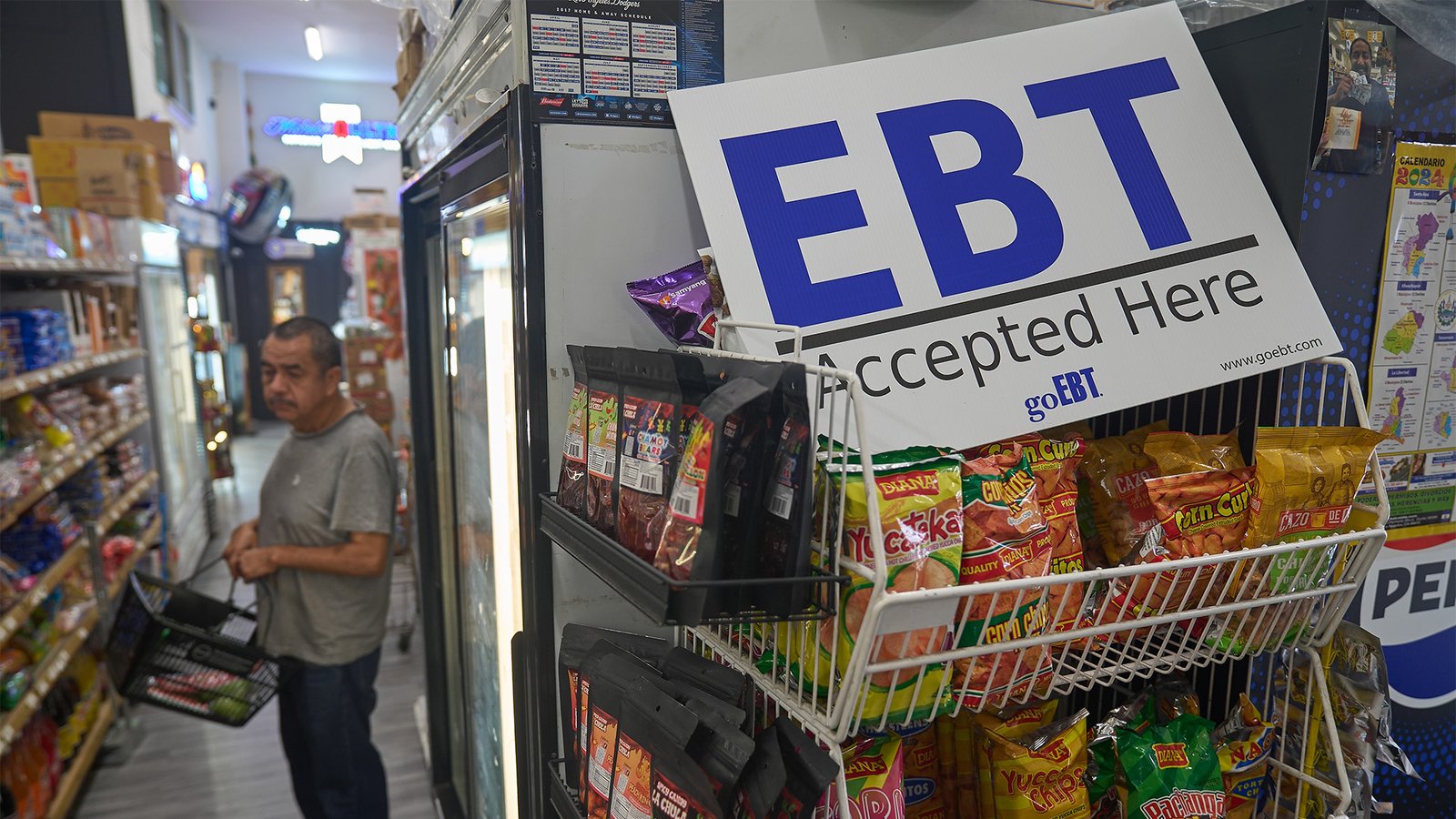
In all, an estimated $100 million in costs will be shifted onto state taxpayers after July 1 due to changes to public-assistance programs that are required under H.R. 1, according to the “Budget in Brief” released last month by the Sherrill administration.
The burden includes state government’s taking on an estimated $71 million portion of the cost of administering Supplemental Nutrition Assistance Program, or SNAP, food-assistance benefits that previously were covered by the federal government.
This comes after H.R.1 required a federal funding cut in SNAP administrative costs, to 25% from 50%, according to the state budget briefing.
If state government doesn’t cover this expenditure, the responsibility would go to New Jersey’s 21 county governments, which rely heavily on local property tax revenue to fund their own operating budgets, the briefing states.
“SNAP helps families access affordable, nutritious foods at more than 6,000 retailers across New Jersey and supports over 40 percent of participating children, one in three individuals with disabilities, and one in five seniors age 60 and older,” according to the briefing.
Among the many policy revisions written into H.R.1 prior to its July 4th enactment by Trump were changes to many individual and business tax provisions. These include an expansion of a cap on state and local tax deductions, to $40,000 from $10,000, that has drawn praise from many members of the state’s congressional delegation.
These and other tax breaks for individuals, including increased tax deductions for seniors, took effect immediately.
However, NJ Spotlight News has reported that significant cuts to federally funded health and food-assistance programs are being phased in more gradually.
These reductions were delayed so states could be ready, Republicans said last year. Other changes, such as new work requirements, will help strengthen the assistance programs, including by enhancing waste and fraud protections, according to the GOP.
 Credit: (AP Photo/Damian Dovarganes)
Democrats, though, have argued that delaying of the biggest share of the federal cuts is motivated by politics. The biggest hits will come after the November midterm elections, which is when Republicans in the Congress will desperately attempt to hold onto an already slim majority.
The planned delay could help explain why the Sherrill administration is expecting more federal dollars to flow through the state budget in the new fiscal year compared with updated estimates for the current fiscal year.
More for Medicaid, GOP says
This comes despite Sherrill’s contention, during her budget message to state lawmakers last month, that the Trump administration is “recklessly slashing critical programs, from health care and housing, to food aid and foster care, (to) schools and infrastructure.”
During the recent budget hearings in Trenton, state Assemblyman Michael Inganamort (R-Morris) took issue with Sherrill’s characterizations.
“The Departments of Community Affairs, Education, Health, Human Services, Veterans Affairs and Children and Families have all seen increases in federal funding.” — Assemblyman Michael Inganamort (R-Morris)
He asked Binder to square the governor’s comments with the administration’s latest budget estimates, which forecast a $750 million year-over-year federal funding increase coming to New Jersey.
“The Departments of Community Affairs, Education, Health, Human Services, Veterans Affairs and Children and Families have all seen increases in federal funding,” said Inganamort, who also noted that federal Medicaid funding is due to go up, year over year.
In his response, Binder said most of the estimated year-over-year growth in federal funding coming to New Jersey is due to the current version of the Medicaid program. And that is being influenced by circumstances like expanding enrollment and rate increases, which “then have a federal match,” Binder said.
No bucket-to-bucket
The rules governing the state’s broader pool of federal funding do not allow for a shifting of funds from “one bucket to the other,” the treasurer explained.
“When we do have cuts — which we had in the SNAP administrative costs, (which) we had in certain parts of Medicaid — so that is actually over $100 million the state has had to fill in (with) general fund dollars to fund,” Binder said.
And that’s just the initial impact from H.R. 1 that’s forecast for the state budget in the near term, he said.
Due to the delay of some of the bigger federal spending cuts, the Sherrill administration expects the most significant effects are looming.
“The downstream effects of federal funding cuts related to H.R.1 will ultimately reduce public health and hospital funding by an estimated $3.3 billion in the out-years,” the budget briefing states.
Then there are the effects of the federal tax changes on the state’s own revenue stream.
A full explanation included in the state budget briefing noted that New Jersey is a “rolling-conformity” state, which means many of the federal business-tax revisions were “automatically adopted” by the state, resulting in reduced corporate tax liabilities.
“H.R.1 alters the calculation of federal corporate taxable income, and these changes flow through to states that use federal taxable income as their starting point,” the briefing states.
Meanwhile, Binder also told lawmakers the state has had to take the Trump administration to court numerous times to fight the fiscal impact of many of his other new policies.
NJ Spotlight News reported that many of these suits have sought to reverse clawbacks of approved federal funding, such as Trump’s failed attempt to freeze allocations for the Gateway rail tunnel.
“There was another $700 million in proposed cuts, that only through litigation were we able to restore those cuts,” Binder said.
Benjamin J. Hulac contributed reporting. This story is made possible in part by the Corporation for Public Broadcasting, a private corporation funded by the American people.



