
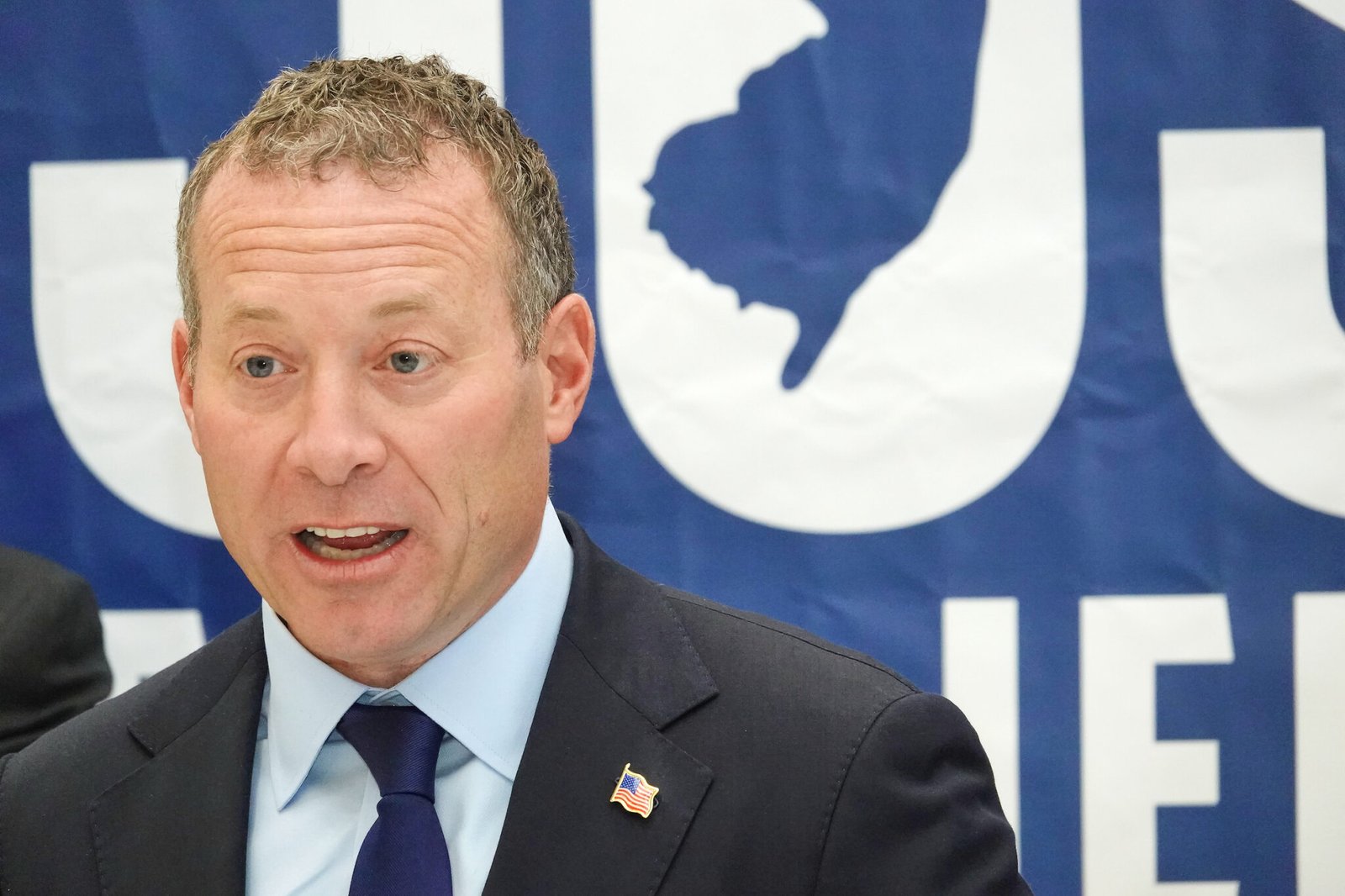
Rep. Josh Gottheimer urged Gov. Mikie Sherrill and legislative leaders against a plan that would create new fees and temporarily raise sales tax rates in the Meadowlands in a bid to win state revenue from World Cup matches there this summer.
Gottheimer (D-05) is the latest to come out against a proposal backed by the governor to create a 50-cent surcharge on ride-hailing trips to or from the roughly 30-square-mile Meadowlands District, add a 3% sales tax surcharge on certain purchases there, and institute a 2.5% surcharge on some hotel rooms.
“These communities didn’t ask for higher taxes. They shouldn’t be punished for living near an event venue. I strongly suggest that you reconsider this proposal,” Gottheimer said in a letter to Sherrill, legislative leaders, and NJ Transit CEO Kris Kolluri.
He urged the recipients to “exclude Jersey residents from any tax hikes on local communities.”
Sherrill (D) has called the proposal to raise taxes in a localized area between June 12 and July 21 a “tourism fee.” The World Cup matches are expected to attract tens of thousands to MetLife Stadium and the region in general.
“The Governor has been clear: New Jerseyans shouldn’t have to bear the costs of hosting the FIFA World Cup, which is why she is taking every step to protect our residents,” said Sherrill spokeswoman Maggie Garbarino. “The proposed tourism fee currently being considered by the Legislature only applies to the stadium and the area immediately around it, and includes a tax credit available to New Jersey residents for any costs.”
The letter was first reported by NorthJersey.com.
Assembly Speaker Craig Coughlin (D-Middlesex) and Senate President Nicholas Scutari (D-Union) did not return comment through spokespeople.
The plan, which has yet to move in the Legislature, has drawn concern and opposition over its impact on residents in the Meadowlands, which covers Secaucus and parts of Kearny, Jersey City, and East Rutherford, among other municipalities.
The legislation, sponsored by Sen. Paul Sarlo (D-Bergen) and Assemblyman Michael Venezia (D-Essex), allows state residents a non-refundable income tax credit to offset the taxes and fees, but that provision has faced criticism over practicality. Sarlo did not provide comment.
The bill would also tax 10% of the money wagered on World Cup events, less any money paid out to gamblers. That tax is ineligible for a credit.
Though other states, like Florida, have similar policies that charge higher prices to tourists, resident discounts under those programs are applied at the point of sale rather than on a tax bill filed weeks or months later.
“People in our state are already stretched too thin, and we should not ask them to cover even more costs of the FIFA World Cup,” said Gottheimer.
YOU MAKE OUR WORK POSSIBLE.



