
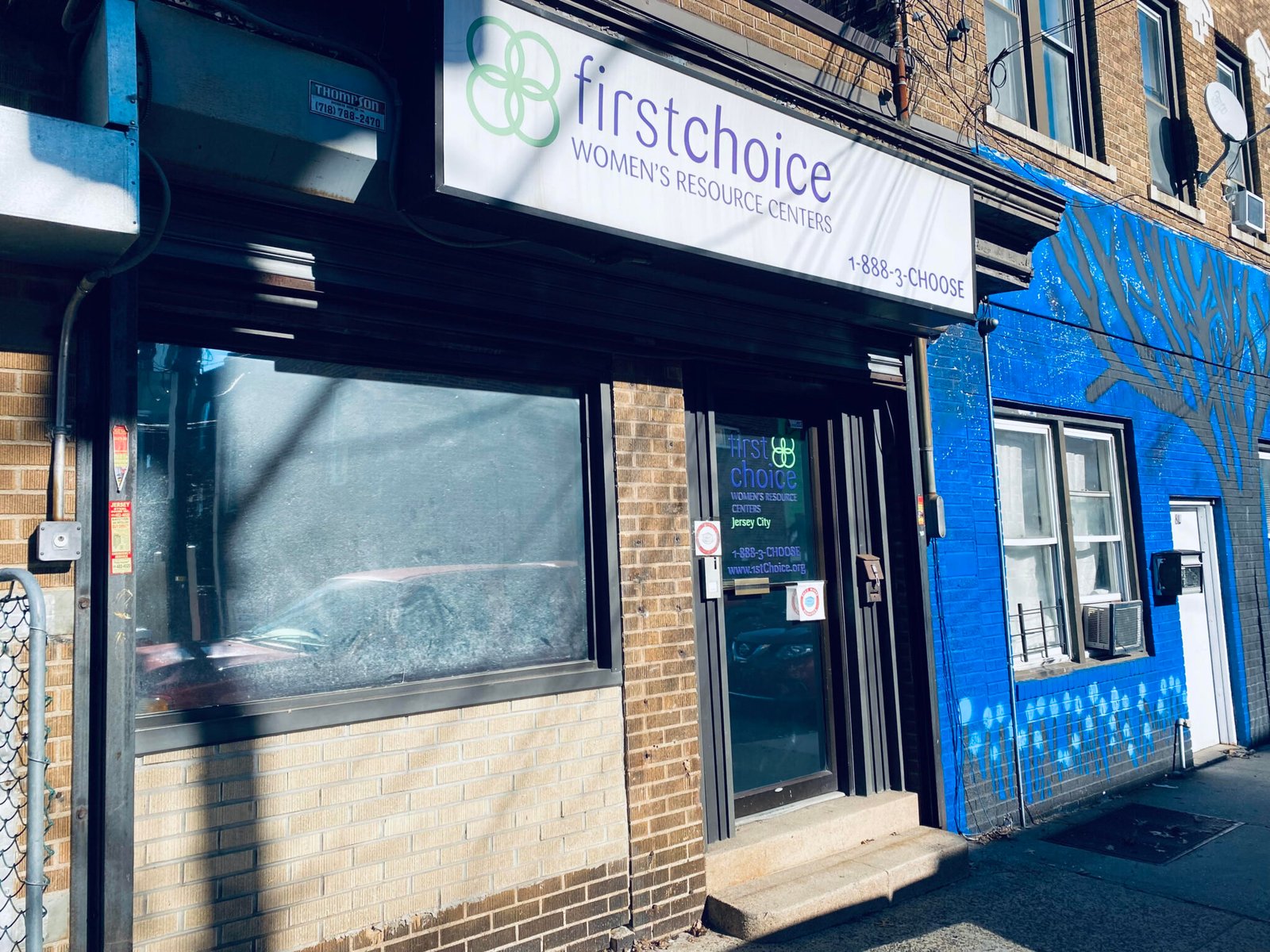
The U.S. Supreme Court has sided with a coalition of anti-abortion crisis pregnancy centers in its fight against the New Jersey Attorney General’s Office, finding a subpoena that state investigators issued for donor information unconstitutionally chilled the centers’ free speech and association rights.
In a unanimous decision issued Wednesday, Justice Neil Gorsuch reversed an appellate court’s ruling that had prevented First Choice Women’s Resource Centers Inc., from airing their constitutional objections to the state’s probe and investigative practices in federal court. Gorsuch’s ruling returns the case to U.S. District Court.
Former Attorney General Matt Platkin had been investigating First Choice since 2022, when he created a “reproductive rights strike force” and issued a consumer alert about crisis pregnancy center practices and advertising he deemed deceptive. Investigators subpoenaed donor records in an effort to interview donors to determine if First Choice, which operates five faith-based, anti-abortion centers in Jersey City, Montclair, Morristown, Newark, and New Brunswick, had misled them about its mission and operations, according to court filings.
Gorsuch, a nominee of President Donald Trump who joined the bench in 2017, said the nation’s top court has long held that “compelled disclosure of affiliation with groups engaged in advocacy may constitute as effective a restraint on freedom of association” as more direct forms of suppression, citing from NAACP v. Alabama. Gorsuch heavily quoted from that 1958 landmark decision, in which the court forbade the state of Alabama from forcing the NAACP to disclose its membership lists, throughout Wednesday’s ruling.
Associational rights carry special significance for political, social, religious, and other minorities, Gorsuch added.
“An official demand for private donor information is enough to discourage reasonable individuals from associating with a group. It is enough to discourage groups from expressing dissident views. A government that chooses to make private donor information public may make the damage worse,” he wrote.
That pressure exists, though, even without public disclosure, he added.
“Just ask yourself, would it have been an answer in NAACP v. Alabama if the State’s Attorney General promised to keep the NAACP’s membership rolls to himself?” Gorsuch wrote. “Since the 1950s, this Court has confronted one official demand after another like the Attorney General’s. Over and again, we have held those demands burden the exercise of First Amendment rights. Disputing none of these precedents but seeking ways around them, the Attorney General has offered a variety of arguments. Some are old, some are new, but none succeeds.”
Platkin said he was disappointed with the ruling, which “for the first time, gives organizations extraordinary protections against routine requests for information in connection with state investigations.”
“The Court’s opinion today makes it harder for women to access safe and effective life-saving medical and abortion care, and harder to protect Americans from potential deceptive practices,” Platkin said. “As Attorney General, I was proud that my office led some of the most consequential investigations and lawsuits to protect our residents from harm, and am always proud of New Jersey for fighting for reproductive rights.”
Attorney General Jen Davenport, who replaced Platkin in January, said Gorsuch’s ruling merely returns the case to a lower court, where the legal fight will continue.
“Today’s procedural decision holds only that First Choice can pursue its challenge to our subpoena, not that its challenge should prevail. New Jersey law makes clear that nonprofits cannot deceive or defraud New Jerseyans, and we regularly exercise our traditional investigative authority to ensure they are not doing so — regardless of the particular services they provide,” Davenport said. “We look forward to defending our subpoena in court. We will continue to enforce our fraud laws without fear or favor.”
First Choice supporters, including the nonprofit’s executive director, Aimee Huber, celebrated the decision.
“For more than two years, Attorney General Platkin targeted First Choice with aggressive demands for sensitive documents, including our donors’ identities. He has gone to great lengths to frustrate the important work we do — work that has made a tangible, life-saving difference for tens of thousands of New Jersey women and their children,” Huber said in a statement. “As the Supreme Court recognized, the government can’t evade federal court review when it harasses those who support pro-life ministries just because it disagrees with their message and their mission.”
The American Civil Liberties Union of New Jersey sided with the anti-abortion centers in this case.
“Thankfully, the Court ruled that federal courts remain open for nonprofits to challenge government subpoenas that could be used to target them based on their viewpoint,” said Jeanne LoCicero, the group’s legal director. “It is crucial for advocacy organizations – wherever they fall on the political spectrum – to have a legal path to fight retaliatory conduct by government officials.”
GET THE MORNING HEADLINES.



