
WASHINGTON — President Donald Trump signed a bill Thursday that will fund almost every agency in the Department of Homeland Security for the next five months, ending the shutdown that began in mid-February.
The House approved the bill, which doesn’t include additional spending on Immigration and Customs Enforcement or the Border Patrol, on a voice vote earlier in the day.
The DHS shutdown, the third funding lapse in the last year, stalled paychecks for federal employees throughout much of the department, including those at the Federal Emergency Management Agency and the Transportation Security Administration.
Trump enacting the DHS appropriations bill finally marks an end to the annual government funding process that was supposed to be wrapped up before the end of September.
Connecticut Democratic Rep. Rosa DeLauro, ranking member on the Appropriations Committee, said during brief floor debate it was “about damn time” Republican leaders brought the bill to the floor.
DeLauro said that “from the outset” Democrats wanted to negotiate with Republicans to address “armed, masked agents marauding our streets and terrorizing people in our communities.”
“It has been the Republicans (who) have been intransigent and not willing to do that,” she said. “But there we go. Today we’re going to do it. It could have been done 76 days ago. I’ll take it today.”
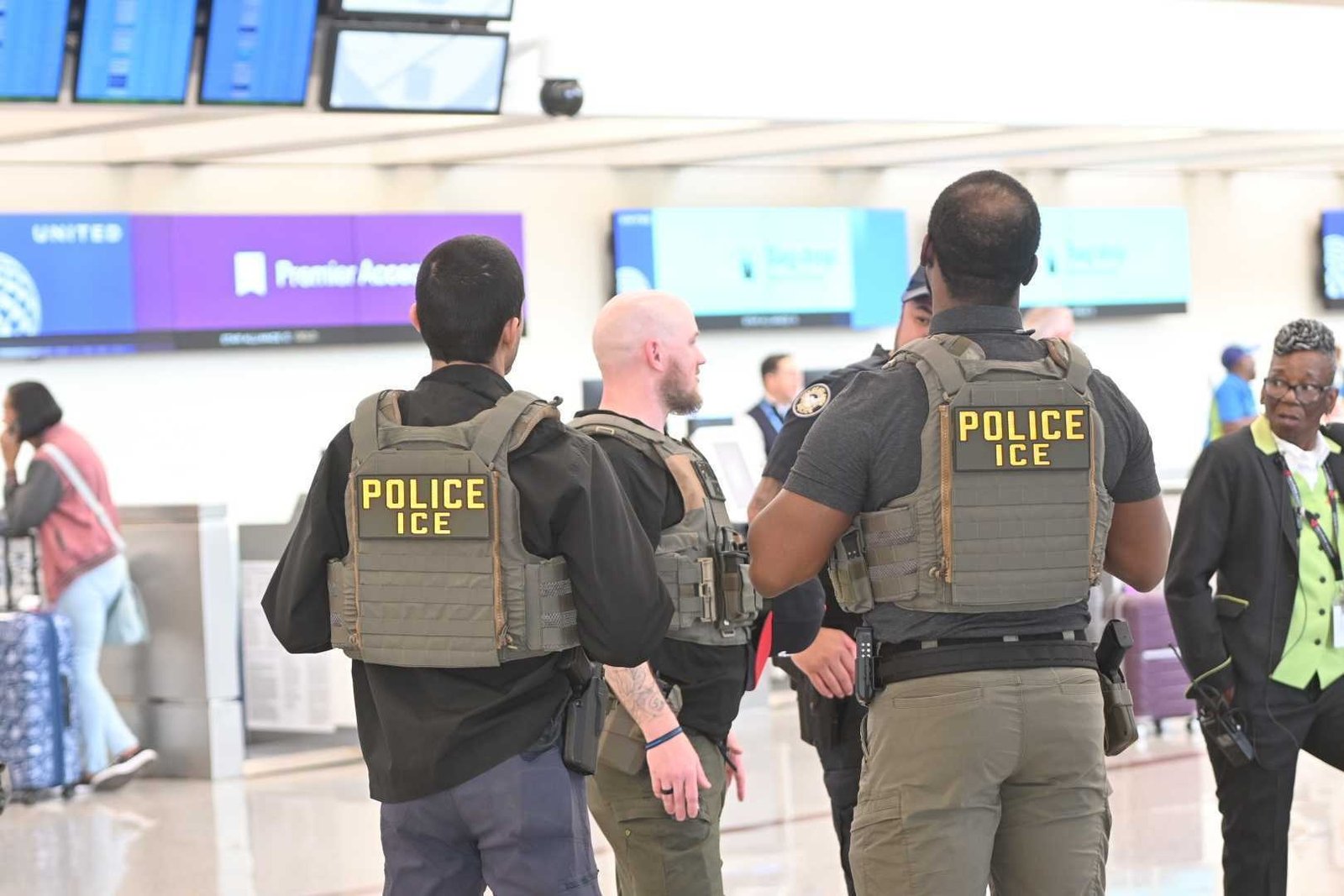
Texas Republican Rep. Chip Roy said separating out funding for Immigration and Customs Enforcement and the Border Patrol from the DHS funding bill “is offensive to the men and women who serve” in those agencies.
“While we are all unified in funding the rest of DHS, we are absolutely horrified that we are blowing up the appropriations process to target those brave men and women who are doing the Lord’s work to keep us safe from cartels, from dangerous actors and from illegal aliens across the streets of America that have been endangering the American people,” he said.
Republicans plan to use the complex budget reconciliation process to fund ICE and the Border Patrol for the rest of Trump’s term without negotiating any new guardrails on immigration agents.
One shutdown after another
Instead of completing the dozen annual government funding bills before their Oct. 1 deadline, lawmakers’ stark differences over funding and policy led to a trio of shutdowns that stalled paychecks for federal employees and wreaked havoc on hundreds of programs.
The first shutdown, which affected much of the federal government, lasted 43 days as Democrats tried unsuccessfully to extend the enhanced tax credits for people who purchase their health insurance from the Affordable Care Act marketplace.
A partial shutdown lasting four days ended in early February when lawmakers approved a stopgap spending bill for the Department of Homeland Security alongside the remaining full-year appropriations bills for other departments.
But lawmakers failed to reach a bipartisan agreement to place constraints on federal immigration agents before the temporary funding bill for DHS expired on Feb. 14, leading to a third shutdown for the department.
Senate Democrats demanded several restrictions on immigration agents after federal officers shot and killed two U.S. citizens in Minneapolis in January. While Republicans control both chambers of Congress, most bills cannot move through the Senate without the support of at least 60 lawmakers.
After nearly six weeks, Senate Republican leaders agreed to remove funding for Immigration and Customs Enforcement and the Border Patrol from the DHS appropriations bill, unanimously sending it to the House for approval in late March.
House hangup
Speaker Mike Johnson, R-La., said at the time a plan to use the complex budget reconciliation process to provide three years of funding for ICE and Border Patrol wasn’t acceptable. He refused to put the Senate-passed bill on the House floor for a vote.
The Senate tried again in early April, sending an identical bill to the House, which Johnson declined to schedule a vote on until Thursday.
The House vote on the DHS appropriations bill happened less than a day after Republicans in that chamber voted to adopt the budget resolution that unlocks the reconciliation process. Republican senators approved the tax and spending blueprint earlier this month.
Congress’ budget resolution isn’t a bill and doesn’t need to go to the president for his signature in order to take effect. It doesn’t actually fund anything, but is designed to help lawmakers plan tax and spending policy for the next decade.
GOP lawmakers intend to use the reconciliation process the budget resolution provides to approve a bill in the coming weeks that will provide up to $140 billion for ICE and Border Patrol. That avoids the need to place any new constraints on federal immigration officers in order to get Democrats’ votes to limit Senate debate.
Members of Congress will, however, still need to find agreement on funding for the rest of government ahead of the next fiscal year, which will begin on Oct. 1.
Another impasse will mean another shutdown, just weeks before the November midterm elections.



