
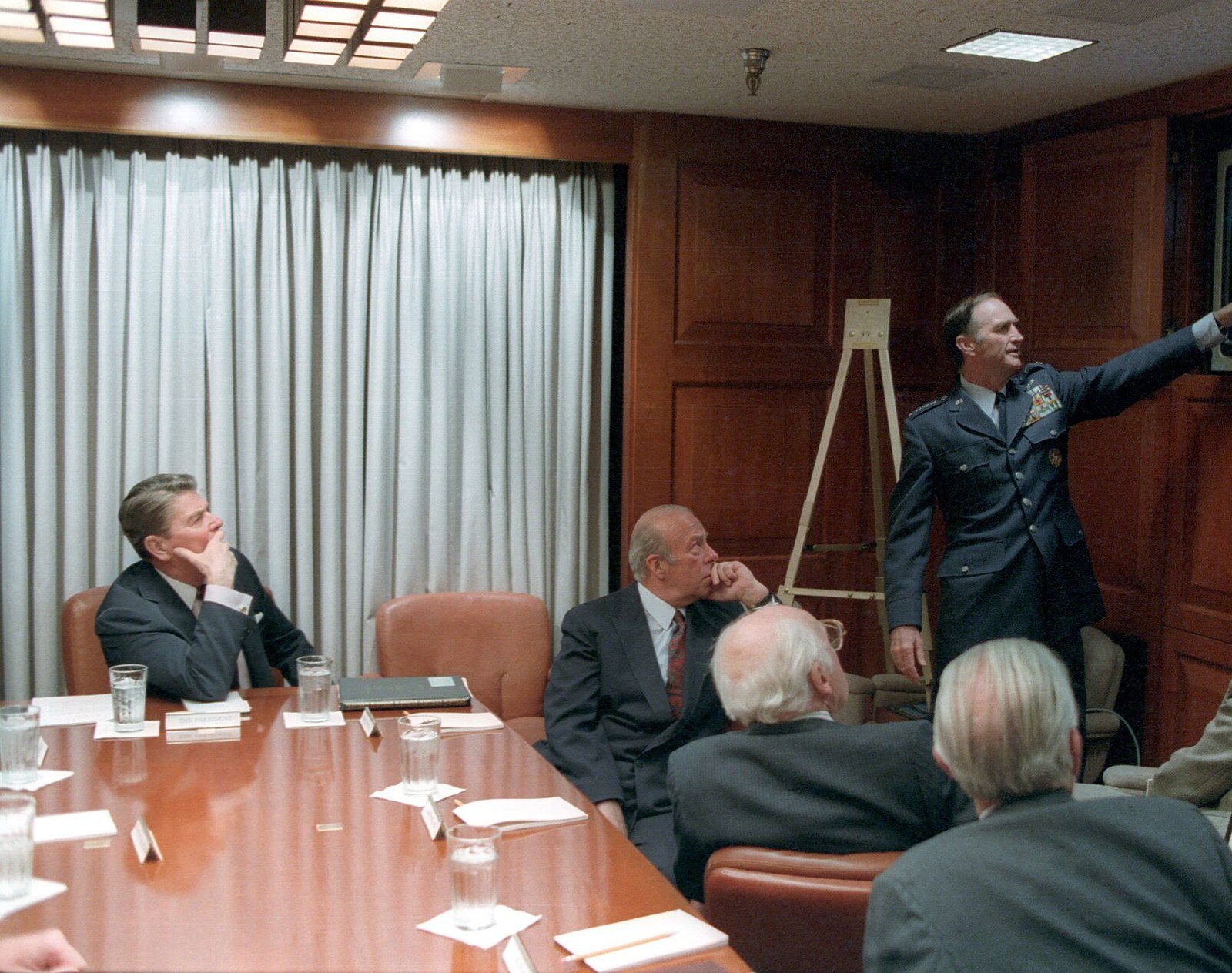
I have long thought that the smartest person in the room doesn’t automatically win. My life experiences have only served to reinforce this theory.
The valedictorian doesn’t always become the CEO. The brilliant policy wonk doesn’t always become the Governor. The person with the longest resume doesn’t necessarily hold the gavel to chair the meeting. So, what does it take to get to the winner’s circle?
Success often belongs to the person who can best read the room. I have toiled around the edges on this observation before, but I think it is time to zone in on the target. That skill, reading the room, requires understanding people, sensing motivations, recognizing insecurities, ambition, fear, ego, jealousy, confidence, weakness, and a myriad of nonverbal forms of communication that people put out without even realizing. It is worth more than a bushel full of Ivy League degrees (sorry, Michael). Human dynamics, not just raw intelligence, determines outcomes.
Politics teaches this lesson faster and more acutely than any other profession. You can be the brightest thinker and can advance the best argument in the world, perfectly crafted and accomplished, but if you don’t understand the person sitting across from you—what they need, what they fear, what they are protecting, what their weaknesses are—you are probably going to lose the day.
In today’s world, people like to pretend that decisions are made on logic alone—they aren’t. They are made on emotion, relationships, trust, history, pride, intelligence, and yes, sometimes revenge. Despite the recent tsunami of AI and quants, the hard truth is the wins of tomorrow will be based on the human ability to read a room, not how well we can plug information into an AI program. Let me add that there is plenty in the tech world to assist in crafting the winning argument, but it will remain in the realm of the individual most capable of reading others and applying these learned practices to a winning argument.
Getting back to the world I actually know a little about, the best political operators I have ever known weren’t always the smartest people academically. Some couldn’t quote a policy paper or explain the purpose of a think tank. But those very same people could walk into a room, shake hands with a dozen people, and within 30 minutes know exactly what matters, who was vulnerable, and who was looking for an exit strategy.
And that is an intelligence of an entirely different kind.
Some folks call it instinct, some call it having a high EQ (rather than IQ), I call it street smarts. Regardless of what you call it, it wins elections, it closes deals, it saves careers, and it sometimes saves disasters.
Forty years in this business have taught me a thing or two. For instance, timing matters. Luck matters. Preparation matters. Tone matters. Knowing when to push back and knowing when to stay quiet and read the room matters.
Politics has some of the worst offenders of people who don’t know how to stop talking and just listen. Some people spend their entire lives talking and vomiting out a constant sea of verbiage, and they never realize that observation is a greater weapon. Their loss.
Next time you are at an important meeting, watch who talks, who interrupts, who needs credit, who never says thank you, and who remembers the names of the janitors. And most importantly, watch who changes when power walks into the room.
Pro tip: people will tell you exactly who they are if you stop long enough to pay attention.
Getting back to my central theme, competence alone will not win the day for you. You can be brilliant and still fail, fearless and not succeed, you can be right and still get crushed. All because you failed to read the room, read the emotions, the pride, the power move, the weakness, you failed to do the emotional sensing necessary to close the deal.
People talk about playing chess when others are playing checkers. Well, the full truth isn’t just about playing on a board people understand, but about fully understanding the player making the moves. It is about awareness.
Leadership is about listening and empathy. It is about learning everything there is to know about those in the room. The best leaders often possess something more valuable than brilliance—it is a thing called perspective. Leaders understand people.
So, lesson of the day: it isn’t enough to be the smartest, you need to read the room.



