
The basics:
- NJBIZ panelists discuss infrastructure and energy challenges in development
- Aging utility systems and permitting delays are slowing projects statewide
- Energy demand from AI, pharma and logistics sectors continues to grow
- Experts called for faster approvals and more infrastructure investment
There was a certain energy about the latest NJBIZ panel discussion.
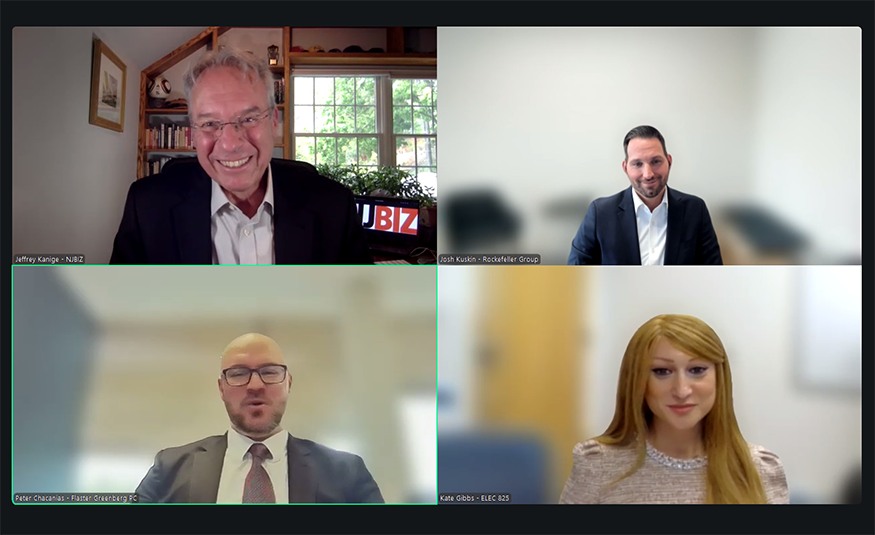
For the April installment in the virtual series, a group of experts convened around the topic of Construction & Development. Moderated by Editor Jeffrey Kanige, participants included:
- Peter Chacanias – counsel, Real Estate and Land Use, Flaster Greenberg PC
- Kate Gibbs – deputy director, Engineers Labor-Employer Cooperative, ELEC 825
- Josh Kuskin – director of design and construction, Rockefeller Group
The buzz during the 90-minute event underscored the importance of infrastructure — how constraints help shape what gets built and where, along with the role those limits play in energy capacity and New Jersey’s development future.
“[I]s energy a defining factor in where people are developing and wanting to go? I’d say the more pressing issue is lack of infrastructure and just the availability of infrastructure,” said Kuskin.
Infrastructure challenges
Infrastructure sets the foundation for everything else; what you can, or can’t, do. And across the board, speakers noted challenges here: whether poor, insufficient or cost prohibitive.
“It’s our roads and bridges. It’s our rail lines. It’s water treatment, water distribution; it’s energy generation, distribution, transmission. All of it,” said Gibbs.
She noted the state’s long – and industrial – history, and the implications of that experience.
“We do have a lot of really old infrastructure, very complicated infrastructure,” Gibbs said. She went on to describe systems mapping imagery as maze-like. Despite those complications, “our utility partners in this state do a really good job of trying to do proactive maintenance and modernization.”
Replay: Construction & Development Panel Discussion
Click through to register to watch the full panel discussion!
Chacanias also highlighted the age issue. He said that just because the infrastructure is there doesn’t mean it’s usable. Particularly when it comes to new, energy-intensive developments, like data centers. “OK, it exists, but can it actually maintain and produce the required energy?”
NIMBY
A new Stockton poll finds that 56% of voters would support banning data centers in their town. And here’s what they had to say about AI in general…
If the answer is no, it presents a whole new series of questions to consider. “Do we update it? Do we build new? If so, where?” Chacanias said.
“The cost of energy is high; it’s going to stay high,” said Kuskin. “That is a little bit more predictable than wondering whether or not you can actually get power to your building or water to your building or sewer or gas, etc.”
‘All of the above’
Solar programs and other energy efficiency design elements or equipment can also help ease the operational burden when it comes to rising energy costs, he said. Chacanias called attention to available state tax credits for certain renewable energy sources, also highlighting solar as “a big thing.”
Additionally, as some clients work to sow solar farms, Chacanias said it can help to diversify energy demand “so that you don’t have to rely strictly on one particular item such as oil.”
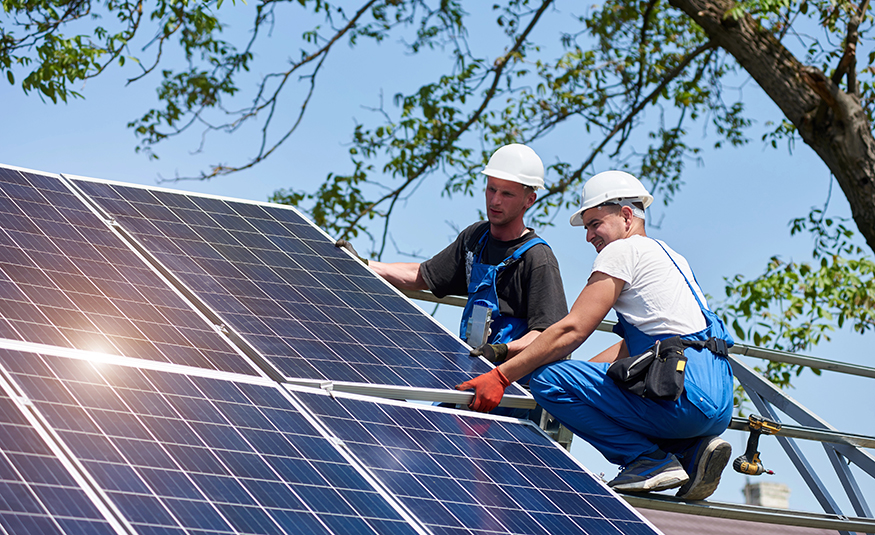
An “all of the above” approach to energy generation has taken hold in New Jersey, particularly following Gov. Mikie Sherrill taking office earlier this year. Gibbs highlighted the necessity. “We need the ‘all of the above’ strategy because every single type of energy generation has a different price tag,” she said.
The state’s shift from a net energy exporter to now importing about 40% of its energy during the Murphy administration has also driven higher costs, Gibbs noted.
In addition, she said, “We lose out on the fact that every dollar that’s spent on infrastructure creates three to four dollars of economic benefit, not just in local payroll taxes and local benefits from folks during construction, patronizing local businesses. So, you lose out on that economic benefit, that four-times economic benefit amplifier.”
Emerging energy trend
But it’s a problem New Jersey can’t afford not to fix. Gibbs went on to note that the industries that driving state economy are typically also large consumers of energy. “We’re the medicine chest of the world, pharma, from research & development to manufacturing, storing to distributing — that takes a lot of energy. Manufacturing, AI, data centers, warehouse and logistics — all of that takes a lot of energy,” she noted. “So, we need to make sure that we’re building that generation to support not only the residential side … but almost more importantly, to make sure that our economy is sustained with energy that they can rely on.”
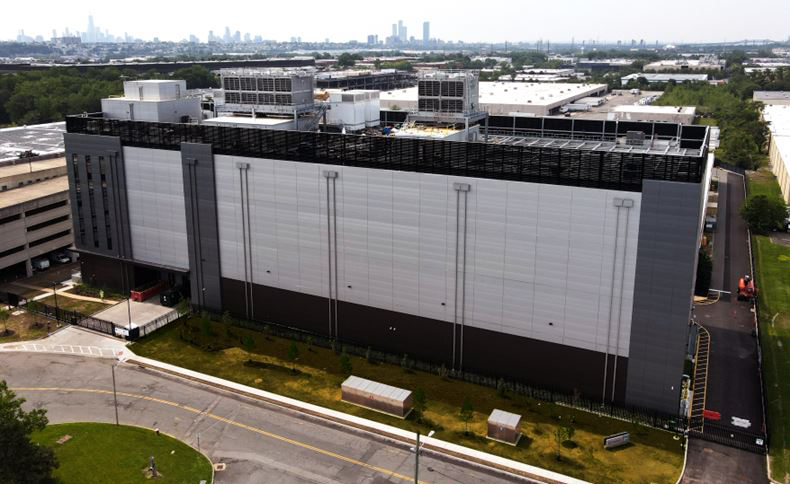
Chacanias also highlighted an emerging trend that goes beyond energy consumption and costs: focusing on energy production itself as a development commodity. “It’s specifically focused on actual ways to produce that energy, as opposed to making use of it,” he explained.
Panelists also pointed to red tape and regulatory hurdles as major constraints on development.
While it pales in comparison to the issues around permitting, Chacanias said energy is “absolutely a factor in terms of the cost effectiveness of certain projects, especially if the project itself revolves around the production of energy.”
The bottleneck
According Gibbs, her organization works with “every single type of infrastructure,” including energy generation, distribution and transmission, which affords keen perspectives.
“[T]his is a basic supply and demand issue, right? We have reduced the supply. Demand has continued to grow … And as we have more and more technologies coming online, it’s only going in one direction,” she said.
So, the answer is to build.
Industry recognition
Meet the 2026 NJBIZ Leaders in Real Estate, Construction and Design and Top Projects honorees here.
However, uncertainty across costs and labor plays an outsized role in shaping the state’s built landscape. Throughout the forum, panelists also highlighted a dense and layered regulatory system, understaffed agencies, home rule, NIMBY-ism (Not In My Backyard) and other contributing factors.
There’s also the question of space, Chacanias said: Where does it go? While the northern part of the state has existing infrastructure to contend with, less-developed areas of presumed opportunity in South Jersey lack it entirely. That reality underscores the notion that availability of infrastructure is just the starting point for development.
With space in short supply in the north, industrial development, in particular, has moved toward the bottom half of the state. “I’m working on a site right now that doesn’t have water or sewer, and it’s challenging,” Kuskin said.
Costs adding up
Those barriers can add substantial costs and complexity to projects. “You’re having to sort of broker and bridge those gaps,” said Kuskin. “Who’s going to build it? Who’s going to pay for it? Who’s going to own and maintain it? You have challenges with easements and trying to get access through areas that the piping and the infrastructure needs to run through. So, there’s a whole host of issues that come along.”
Gibbs said federal funding can and has helped. “But the size of the problem, when you look at just how much we need … There’s some estimates to say we need 70 to 80 billion dollars of water infrastructure investment over the next few years.”
She noted projects like these require continued long-term capital. And that federal funding can take time. “The other thing that’s really challenging is that a lot of this money was made available. It goes on a spreadsheet and then it doesn’t get out the door. So there’s a gap between, we’ve put money toward something and then the groundbreaking and actually deploying those dollars.”
Compounded by the local regulatory environment, those delays can grow exponentially, increasing the burden of risk. “One of the biggest hurdles that I think we keep running into, and it’s these conflicting goals within the state of New Jersey, which is we need housing, we need infrastructure, we need energy, and we need to protect the environment,” said Chacanias.
‘Time is the killer of all things’
Kuskin underscored that point. “One of the biggest factors in all this is just time that it takes to actually build out the infrastructure.” He also mentioned money along with the uncertainty, adding, “And time is the killer of all things.”
As infrastructure and utility infrastructure continue to see “tremendous” public investment, Gibbs noted an uptick in public and utility work versus private that she described as concerning. “And again, a lot of that is because of the high cost, the long time periods and uncertainty that are making it hard for projects to pencil out. … Addressing the regulatory environment and figuring out how we can reduce those timelines will help reduce costs, will help that project pipeline.
“Making sure that we can make the appropriate investments in our infrastructure to support the development that folks like Josh and Peter want to do.”
The post Panel: Infrastructure hurdles slow NJ construction growth appeared first on NJBIZ.



