
A Republican state lawmaker is pushing for reform after a $500 million no-bid school contract was awarded to a politically tied developer in Newark.
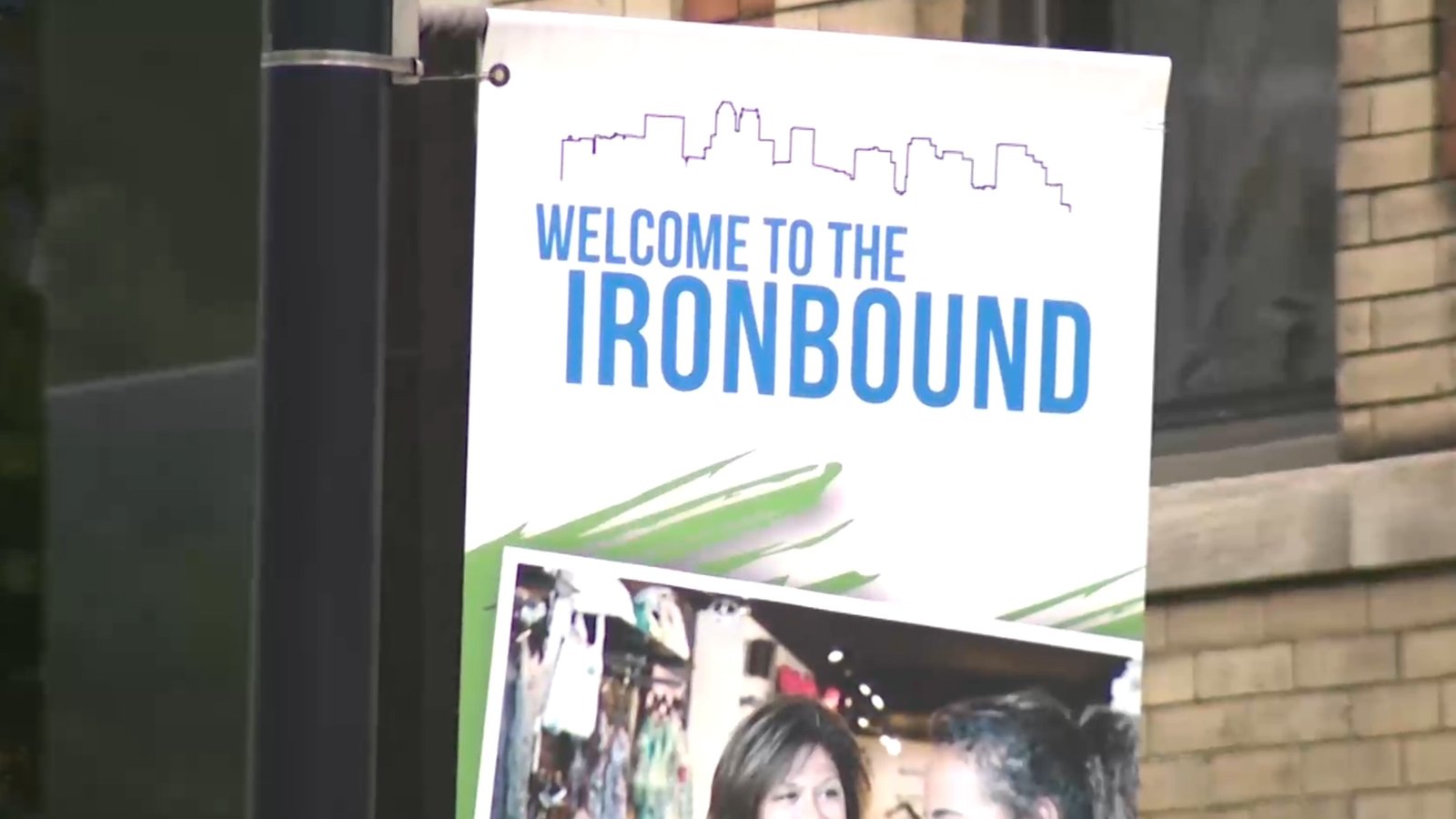
The lease proposal, for 56 Freeman St. in the Ironbound neighborhood, is under state review. It would be an unusually large amount to spend on a school building, secured in what critics called a backroom negotiation.

The school board faced scrutiny for not identifying the developer behind the limited liability corporation, later identified by NJ Spotlight News as Scott Fields, a donor to Mayor Ras Baraka’s unsuccessful gubernatorial bid.
Baraka denied any involvement, citing board independence. School officials including Superintendent Roger Leon have not explained why Fields was chosen or if others were considered.
Now Assemblyman Alex Sauickie (R-Jackson) has introduced two bills, he said, to “restore accountability.” Aimed at curbing taxpayer waste and no-bid deals, his legislation would help prevent political insiders from “quietly” securing decades-long contracts behind closed doors, he said.
Voter approval
The first bill, A4985, would require approval from voters or the local board of school estimate for any school lease exceeding 15 years.
While a board of school estimate – a hybrid group of city and school officials – typically approves large capital projects or bond issues, Sauickie said, a voter referendum vote would force a deeper level of transparency for the public.
“That’s really the driver here,” he told NJ Spotlight News. “The current half-billion-dollar deal that is being talked about doesn’t have a lot of detail with it – I’ve tried.”
The second bill, A5032, would require low-wealth districts that receive construction funding from the New Jersey Schools Development Authority to solicit at least three lease proposals before entering into an agreement with a developer to build and lease a school building.
“Very similar three-bid processes are already at the local level for other things,” Sauickie said. “Why wouldn’t we do that for something so large?”
He said he recently met with the state education commissioner, Lily Laux, to share his concern that “politically favored developers” are getting “sweetheart arrangements” involving billions of dollars from taxpayers, without meaningful public scrutiny or competitive review.
“I don’t think I’m the only one who thinks this thing needs a little bit more scrutiny,” said Sauickie,, noting that Newark’s mayor has also said the price tag is high and suggested that the state should ideally handle such construction.
Advocates, including the Education Law Center, which advocates for New Jersey public schoolers, say the state has failed to provide capital funds to districts like Newark at the level required by the court. Because the state has been slow to approve such funding, districts have turned to a “pay-as-you-go” approach that covers some repairs but is often insufficient, leaving their crowded, more than 100-year-old school buildings to deteriorate further.
Strategic workaround
Newark’s school board and superintendent have framed the $500 million proposal as a strategic workaround to state construction delays and student crowding, while critics question how they can justify a lease that costs nearly four times as much as constructing a $130 million high school – especially since the district would not own the building once the agreement ends.
Critics also point to another deal in Newark as precedent: the nearly $300 million lease for the Newark School of Architecture and Interior Design at the site of the former St. James Hospital, also in the Ironbound.
When that agreement was struck in 2021, the district signed a $160 million, 20-year lease. A May 2025 amendment bumped that total by nearly $136 million and added 10 years to the timeline, Chalkbeat reported.
The developer on that project, Albert Nigri, CEO of Summit Assets, is also a political donor who has contributed to a Baraka-aligned PAC, according to the Federal Election Commission. Nigri told NJ Spotlight News on Tuesday that he was not selected for that lease because of any political ties, did not talk with the mayor about it and does not recall contributing to a Baraka-aligned PAC.
“I own the building, and they wanted to be in that neighborhood, and they couldn’t find that size of a school in this vicinity,” Nigri said of his lease agreement with the district.
Journalist Ian Shearn first published that connection on his independent website.
Baraka, in a statement, told NJ Spotlight that he “has no authority over the Board of Education or the schools.” He criticized New Jersey lawmakers, including at least 20 Republicans, who allege that Newark is mismanaging money.
“Republicans have made Newark a target for years with illegitimate, ultraconservative and sometimes racist attacks,” Baraka said. “These accusations that insert me into school board decisions are baseless and defamatory.”
$12 billion in school aid
The assemblyman, Sauickie, noted that New Jersey taxpayers contribute more than $12 billion annually in state aid to schools – including more than $1 billion to Newark – and argued that oversight of school construction spending is crucial.
Critics also warn that this lease strategy for school buildings could backfire politically for lower-income districts. It undermines the legal principle that such districts deserve more state aid, they say, making their prioritization for state taxpayers increasingly difficult to justify.
“When large-scale capital investments are financed in ways that draw from operating resources — or appear disproportionate in scale — it risks creating a narrative that undermines support for state aid to high-needs districts,” said Tony Trongone, head of Great Schools of New Jersey, which represents low-wealth districts.
“That perception, whether accurate or not, makes it more difficult to defend the very principle that funding should follow student need.”



