
Ever since the release of Gareth Evans’ “The Raid”, the action genre has undergone a notable resurgence. Similar to the impact of John Woo’s works in the 1980s, there seems to be a growing demand for more grounded action cinema that does not rely on CGI, but instead on practical effects and refined action choreography. Kenji Tanigaki has been one of the many people behind the camera responsible for this particular aspect, contributing his expertise to projects such as “Rurouni Kenshin”, “Raging Fire” and “Twilight of the Warriors: Walled In”.
Considering his vast experience within the genre, the news of him directing a feature himself was met with considerable interest among action fans, with his latest project “The Furious” already receiving rave reviews from critics and audiences alike. And indeed, while its story may not break much new ground, its approach to action, fight scenes and character development is not only noteworthy, but also proof that Tanigaki knows how to combine a simple narrative with gripping martial arts and effective action storytelling.
The Furious will screen on US theaters from May 29
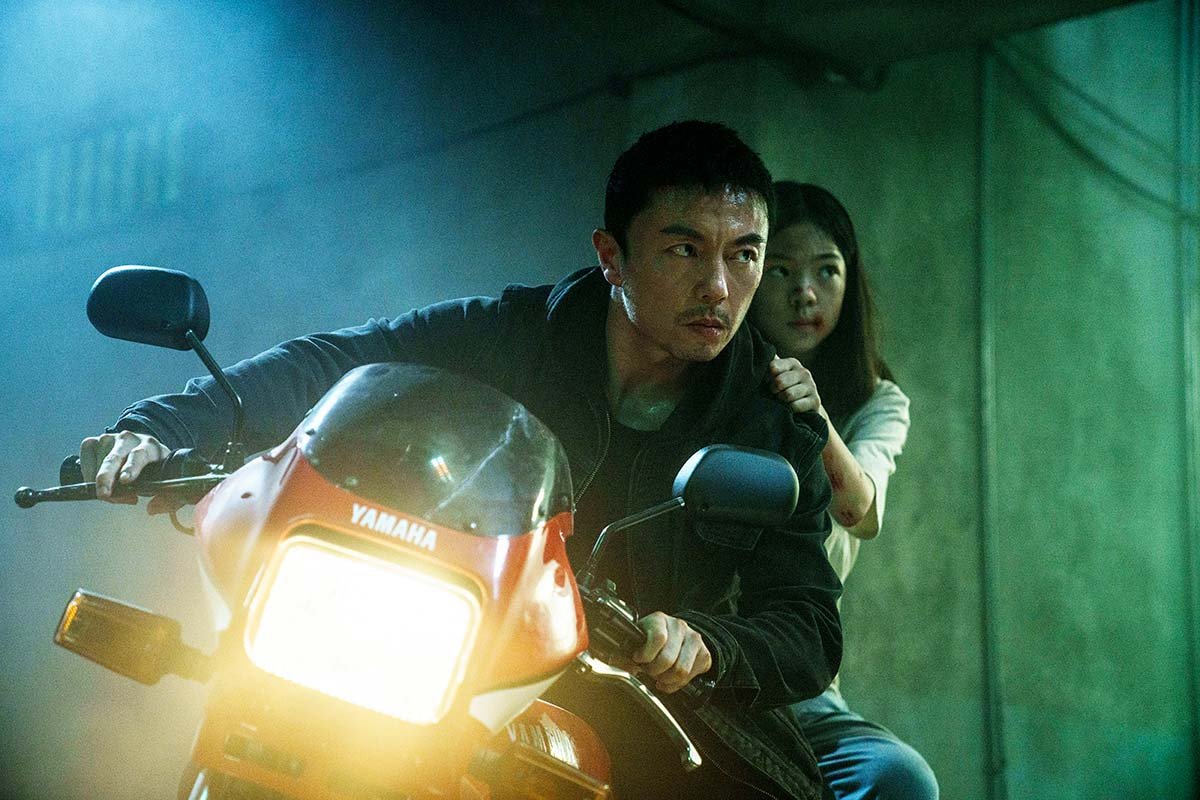
Wang Wei (Xie Miao) is a mute handyman who once fled China in order to start a new life. He wants to avoid trouble and remain unnoticed – an attitude which has caused frequent arguments between him and his teenage daughter (Yang Enyou). However, when she is kidnapped by a group of human traffickers, Wang realizes he has to take matters into his own hands if he wants to bring her back safely.
While searching for the men responsible, he crosses paths with Navin (Joe Taslim), an investigator who is likewise trying to uncover more about the criminal syndicate and the whereabouts of his missing wife. The two men eventually agree to join forces, as the organization proves too powerful to take on alone. Apart from controlling large parts of the underworld and paying corrupt police officers to turn a blind eye to their crimes, the head of the syndicate also commands a small but highly effective group of enforcers and assassins (among them Yayan Ruhian and Brian Le), who soon begin hunting the two men attempting to dismantle their operation.
Although its story may appear simplistic, one has to consider the tradition Tanigaki’s feature consciously embraces. On the surface, “The Furious” has much in common with numerous action films from the 1980s, whose narratives often served primarily as a framework for fights, shootouts and large-scale destruction. However, drawing on his experience within the genre, Tanigaki employs other means to convey character development and emotion, such as the contrast between different fighting styles as well as the carefully structured dramaturgy within the action scenes themselves.
Xie Miao – a master of wushu – appears more traditional and precise in his movements, while also emphasizing the emotional bond his character shares with his daughter and his growing frustration as time slowly runs out. Taslim’s Navin, on the other hand, employs a style that feels more direct and personal, giving his confrontations a raw physical edge, with his final encounter against Yayan Ruhian’s character standing out as one of the film’s highlights.
Interestingly – and almost paradoxically – “The Furious” feels traditional and modern at the same time. As mentioned before, Tanigaki’s approach to the action scenes is remarkably elegant, showcasing his talent for choreography alongside a clever use of camera movement and editing. Each sequence delivers considerable impact (pun intended), while also allowing the audience to fully grasp both the emotional and physical strain experienced by the characters.
In this regard, the sequence set in the cold storage facility is an excellent early example of how these elements come together, while simultaneously paying tribute to the iconic fight scene in Bruce Lee’s “The Big Boss” – and it is far from the only Lee reference within “The Furious”. Thanks to its awareness of its cinematic roots and its reliance on practical action instead of CGI spectacle, Tanigaki’s feature becomes an intense and highly entertaining genre film that should satisfy viewers looking for grounded yet thrilling action cinema.
“The Furious” is an impressive action feature built around practical effects, outstanding choreography and storytelling through movement. Kenji Tanigaki demonstrates a remarkable understanding of the genre and shows what modern action cinema can still achieve without relying heavily on CGI, while remaining deeply respectful of the traditions of East Asian martial arts cinema.



