
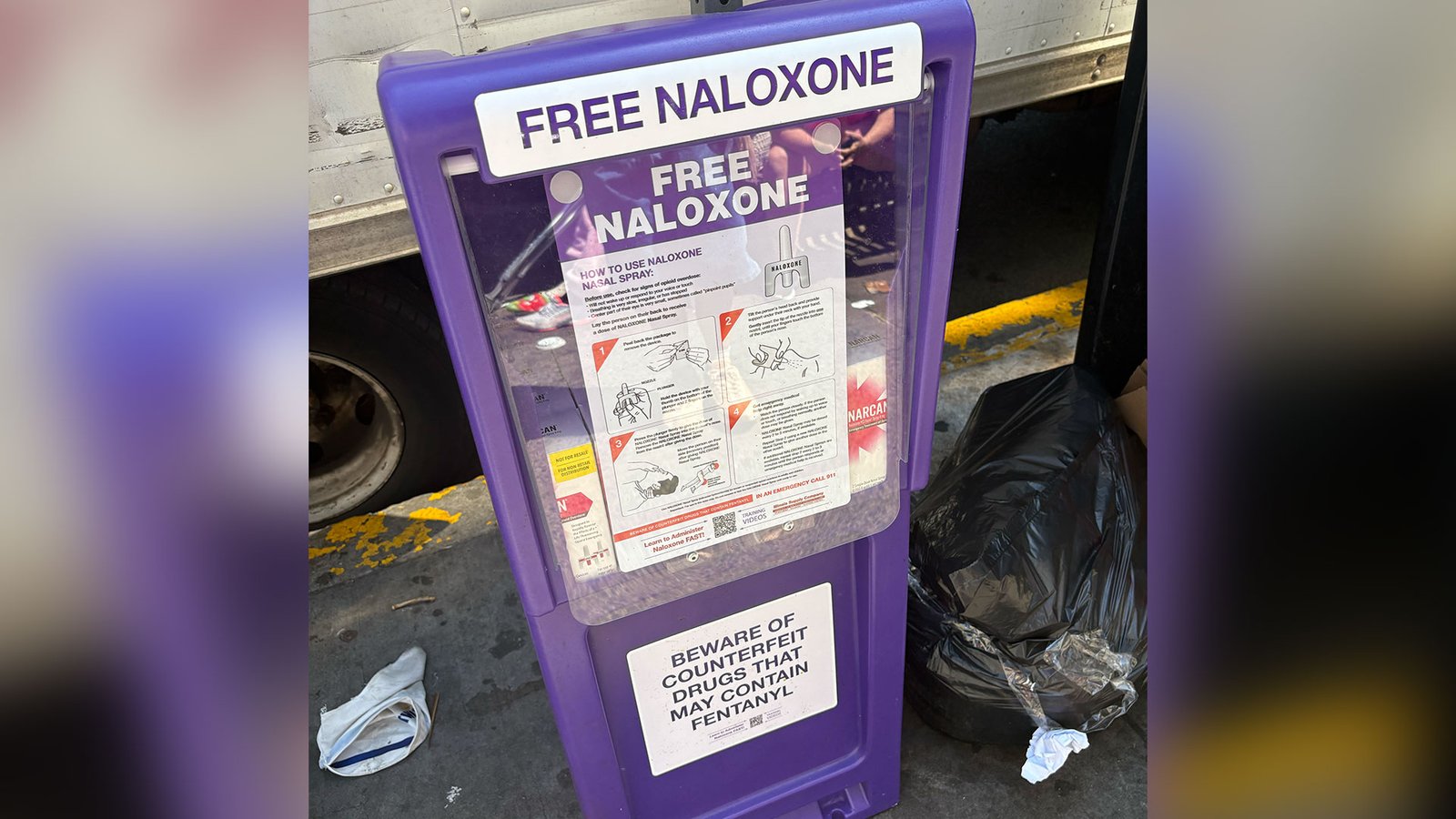
Steps from a busy 7-Eleven in Paterson, a self-serve kiosk offers free tools that anyone can use to help save a life: boxes of naloxone, the medicine that can reverse the effects of opioids.
On a recent day, a woman who identified herself only as Anna was all too familiar with the dangerous effects of heroin and other illicit injectable drugs. She once came to the rescue with a naloxone dose, she said.

“Restaurants — people use the bathrooms and OD in them,” Anna said. “The 4th Ward — that’s where all the dopeheads are at and where they are free to run all day long.”
Among the state’s 21 counties, Passaic County in 2024 ranked eighth-highest for unintentional fatal overdoses from opioids and other illicit drugs, according to Department of Health data. Paterson, the county seat, logged 107 such fatalities.
The city, about 22 miles northwest of Manhattan, now has five naloxone kiosks as part of a growing around-the-clock initiative led by Black Lives Matter Paterson. Boxes of naloxone on the street can function as immediate first aid, particularly when help isn’t available from harm reduction centers.
“We have two centers but they are only Monday through Friday, and unfortunately addiction doesn’t stop at certain hours,” Precious Kirby, the group‘s community education and communications director, told NJ Spotlight News.
 Credit: (Taylor Jung/NJ Spotlight News)
Each kiosk can hold roughly 50 boxes of naloxone, often called by the brand name Narcan. The medicine can be expensive or difficult to access for vulnerable populations, and Kirby said demand is significant.
“We have already seen these kiosks emptied out, and it has only been here for less than a week now,” Kirby said of the latest installment near the convenience store.
‘Not shunning others’
Harm-reduction specialists working with Black Lives Matter Paterson canvass neighborhoods, speaking about overdose prevention and telling how to administer naloxone in an emergency.
One specialist, who asked to be identified only as Jei, said the work is rooted in community care and reducing stigma surrounding substance use.
“What we are seeing is an opioid overdose reversal with people not shunning others,” Jei said. “After hours, who do they have to turn to? They have each other, so we have to put something out there for them to help each other.”
Tori Sutera, another specialist working in the neighborhood, said many overdoses involve substances like the pain drug fentanyl. A fentanyl dose equal to a few grains of salt is enough to kill.
“It’s not that people knowingly are putting these things in their bodies,” Sutera said. “It used to be heroin but now heroin is being laced with other chemicals, and it is doing horrible things to our people. It’s not lack of control, but lack awareness.”
Dozens of additives
Overdose deaths nationally peaked at 110,000 in 2022 and have declined for three straight years, according to provisional data from the Centers for Disease Control and Prevention. In 2025, the total dropped almost 15% from a year earlier, to 70,000.
Public health experts attribute the decline to several factors, including expanded naloxone access, increased addiction treatment, more harm reduction programs and greater public awareness. Still, deaths spiked in Arizona, Colorado and New Mexico. As fentanyl supply chains are shut down, dozens of dangerous new additives are showing up in illicit drug supplies, experts say.
New Jersey is following the national downward trend. The state Department of Health recorded more than 2,900 overdose deaths in 2022, down about 300 from a year earlier. Such deaths declined across all racial and ethnic groups from 2022-2023, the first time that happened in a decade. Declines continued through 2024.
In 2023, then-Gov. Phil Murphy announced what his administration called a “nation-leading” naloxone initiative. Gov. Mikie Sherrill, who took office in January, has proposed maintaining funding.
Free doses are available to anyone 14 years or older, anonymously, at more than 700 participating pharmacies. Harm reduction centers, at fixed addresses and mobile, provide naloxone, sterile syringes, overdose prevention education and connections to addiction treatment and recovery services. And the state’s Naloxone Direct program supplies free doses to community groups, libraries, shelters and recovery centers in addition to first responders.
Black Lives Matter Paterson, meanwhile, is working on a sixth vending site.
“It is making harm reduction accessible for everyone,” Kirby said.



