
Welcome back to World Brief, where we’re looking at the United States’ military presence in Poland, Mexico expanding trade ties with the European Union, and greater collaboration across the Asia-Pacific.
World Brief will be off on Monday, March 25, for the U.S. holiday of Memorial Day.
Welcome back to World Brief, where we’re looking at the United States’ military presence in Poland, Mexico expanding trade ties with the European Union, and greater collaboration across the Asia-Pacific.
World Brief will be off on Monday, March 25, for the U.S. holiday of Memorial Day.
‘We Don’t Know What This Means Either’
Just weeks after U.S. Defense Secretary Pete Hegseth canceled the deployment of 4,000 military personnel to Poland, U.S. President Donald Trump issued an about-face on Thursday—leaving NATO allies bewildered by Washington’s flip-flopping commitment to Europe’s security.
“Based on the successful Election of the now President of Poland, Karol Nawrocki, who I was proud to Endorse, and our relationship with him, I am pleased to announce that the United States will be sending an additional 5,000 Troops to Poland,” Trump wrote on Truth Social.
Earlier this month, the U.S. Defense Department announced that it would be reducing the U.S. military presence in Europe, starting with withdrawing 5,000 troops from Germany. Two weeks later, Hegseth also canceled an armored brigade’s planned nine-month rotation to Poland.
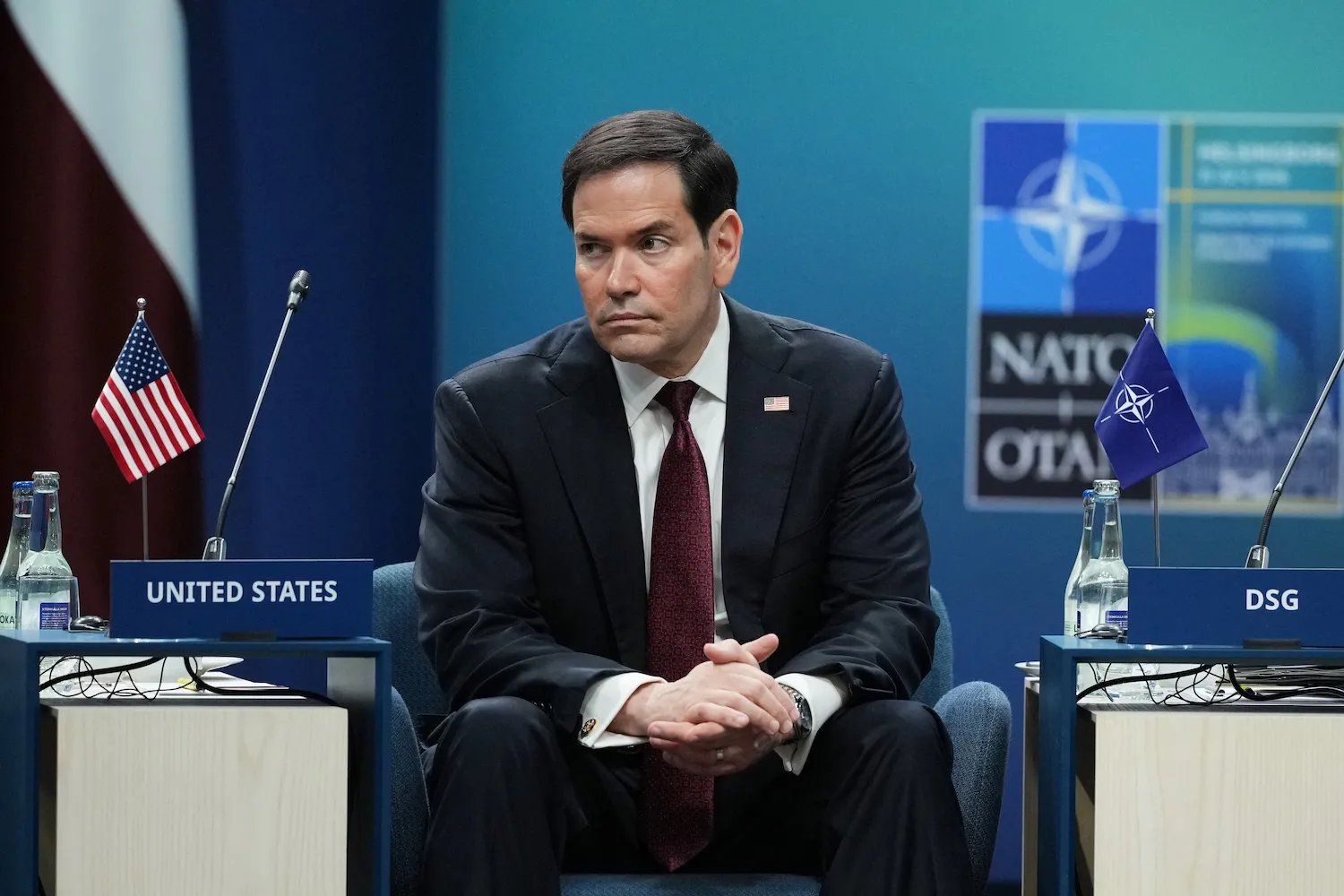
U.S. Secretary of State Marco Rubio insisted on Friday that these decisions were “not a punitive thing. It’s just something that’s ongoing.” “Every country has to constantly reevaluate what their needs are, what their commitments are around the world, and how to properly structure that,” Rubio told the press.
However, European leaders found the timing of the troop withdrawals suspect; the Pentagon’s initial announcement came shortly after German Chancellor Friedrich Merz accused the White House of lacking a war strategy in Iran and said that Washington was being “humiliated” by Tehran. Merz made those comments on April 27. Two days later, Trump wrote on Truth Social that “The United States is studying and reviewing the possible reduction of Troops in Germany, with a determination to be made over the next short period of time.” The next day, he wrote a post criticizing Merz. The day after that, the Defense Department said it was pulling troops from Germany.
But while there seemed to be a clear cause-and-effect to explain the withdrawal from Germany, Hegseth’s decision two weeks later to also cancel the deployment of 4,000 troops to Poland caught many off guard—including, according to the Wall Street Journal, Trump himself. Now, Trump has apparently reversed course on Poland.
The White House’s decision-making “is confusing indeed and not always easy to navigate,” Swedish Foreign Minister Maria Malmer Stenergard told reporters on Friday. Even some U.S. defense officials expressed confusion, with one telling The Associated Press: “We just spent the better part of two weeks reacting to the first announcement. We don’t know what this means either.”
But as much as NATO members appear surprised by the United States’ U-turn, they are also relieved. “I thank the President of the United States, Donald Trump, for his friendship toward Poland and for the decisions whose practical impact we see very clearly today,” Polish President Karol Nawrocki wrote on X.
NATO chief Mark Rutte offered similar praise on Friday while stressing that Trump’s decision would not change the alliance’s push to make European members less dependent “on a single ally, the United States.” Rutte announced that NATO would spend hundreds of billions of dollars on defense in the coming years to help reach the alliance’s 5 percent minimum defense spending pledge.
Rutte’s messaging is likely an effort to appease the White House, which has repeatedly criticized Europe for not bearing the burden of its own security. “I think there’s a broad recognition that there are going to be eventually less U.S. troops in Europe than there has historically been for a variety of reasons,” Rubio said on Friday. The secretary of state added that Trump’s disappointment with Europe would be discussed during NATO’s leaders’ summit in July.
Today’s Most Read
What We’re Following
Diversifying exports. Mexico prepared to sign a free-trade agreement with the European Union on Friday that aims to reduce both sides’ dependence on the United States. The pact, which expands a preexisting trade deal that only covered industrial products, now includes duty-free access for almost all goods and services, including farm produce and digital trade.
Bilateral trade between Mexico and the EU has increased by 75 percent over the past decade. With Friday’s deal, Mexican officials estimate that annual exports to the EU will increase from around $24 billion to $36 billion by 2030; EU exports to Mexico are worth around $65 billion in goods annually.
“This summit means more than trade; it’s a geopolitical statement,” EU foreign-policy chief Kaja Kallas said on Thursday ahead of the signing. Both Mexico City and Brussels are hoping to diversify their exports away from Washington to counter Trump’s sweeping tariffs. However, the deal—despite being ready to sign a year ago—was heavily delayed due to the EU prioritizing its free-trade agreement with South America’s Mercosur bloc as well as negotiations with Australia, India, and Indonesia.
Calls for multilateralism. Trade envoys gathered in China on Friday for a two-day Asia-Pacific Economic Cooperation (APEC) conference focused on bolstering multilateral cooperation, addressing supply chain crises, and improving trade imbalances. Members of APEC account for nearly half of all global trade.
“The more turbulent the times, the more we must adhere to seeking common ground while reserving differences, working together to overcome difficulties, striving to reach more consensus, leading the Asia-Pacific economy through the crisis, and injecting confidence into the global economy,” Chinese trade representative Li Chenggang said during APEC’s opening ceremony.
But Li’s message was slightly undercut merely by his presence. Li revealed on Friday that he would be chairing the meeting instead of Chinese Commerce Minister Wang Wentao, who was unable to attend due to “urgent official business.” However, one attendee told CNBC that Wang was expected to return.
A blow to the CHP. A Turkish appeals court ruled on Thursday that the 2023 congress of the Republican People’s Party (CHP)—during which Ozgur Ozel was chosen to be the party’s leader—should be annulled, citing unspecified irregularities. The unprecedented decision stripped the opposition party of its current leadership and reinstated Kemal Kilicdaroglu as its chair.
Ozel is a fierce ally of imprisoned Istanbul Mayor Ekrem Imamoglu, whom experts once viewed as the strongest electoral challenger to Turkish President Recep Tayyip Erdogan. Kilicdaroglu, meanwhile, is considered a divisive leader who—after losing to Erdogan in 2023—lacks the support needed to reenergize the CHP. Turkey’s next presidential vote is not until 2028; however, Thursday’s ruling increases the likelihood that Erdogan calls an early election to try for another term.
The CHP denounced the ruling as a “judicial coup” on Friday and vowed to fight it. Experts warned that if the decision was upheld, the courts could have greater influence over party leadership and ultimately sway democratic practices. The state, though, maintains that the judiciary is independent, and Erdogan’s government denies targeting political dissidents.
Odds and Ends
Why did the world’s most fearsome dinosaurs have such tiny arms? For the first time in history, paleontologists might have an answer. According to a new study published on Wednesday, large theropods such as the Tyrannosaurus rex might have relied on their heads to attack prey, meaning that over time, their arms (getting little action) evolved to be smaller. “It’s a case of ‘use it or lose it,’” said Charlie Scherer, one of the study’s authors. “The arms are no longer useful and reduce in size over time.” Clever girl, indeed.



