
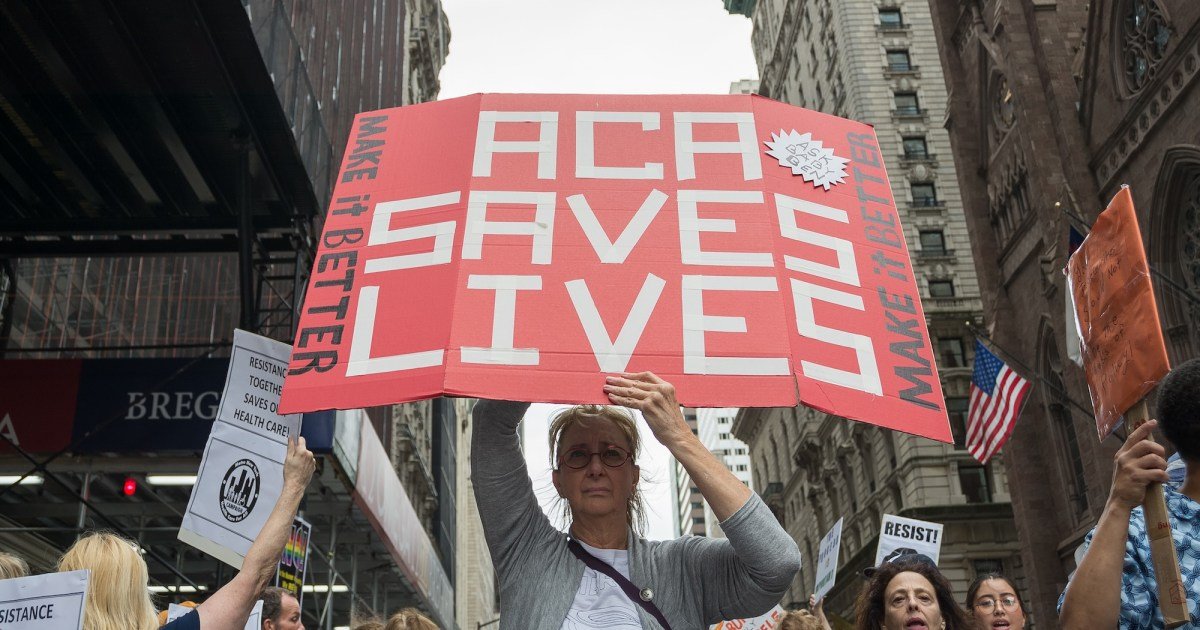
“Our politicians like to say that farmers and independent business people are the backbone of our economy,” a farmer told Mother Jones. “They are doing this and breaking our backs.”Albin Lohr-Jones/Pacific Press/Zuma
Pennsylvania bike shop owner John Ronca has been buying health insurance through the Affordable Care Act marketplace for over a decade. Last year, with enhanced ACA tax credits enacted under the Biden administration, the premiums for his gold plan—the second-highest tier, which includes lower deductibles and often more flexibility in seeing specialists—tripled. Ronca decided to go for a bronze plan with a higher deductible to make sure he, his wife, and his young daughter were still insured. Now he’s putting off surgery for carpal tunnel syndrome because he can’t afford to pay for it in full. His family’s combined deductible is $14,000.
“I was really hoping to have that taken care of, but with the new deductible and the new plan, I’m pretty much pushing that off,” Ronca told me, “and owning the bike shop, my hands are my money makers.”
“If Congress had to have a Bronze ACA plan…it would change immediately.”
Americans are facing an affordability crisis, and health care costs are a major contributing factor. According to a new report from the nonpartisan health policy organization KFF, the average ACA marketplace deductible grew by about $1,000 per person, or around $3,000 per family, since 2025. That’s in part because families like the Roncas are switching to lower-tiered plans with higher deductibles as the premiums for platinum, silver and gold plans become simply unattainable. It’s an unsurprising response, says KFF senior policy analyst Emma Wager, but it comes with a risk.
Families who switch are taking a chance “based on the fact that they’re assuming that they’re healthy, and that their family is healthy, and they won’t need that much care,” Wager says, “but they’re not all going to be correct about that for the coming year.”
Earlier this year, for example, when Ronca’s daughter had an infection and abscess in her lip, the required procedure ended up costing his family more than $2,000.
Already on a bronze ACA plan for his family, Iowa-farmer Seth Watkins seriously considered forgoing health insurance for himself this year so that his wife and two children—both adults under the age of 26—could better afford it. Their combined deductible this year is around $20,000.
When Watkins’ family had employer-provided insurance through his wife’s job as a teacher, getting an X-ray was easy. Now, he says, there’s always a debate as to whether or not it’s worth it, cost-wise, and whether insurance will even cover it.
“If Congress had to have a Bronze ACA plan,” Watkins tells me, “They would not like it one bit. It would change immediately.”
Anthony Wright, the executive director of Families USA, a nonprofit pushing for health care reforms that benefit everyday people, told me that the premium spike is causing a “huge health care affordability crisis” and will continue to until enhanced tax credits—an extension for which passed the House in January, but the specific proposal died before it could be voted on in the Senate, a fault of Republicans—are restored.
There’s also the added pressure of Medicaid work requirements, which serve in part to push more people—often those who already work, but cannot afford insurance—into the marketplace.
“We’re going to have a dramatic [increase] in the people who are uninsured and also underinsured,” Wright said, “and that’s going to put strain on the health care system that we all depend on.”
Watkins is very concerned about how his local hospital will fare under those circumstances, and about the effects of health crises on people like family farmers.
“Our politicians like to say that farmers and independent business people are the backbone of our economy,” Watkins says. “They are doing this and breaking our backs.”
Ronca is in full agreement with Watkins as a fellow small business owner. “Now you’ve got a ballroom coming, we’re in a war that’s billions of dollars,” Ronca said, “but no one talks about what we need—healthcare.”



