
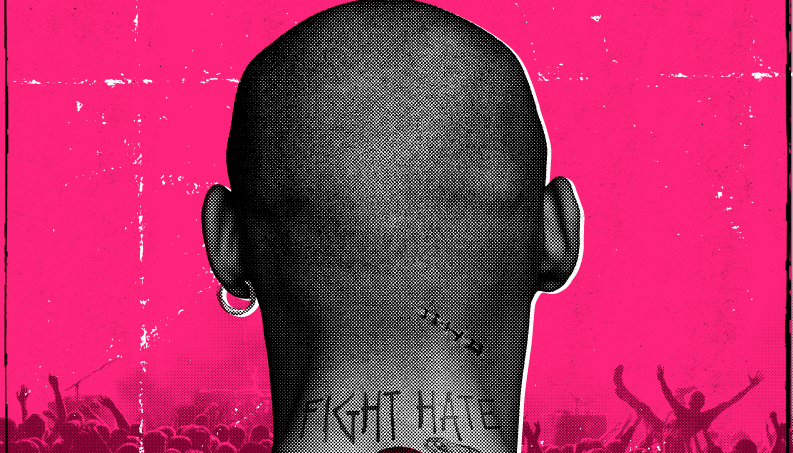
(Music: “No One Is Perfect” by HoliznaCC0)
Anne Brice (intro): This is Berkeley Talks, a UC Berkeley News podcast from Strategic Communications at Berkeley. You can follow Berkeley Talks wherever you listen to your podcasts. We’re also on YouTube @BerkeleyNews. New episodes come out every other Friday. You can find all of our podcast episodes, with transcripts and photos, on UC Berkeley News at news.berkeley.edu/podcasts.
(Music fades out)
Hannah Weisman: Welcome to the headlining event for our second, now annual, I think we can safely say, Jewish Arts and Bookfest at The Magnes Collection of Jewish Art and Life. I’m Hannah Weisman, executive director of The Magnes, and it’s my pleasure to welcome all of you and our speakers for our headlining event today.
The Magnes is a community-supported museum at UC Berkeley dedicated to generating new knowledge and understanding of Jewish cultures, which we do primarily through the extraordinary collections in our care that I hope you’ve had a chance to see a little bit of today.
The museum’s holdings span space, time, and medium, making The Magnes the only museum of its kind at a public research university in the United States. I invite you to come back over the next couple of weeks to enjoy the final days of our current exhibition, Flowing Through Time and Tradition, or to join us this summer for our annual community conversations to share your feedback and thoughts for the museum.
Today’s event is the result of a full year of work and collaboration. Please join me in extending an exuberant thank you to The Magnes’ learning and engagement coordinator, Dan Alter. Is he in the room?
(Crosstalk)
He was? We’ll thank him again. I also want to thank the members of the planning committee, Jo Ellen Green-Kaiser, Robby Adler Peckerar, Hila Amram, Laura Cogan, and Dan. We also thank our presenting partners, JCC East Bay, J. The Jewish News of Northern California, Jewish Community Library, and New Lehrhaus.
Thank you too to the entire Magnes staff, every single one of whom had a role in making today happen. Thank you too to our sponsors, without whom we could not make this event happen, Denah Bookstein, Bonnie Burt, Vallery Feldman, Anne Germanacos, and Fran Quittel, as well as the Helen and Albert Colen Endowment of the Magnes Museum Foundation. Each of our sponsors shares our vision of the Magnes as a space for building community and convening dialogue. And I invite you to join them in making that vision a reality by making a gift to the Magnes.
And now I have the pleasure and privilege of introducing our headlining speakers. Jacob Kornbluth is an Emmy Award-winning filmmaker who has directed five theatrically-released feature films and over 200 shorts. Of his five films, three have premiered at the Sundance Film Festival and one was a Netflix original film. The other has 100% fresh score on Rotten Tomatoes. That’s really impressive.
Jacob was awarded a special jury prize for excellence in filmmaking from the Sundance Film Festival for his featured documentary Inequality for All. Jacob founded Inequality Media with Robert Reich, which has been a lighthouse brand for economic storytelling and played a crucial role in framing an economic case for policies in ways everyone can understand. His videos have been viewed over a billion, with a B, times on social media.
Eric K. Ward is executive vice president of Race Forward, former executive director of the Western States Center, and senior fellow at Southern Poverty Law Center. He’s one of a small group of leaders of color who have been working to counter organized hate since the 1980s. During his career, Eric traveled by bus across thousands of miles of predominantly white rural areas to support and establish hundreds of anti-hate task forces.
Among his concerns are the backlash against Black America, anti-LGBTQ violence, the growing influence of xenophobia on public policy, and antisemitism across the political spectrum, and the impact these issues have on the gains of the 1960s civil rights movement. A performer, he has a special interest in the use of music and culture to advance inclusive democracy. Perfect fit for today. He works with musicians and artists to create new narratives that lift up anti-bigotry and inclusion, and puncture the myths driving American political and social divisions.
Dion Garcia was born in Fresno, California to a working-class white mother and a Mexican American father, whose relationship faced racism and violence. He found early refuge in music, especially the low rider oldies and Latin rock that shaped his home and neighborhood. Coming of age in the early 1980s, Dion witnessed how music scenes could become battlegrounds.
In San Francisco and Southern California, neo-Nazi and white supremacist groups targeted punk, mod, and anti-racist skinhead communities, showing up at shows and attempting to recruit disaffected youth. Later, while touring managing bands across Europe, he encountered both extremist networks and the movements that resisted them.
Today, Dion lives in the Bay Area and remains active in music as a music director. His perspective reflects lived experience and a belief that scenes can be powerful spaces of resistance when communities actively defend them. Please join me in welcoming Jacob Kornbluth, Eric Ward, and Dion Garcia.
(Applause)
Jacob Kornbluth: Thank you. That was a remarkable introduction. It’s always crazy even to hear from my collaborators their bios read. I feel like I’m lucky to share the stage with them. What we’re going to do here is I’m going to set up the film and then we’re going to have a talk afterwards. The film’s only 11 minutes. It’s a short film, so we’ll have plenty of time to talk afterwards.
But at Eric’s urging or prodding, I’m going to do something that I almost never do, which is give more context to the film than I normally do. Normally I say the work should speak for itself and we’ll talk about it afterwards. I want to set this up for you a little bit so you know, because we’re at a Jewish books and arts festival, the Jewish artist who stands before you who helped create this and why.
So maybe 2023, a guy named David Katznelson asked me to do something. He said, “Do something on antisemitism.” And I immediately said “No” because I was raised by communist-Jewish parents in New York City. Although I’m Jewish-identifying now, I grew up without religion in my household and didn’t feel I was qualified to talk about antisemitism.
But this was about a year after, I don’t know if you remember this, the Kyrie Irving antisemitism story and the Kanye West, now Ye’s antisemitism story was coming out. And I sort of had this inkling and I couldn’t stop thinking about it, that something had shifted in the culture. Something about the way people were treating Jews had changed. Jew hatred was taking on a new shape and form, and I wanted to understand it better.
And in my work, I had just come off of a long period of time working on widening economic inequality in America, and in particular work with Robert Reich that started for me, I’m going to tell you my story of starting that film, which was in 2008 the economy crashed.
I heard all kinds of talking about what had happened, including the sub-prime housing market, etc., etc., but I didn’t feel like it helped me to understand what had happened to the economy. I thought all of my friends were at that point not sure where they were going to go next. They felt economically very insecure, and I wanted to tell our story. And I realized I should understand this based on my background as a communist kid growing up in New York. I should understand why we were all suffering and I didn’t.
So I wanted to tell an autobiographical … I wanted to make it an autobiographical documentary. But I was reading some literature around three academics at Berkeley, Emmanuel Saez, Thomas Picchetti and Gabriel Zucman. And they had, I don’t know if you know their work, but they had just come out with this work on widening economic inequality, that made the two years of peak inequality 1928 and 2007 were the highest rates of inequality in the last century, and immediately following that was the biggest crashes right after 1928 and 2007. And I thought that’s my life. When I saw the line that went from where the inequality started widening in about the late ’70s to 2008, that was my life. And I thought, “That’s the story I want to tell.”
And it turns out Robert Reich was writing a book about it, and he and I became good friends, probably because he’s Jewish and I’m Jewish and we share a sense of humor. Who knows. But we wound up making a series of work around it, shorts, feature films around this issue, and it elevated the issue, I believe, in the national consciousness. This idea of why economic inequality started to become more and more known.
So, flash forward to 2022 or 2023, when he asked me to do something about … David Katznelson asked me to do something about antisemitism, I thought, “OK, but I need to sort of plug into it in my own way, and I hope it can be a conversation starter.” Some of the work I had begun with Reich was just kind of exploring the issue, trying to understand how to tell the story through social media videos, through eventually feature films, but through a bunch of different work, including his writing that he was putting out there. And trying to figure out how collectively this could push the issue forward. And I thought, “OK, maybe we need to start having that discussion around the rise of hate or what felt like the rise of hate to me in the country. And who could I talk to about this issue?”
Well, I happened to be presented with Eric Ward’s work. And if anybody has not been exposed to it yet, I suggest right after this run out and read the essay, “Skin in the Game.” I think that was my entry point to his work. But I found it to be so fresh, so original, and I just wanted to know more. And I can’t even remember how we were connected at that point, but we’ll get to it in the discussion. But I have to say, when I had the chance to talk to him, everything changed. I felt like I was learning stuff that I hadn’t … I was learning to think about things in a way that I hadn’t thought of it before.
So that is a very long preamble to watching the short 11-minute film and then for the discussion afterwards. But I hope you’ll take the film and what happens afterwards as an invitation to start this discussion. Hopefully gives you some new way to think about things you think you already know or have entrenched opinions, and a new way in to hopefully, I guess, have a discussion that’s ongoing about how we can make things better.
Video begins playing:
(Dark, heavy music)
Eric Ward (in the film, speaking to the camera): We are in a moment now that we recognize antisemitism, but we won’t recognize the thing that’s actually fueling it.
(Writing across the screen that reads: “What connects these mass shootings across the U.S.?”)
Eric Ward (speaking off camera, as news images illustrate each crime): A supermarket in Buffalo, New York, a garlic festival in Gilroy, California, at a Walmart in El Paso, the Tree of Life synagogue in Pittsburgh.
(Illustrated map showing where each crime took place across the U.S., with news headlines of the crimes as markers for each one)
In those cases, Black, Latino, Jews, they were all killed by individuals who believed that they were in a war against the Jewish community. These killers all indicated in their writings that they were targeting these groups because they saw them as puppets, and the puppet masters are named as Jews. The truth is is all of those victims died over antisemitism.
(Writing on the screen introduces the name of the film: We’ve Been Here Before: What the Punk Scene Can Teach Us About White Supremacy.
(Heavy music fades into energetic, more upbeat music)
(Photo snapshots in quick succession of Ward)
Eric Ward (speaking to the camera): I’m not Jewish, I’m Black.
(Photos of Ward as a kid and with his family)
Eric Ward: I acknowledge that as my primary identity. This society makes it so. But it’s not all I am, right?
(Photos and silent video clips of Ward in the punk rock and reggae scene in the 1980s interspersed with Ward speaking to the camera)
Eric Ward: I’m a punk rocker. I came up and ska reggae skinhead, a subculture for the most part. September of ’86, I break up my band, or at least I leave the band. In typical fashion, it got better (laughs) probably after I left. The band eventually becomes known as Sublime. I was the first singer with Bradley and Eric, when we were trying to mix punk and reggae and whatever else sounded good.
Folks are really surprised to hear my anti-racism wasn’t grounded in a left-right politic, or conservative or liberal. In Long Beach, all of those existed within my skinhead circles and punk rock circles, right? The difference about the form of anti-racism that I came up in is in my subculture we wanted to destroy racism, right? Race has a concept, right? We understood that it was a false idea that was preventing our subculture.
(Video of singer Pan Nesbitt and a band playing punk rock music in a dark club)
(Photo of Nesbitt with his arm around Ward’s shoulders, showing a close friendship)
Pan Nesbitt (with punk singing in the background): I’m a Jewish skinhead. I honestly became a skinhead, not because I’m Jewish, but because I loved the music.
(Photo snapshots and video clips of Nesbitt in the ’80s and in the present in the punk scene)
Pan Nesbitt: Skinhead’s not about race, creed, politics. It’s about culture. It’s about subculture and sharing that subculture, and bringing people together that might not otherwise be together.
(Upbeat music)
(Nesbitt and Ward talk in an outdoor restaurant, with others around)
Pan Nesbitt: I think it’s the mid- to late-’80s where shit really got political, where they got to be like neo-Nazis, but prior to that skinhead was like anybody.
(Ward speaking to the camera, with silent video clips and photos showing white nationalist groups in the ’80s)
Eric Ward: That’s how I first came across what’s now known as the white nationalist movement. They were Nazi punks out of the suburbs of Orange County, who would come into these shows to be disruptive.
(Back to restaurant with Nesbitt and Ward)
Pan Nesbitt: It was, if you’re a skinhead, you’re a Nazi, you’re a racist.
(Photos of white nationalists in the ’80s)
Confederate flags, neo-Nazis, that’s what you are. And that really was bullshit.
(Close up of Mic Crenshaw speaking at a small event)
Mic Crenshaw: I’m an anti-racist skinhead. Eric is an anti-racist skinhead, fellow Black skinhead.
(Back to restaurant)
Pan Nesbitt: Skinhead is the most multicultural subculture that I think the world has really seen in an urban environment. I mean, some of the first skinheads were Jews. And why? Because they were refugees from World War II.
(Mic Crenshaw speaking at a small event)
Mic Crenshaw: Only later did I come to discover that, oh, the first skinheads were actually Black people from Jamaica, migrant youth from Jamaica coming back to England.
(Silent video clips and photos showing interracial youth groups in the ’80s and ’90s performing music)
Mic Crenshaw: So now you got all these Black youth and all these white youth and they’re coming together and influencing each other’s style. And white kids got exposed to the Black kids style and music, and that was the birth of ska. British ska, right? Second-wave ska.
Pan Nesbitt: I mean, they were British white kids and Jamaican Caribbean kids hanging out together, and it wasn’t a big deal.
Mic Crenshaw: So I started to understand that that was the roots of skinhead culture. So then I had more so than the attitude, the militancy and the style, it was like, this also comes from me. This comes from Black people in the diaspora.
Erin Yanke: I’m Erin Yanke. I made a podcast with my friend, Mic Crenshaw, called It Did Happen Here (photos of youth in the ’80s in Portland) about punks and other Portland residents fighting back against neo-Nazis in the late ’80s and early ’90s. This was our home and people wanted to erase our friends and have them not exist. And like, fuck that. We just want to be left alone, and we weren’t being left alone.
Eric Ward: These Nazis were able to completely shut down my community. So we have a choice, right? Give up this one identity that’s more important to us than anything or to fight for it. It’s neo-Nazis who forced us to become quote-unquote “political.”
(Upbeat music fades and solemn, heavy music comes up)
The way we decided to start this project to defend the community from hate crimes and hate organizing was to try to understand the problem. Research at that point either meant clippings from newspapers or attending meetings in person. That’s how we got to know them.
But there was another way we could start to get a sense, by collecting flyers.
(Series of black-and-white flyers illustrating what Ward describes)
They would put up hate flyers everywhere. These flyers were viscerally racist, homophobic, anti-immigrant, you name it, Islamophobic, just vile, vile stuff. But the interesting thing is no matter how racist or how homophobic, there was always on these flyers, some reference to the Jewish community, right?
So there’d be like a Star of David or there’d be this total antisemitic caricatures, right? Yarmulke, rabbi. And typically, if there was a character of a Jewish person, it would be with puppet strings, right? Pulling the strings of a puppet, usually the homeless person or the gay man or the immigrant. The problem is known as the Great Replacement theory.
(Silent images and video clips of present-day news stories)
Retelling of a conspiracy called the Protocols of the Learned Elders of Zion, a narrative that appears in the early 1900s that purports to tell the story of Jewish elders gathering in a cemetery at midnight in order to plot the takeover of European Christendom. Democracy for those who were afraid of it became nothing more than an antisemitic conspiracy that poor people living in feudal conditions didn’t have any real grievances. They were merely being stirred up by their Jewish puppet masters.
(News anchor speaks off-camera with video of a crowd marching)
News anchor: What was once a fringe white supremacist conspiracy theory has now become mainstream.
Crowd chants: Jews will not replace us.
Eric Ward: The Great Replacement theory is the 2.0 retelling of the Protocols in modern America.
Mic Crenshaw: Eric was posting articles that he had written. He was connecting the dots between white supremacists, hate, antisemitism. Those two have always been part of the same thing.
Pan Nesbitt: And so for us to stand up to that and step up to that was a big deal, and it took a lot of learning and a lot of courage.
Eric Ward: I think it’s fascinating that my music community is really the first formation outside the Jewish community to fight antisemitism as a formation, right?
(Upbeat music)
Antisemitism left unchecked prevents us from addressing racism in society. Why? Because a white nationalist movement looks at the grievances of Black America or looks at the grievances of women or looks at the grievances of union workers and says, “Those aren’t legitimate grievances, those are just people being organized by a Jewish conspiracy.” With one fell swoop, antisemitism denies the credibility and the legitimate grievances of people who want a better life in our society and want more opportunity.
We see polls telling us nearly half of America believes there’s going to be a civil war in this country in five years. I’m here to tell you what we’re dealing with in this country is exactly what happened in our subculture.
The only difference is it’s now happening on a mass scale. We have to do better by our communities. People are being killed. We are no longer talking about the issues that matter — jobs, housing, access to health, what types of lives do we want for our children, climate. It is now all distracted by this conspiracy, this conspiratorial narrative that is causing irrevocable harm to the idea of a United States of America.
(Writing across screen: Neo-Nazis were ascendant in Portland in the late 1980s. Blacks, LGBTQ, Jewish and other activists united to fight back. By the 2000s, the neo-Nazis were driven out. The anti-hate coalition came together and won.)
(Film credits)
Jacob Kornbluth: Hello, hello? OK, there we go.
Eric Ward:
Jacob Kornbluth: Thank you for watching. I want to get to Eric and Dion. We both had the opportunity to watch it with you guys in a second. But I just want to say before the show, Dion puts … The music you were hearing coming in was anti-hate skinhead playlist that Dion curated from 1960 …
Dion Garcia: ’68 until ’70.
Jacob Kornbluth: ’68 to ’70.
Dion Garcia: Yeah.
Jacob Kornbluth: And this is a pretty interesting piece to this story. What you think you know about skinheads is not the story of skinheads. And I think we’ll get into that in a little bit. But the music is a great place to start. It’s beautiful music, really interesting. And Dion, well, why don’t you tell them a little bit about what you do for your day job, or not your day job, but your radio station.
Eric Ward: It’s never during the day.
Dion Garcia: Right. Yeah. So the music, as Jacob said, was from about 1968 to 1970. It was music that was popular with those original skinheads that kind of came at the very beginning of the movement, when the skinheads were living in the same proximity, same neighborhoods, same council estates as West Indian immigrants.
And so the music and the culture and the dances are all things that they shared. So yeah, that’s a little bit about what the music is. We will be sending something out later through The Magnes that you can download and listen to some of it.
Jacob Kornbluth: Yeah. We’ll just share the mic if that’s cool. And if you look up here behind you, there’s a few things, there’s another film that we made that’s up there, but there’s a playlist also below that is Pan, he’s the oi music producer, the sort of enforcer-seeming type guy. He put together that playlist of anti-hate skinhead music. It’s up there. You can scan that. That’s a Spotify list. It’s really interesting to get into that music if you think you know it, if you think you know what you’re getting into, and just hear it with fresh ears and fresh eyes. So something I want to start with.
So firstly, before we get into some of the specifics of the punk resistance, the first thing I asked you, and I want to just get it in your words, get Eric to get going, but the first thing I asked him was like, “What am I doing talking to you, Eric Ward, a non-Jew, African American gentleman about antisemitism? How did you become an expert?” And your journey to that was so fascinating to me that I felt like it opened up the world to me. So I want to know maybe what you thought about participating in this project when I called you up and said, “Hey, what do you think?” That kind of stuff.
Eric Ward: Yeah. And I was trying to think, Jake, who had connected us, and I do not remember. But I do remember you texting me. And I remember looking at your texts and just thinking, “Oh, this would be interesting.” And then what really sealed the deal is I think we talked on the phone and I said, “Well, if you want to know how I really came to understand antisemitism, you should come out to Portland, Oregon. I don’t want to go to D.C. And come let me introduce you to this subculture where folks have an understanding of antisemitism that is more nuanced and complex than even the Jewish community had at that time overall.” We can get into that debate in a little bit about why I say that. And you were like, “OK.”
And I thought it was really daring and I thought here’s a person I like, and you prove it every time I meet you. Look, the truth is just simply this, I am fundamentally an unapologetic anti-racist. And one of the things we learned early on were kind of three key points.
The first was we were fighting antisemitism long before we actually understood what antisemitism was. We didn’t understand how much it was the ideological narrative of what was driving this white power movement at the time. And it was extremely violent. And punk and skinhead scenes were the first victims of organized antisemitism in the United States in the ’80s and ’90s, and it was brutal. We had friends and folks we know who were killed, people who were physically harmed in significant ways.
And it’s hard to understand, one of the things Pan and another friend likes to say to me sometimes when we’re talking, is, “Remember, Eric, none of us came into this social movement, into this subculture because we were the healthiest, most adjusted kids on the block. We were alienated kids, often marginalized around race, class, religion, a host of things, and we found community.”
To understand this, the first thing and the first point, think about what it’s like to find community. Now imagine it’s the only community out there that is fully accepting of you. Imagine what that feels like. I’m saying this because I’m getting most folks in the audience probably don’t have to imagine too hard what this feels like right now. Then imagine folks saying, “You cannot occupy or hold that space.” And we were left with a choice. Did we leave it, this only thing that we could identify with or identify as home, or did you fight for it?
And ultimately, we decided to fight for it. I’m not a person who romanticizes what that meant, right? We didn’t have adults, like the white power folks did, right? We didn’t have folks who were cutting us checks, right? We didn’t have organizers who were adults. We had to figure it out. And the first way we figured it out was if they wanted to be physical, then we were going to be physical too. And that’s how that played out.
What was interesting, again, I pointed out the flyers, it was shocking to me how much antisemitism was an underlying force. That’s how I come to understand antisemitism. Not because I have to say, not because of … I wish I had this mythological story that I could tell about how I had this Jewish friend who I was … You know the stories that they make movies out of. It’s not that I didn’t have Jewish friends. Most of them I didn’t even know were Jewish until much later. It was literally self-preservation and trying to understand what was driving this. And at the end of the day, it was antisemitism.
Not as a form of another prejudice. So this is my second point. It didn’t function like anti-Black racism or their homophobia or their anti-immigrant attitudes or Islamophobia. Antisemitism for them functioned as an ideological position, right? It was almost a political position. And that political position was how they understood the world. And so if we wanted to challenge them effectively, we needed to understand what their world looked like. And that’s how I came to understand antisemitism.
Primarily, I always give credit to a few folks who were responsive to my hundreds of questions around antisemitism. Nadia Telsey, who passed recently, who was a self-defense trainer, feminist. I used to tell her she’s the person who made me want to grow up and be a dyke, right? She was phenomenal, magical, thoughtful, and gave me my first understanding of antisemitism.
Jacob Kornbluth: Could I jump in real quick? Because one of the things that I think we gloss over in the film, but I found fascinating talking to you about this story, was that educating yourself about how they thought. So it’s flipping the telescope around, right? We know what it feels like. Anybody who’s Jewish knows what it feels like, or could imagine what antisemitism feels like. But you’ve turned the telescope around, you went into the meetings. I remember being fascinated, I thought to myself, “How does a Black man infiltrate a white nationalist meeting?” And you did. You went to the meeting. So tell the story of that, because I thought that was a …
Eric Ward: Yeah. So one of the things we were learning in the skinhead subculture, not the bonehead neo-Nazi subculture that was attempting to take over our subculture, one of the things we learned is we had to do research, we had to understand. And there were some really brave white folks in our subculture, who still are courageous, who were willing to go to meetings. I was an organizer, and one of the rules of organizing is you do not ask people to do something you haven’t done yourself.
And so in 1991, I set off to the Salem Fairgrounds to attend a meeting of the Populist Party of Oregon. It was their primary season. And they were running a guy for president by the name of Bo Gritz, who passed away recently, too. He had run the previous four years before as the vice president, and David Duke had been the candidate of the Populist Party. Populist Party of Oregon was run by the Klan. And I’m not using it as a euphemism, it was actually run by the Ku Klux Klan of Oregon. And I went up and attended that meeting. And what allowed me what reinforced the importance of antisemitism is it was antisemitism that allowed me to navigate that space and many more far-right gatherings after that. For years I would attend far-right gatherings.
And the story I’ll tell really quickly is I was at a gathering of about three, 4,000 people over, that’s right, 3,000 to 4,000, 3,000 to 4,000 people, it was called the Preparedness Expo. And it was set up as kind of an alternative health expo. But really what it was, it was cover for militia and other more hardcore white nationalist organizing. And so they would have speakers and others.
So I hit this Preparedness Expo. I come in and I come into the hall, and I get like feet and all of a sudden I see this big guy just like walking straight, coming right at me. He is focused on me. And so I’m like, “Oh, OK, let’s see what’s going to happen here.” And he gets close and then he sticks out his hand to shake my hand, and he says, “My name is Bear. I’m glad you’re here.” So I looked at Bear and I didn’t put out my hand, and I said, “It’s nice to meet you. Apologies, but I don’t shake hands with white people.” That’s not true, by the way. That’s not true. OK. That’s called reinforcing my character, by the way.
And he doesn’t even miss a beat. He just nods and like, “I totally get it.” He said, “But I’m glad you’re here because I want you to come see the speaker. His name is Jack McLamb. He’s a former police officer in Arizona, and he’s been talking about the need of building broad-based coalitions. That we need to bring together” … I think he says like Blacks and then he says Orientals and Mexicans together, because we need to take on the bigger enemy. Now he doesn’t have to say who the bigger enemy is and I don’t have to ask him who the bigger enemy, is because he was talking about Jews.
What allowed me to navigate those spaces was pretending and floating antisemitic caricatures and remarks. It would open up lanes for me. Now, I want to be clear, I wasn’t in some hardcore neo-Nazi white resistance meeting, right? These are the front-facing kind of meetings of the far right, but it gave me a lot, a lot of access, because antisemitism, Jacob, is the Rosetta Stone of their understanding of the world.
Jacob Kornbluth: That’s an amazing story, isn’t it? So Dion, I want to ask you, because I think one of the other things which we touched on with the music is this idea of anti-hate skinheads and the evolution of what a skinhead was. I feel like I can’t think of anything that educated people know less about than the story. I don’t know if that’s … I just said that now, so don’t call me out on it if it’s true. But you as a person who came up in the scene became a real scholar of this kind of after the fact. Is that right? Or tell me a little bit about how you came up and how you came to educate yourself about this history.
Dion Garcia: So my journey into the subculture started in the mod scene in the early ’80s, and that was really when I got my first exposure to neo-Nazis.
Jacob Kornbluth: What’s the mod scene?
Dion Garcia: Mods, we were into this early ’60s, mid ’60s … It was another British youth movement. We’re into soul music, really dressing nice ’60s-style clothes, scooters. And it was just really just a cultural subculture. Again, not political. My first encounters with neo-Nazis though was in San Francisco. And I’d spend time up here, sometimes extended periods of time, and there was a group here called the Bash Boys, Bay Area skinheads. They were Nazis, they were assholes, and they liked to harass whoever they could.
The kind of main guy there was a guy named Bob Heick, he went by Bob Blitz. He founded the American Front in San Francisco in 1984. So it was this, you think of San Francisco, you don’t think of the far-right national socialist politics that he was espousing.
But there were kids that were just looking for something. They were looking for something to identify with, people who they would make a community. And you had a guy like that who was a predator, who was trying to instill in kids who knew nothing about antisemitism or anything about growing up around Jewish communities, but were told hate because for hate’s sake.
Later on I went in to … I had a couple of run-ins with them. I was a big guy back then, a wrestler. Had one physical altercation with one of them, it didn’t go well for him. And eventually, I went into the Marine Corps, and that’s down in Southern California. Near Camp Pendleton was Fallbrook, California, a town called Fallbrook, California. And that is where the white Aryan resistance was formed by the Metzgers, John and Tom Metzger. Again, Tom Metzger was kind of a predator in the sense that he was trying to get these kids to indoctrinate him with antisemitism or just all kinds of far-right beliefs that all stemmed from Nazism.
We would hunt each other down. I was in the Marine Corps, I knew other Marines who were anti-fascist, anti-Nazi skinheads, and they’d gotten us a few times and so we would get them as well. It really accomplished nothing, but it was a way of organizing on a very small level so that we could not just defend ourselves, but also at the time assert ourselves. We hated them. Hate’s a horrible word and it’s a horrible thing to carry, I don’t like carrying that, but these were people who we felt would want to kill us.
Jacob Kornbluth: Well, one of the pieces of this whole storytelling ecosystem is that what happens within subcultures at the fringes of society. So what you see is you see people gravitating towards these communities and right now we see them, you could just pick one in a way, but motorcycle community, rodeo community, MMA, mixed martial arts community. I could probably list …
Eric Ward: Quilting.
Jacob Kornbluth: Quilting.
Eric Ward: Quilting club.
Jacob Kornbluth: Hey, different kinds, but within these communities, people gravitate to them because this is where they feel at home, right? They’re not driven to it because they’re Nazis, they’re driven to it because they don’t find other places within society. And they find a home in these societies. And within those societies, what Eric has opened up my eyes to seeing it as, I will give you credit for this, this is an idea that you gave to me so I’m not claiming it as my own, but is that within those subcultures there’s a lot of organizing around hate and very little organizing around anti-hate.
And these folks can go either way, right? These are upstream from the political discussion. So if you’re worried about what’s happening in democracy and you’re fighting the folks at the ballot box, that’s God’s work, I am all for it myself, but don’t neglect these spaces that are coming upstream from this, where these spaces are organizing. And you have to really start seeing that or else you can’t really see a solution to the problem. Or that was one thing that … I’m sorry to grab your …
Eric Ward: No, no, I think that’s right. I mean, folks might be sitting here, it’s the last, I think it’s the last session of the Arts and Book Festival. So you’re thinking, what does this have to do with the fight against antisemitism? Like we hear, Jacob, antisemitism doesn’t just come out of the far right. One of the things I make clear in the essay, “Skin in the Game,” is white nationalists didn’t bring antisemitism into our communities or into our society, they merely organized the antisemitism that already existed, right? It may have been organized on the fringe into the mainstream, but they organize something that already existed. And that’s how bias functions best when it is unconscious or consciously organized.
And we were the first canaries, skinheads, punk rockers, mods, I do not want to leave the mods out, were the first canaries in the coal mine of modern antisemitism in America. Now that organization has entered the mainstream, right? It exists across the political spectrum. I do not want to draw an equivalency.
I think one of the mistakes that is happening right now is people are drawing an equivalency that somehow antisemitism on the left is as vicious or more violent than what’s happening on the far right. I think that’s a mistake. But I’m not saying that they both are not important to engage in this moment, and they call for different tools. But the impact of antisemitism is already being felt.
And one of the things that I say as a non-Jew is that one of the challenges the Jewish community feels right now is what any community might feel when a form of bias has risen and is targeting that community. The first immediate thing is naturally this is happening to me, right? This is happening to my community. This is happening to Jews. But the truth is is both Jews and non-Jews are suffering in real tangible ways from the rise and the mainstreaming of antisemitism. Can I give you all a few examples? Ways we don’t even think of.
What we saw play out on the streets of Minneapolis, what we saw play out on the streets of Los Angeles, Portland, Oregon, Chicago, D.C., the terrorizing of Latinos and folks perceived to be immigrants or refugees in the society is a tangible manifestation of the Great Replacement theory. It is what the Great Replacement theory looks like as policy. The Great Replacement theory is just a retelling of the antisemitic Protocols of the Learned Elders of Zion. It is just the Protocols 2.0.
Sometimes people are smart enough, in the far-right meetings that I attended, to not say the Jewish banking conspiracy, sometimes they just said the banking conspiracy, right? They didn’t talk about Jewish puppeteers in Hollywood, they just talked about the corruption of Hollywood or East Coast cosmopolitans. These are called dog whistles. And those dog whistles are still in play around the Great Replacement theory, but we won’t acknowledge it. We like to pretend in the same way that Black folks would never pretend that when you’re talking about welfare queens, when you’re talking about thugs, we know who you are talking about, right? You can pretend otherwise, but we know absolutely. But something is happening in this moment where we have become afraid to name the caricatures of antisemitism. So that’s one piece that I would say this is why this is relevant.
The second is who’s being targeted. The way that antisemitism is formulated is around a classic organizing piece, to place Jews as the buffers, so see if this sounds familiar right now in the world, place Jews as the buffers between the haves and the have-nots in a society, so that when the have-nots have been fed up, the haves allow them to take their frustration out on the Jewish community. It is classical antisemitism. It is how it was formulated in Eastern Europe, and the scapegoating of Jews is a classic form of bias that plays out every time the world or a society enters great changes. And I would make the argument right now that the world is going through great changes. And who is on the receiving end of every frustration, every fear, every anxiety is the Jewish community.
Now, here’s the last piece and then I promise I’m going to shut up. I said there were three things here that were problematic. The first is not acknowledging that non-Jews, forcing non-Jews to acknowledge that they are also victims of antisemitism on the policy level, physically in mass shootings, in a host of ways that I could point to right now.
The second piece again, and then I’m going to get to the third piece, is not naming the caricatures that are in play right now because we are so focused on left right, whether antisemitism is are coming from the left or the right, and whether I sit on the left or the right, rather than just naming antisemitism as a mainstreaming problem that needs to be confronted.
The third is this, though: We look who is most likely to express antisemitism consciously or unconsciously in a society. As I said, antisemitism is used as a buffer to place Jews between the haves and the have-nots. Who’s most likely to express antisemitism in that formula?
Hannah Weisman: The have-nots.
Eric Ward: The have-nots, right? That’s how antisemitism was constructed. So then we see antisemitism in the Black community, we see antisemitism amongst the poor communities, along class lines, folks who don’t have access to education, and we say, how could Black people be antisemitic? How could immigrants be antisemitic? How could poor white people be antisemitic? It’s because it’s how antisemitism was constructed.
But what we do is we treat these folks not as something that needs an intervention, but as if they are the enemies themselves, formulating and promoting antisemitism. We literally cut our potential coalitions against bigotry in half by buying into that myth.
So subcultures are important for this reason. Most people in society are alienated and lonely, true or false?
Audience: True.
Eric Ward: Majority of Americans rate loneliness as one of their biggest issues. You know what doesn’t fix loneliness? Being online. What fix loneliness are people who leave the internet. And trust me, every person who spends 20 hours on the internet a day has attempted to leave their house and to find community, and the community is not likely going to be in the mainstream, it’s going to be within subcultures, like you said, mixed martial arts, quilting, I don’t know, archery. Some of you all rock climb out here, right? There’s subcultures, right?
We do not take seriously the need to invest in subcultures and subculture leadership. We keep trying to solve this problem in the mainstream, where folks are already on board and safest rather than contesting complicated terrain, and that’s why we are losing the fight against antisemitism in this moment, right?
The other side, trust me, is much better resourced on the fringes of society, and we’re already starting to watch this again play out in the punk scene again, right? Folks are attempting to contest those spaces and those who are trying to hold those spaces, and educate the younger generations that are moving through there are left without any resources or support. We’ve learned no lessons from the ’80s in that manner.
Jacob Kornbluth: Just a quick time. Do we have a minute here to one more point or is that the end of our time?
Hannah Weisman: [inaudible] … questions.
Jacob Kornbluth: Sure. Could I say … So this body of work I just want to say is … That’s a good jump off. And I wanted you all to think about this a little bit, the one thing that I have a request of, think about this notion that he just laid forth about contesting those subculture spaces, because I think it’s really difficult for folks in the, what we call it, the mainstream or the people who feel heard in society, to kind of understand the needs that people are bringing to these subculture spaces and honor them. Honor them.
If we could contest those spaces, I think that’s the way we save democracy. It’s probably a broad thing to say and too broad, but it’s a kind of core belief. This is where the fight I think is going to get more interesting and I think we need more folks resourcing it, thinking about those spaces in a way that’s constructive rather than just as places that foment hate.
(Applause)
So apparently, there’s some cards that were around. If anybody has any questions and they’re on the cards, some folks can come around and collect them and we can do our best to answer them.
Audience 1: Thank you. This is a question for Eric, I think, concerning the Southern Poverty Law Center. I know it’s in the crosshairs of the Department of Justice with this infiltration thing, fomenting whatever. Can you respond to that?
Eric Ward: Yes. So the Southern Poverty Law Center, where I am a senior fellow, has for years done the work of the federal government in terms of monitoring hate groups and hate activity, because the federal government has never taken that issue seriously. And that has been part of the work of the Southern Poverty Law Center.
We also work with clients and entities in the South around housing discrimination, employment discrimination, but it is a part of our work. And as part of that work, there are paid informants, which the federal government knew about by the way, including the Department of Justice, but these are not normal times. And because the Southern Poverty Law Center has been such a guardian and shining a light on white nationalists and other hate leaders who have tried to move into the mainstream, it has built a lot of resentment. Those who are feeling that resentment are now part of the coalition that is in the White House, and what we are seeing is a retaliatory attempt to shut down the Southern Poverty Law Center and its work.
Jake, you’ll be proud, this is like a true kind of subculture rebellious moment. So my organization is facing 11 federal indictments from the federal government. And a documentary I worked on called White With Fear got banned by local PBS stations. And that’s what it means right now to speak up on behalf of opportunity and inclusion and belonging in this moment. We will have to see, I will not speak to the legal pieces of the case, but from my reading, it looks like an attempt at political retaliation and an attempt to tie up the resources in the time of the Southern Poverty Law Center at a time where the federal government is still not taking on its job in that area.
Hannah Weisman: Got a couple questions here. I’ll pass those to you.
Jacob Kornbluth: Eric and Dion. Well, I’m not great at reading this handwriting, unfortunately.
Hannah Weisman: We can revert to the mic if we need to.
Dion Garcia: Here you go.
Jacob Kornbluth: It’s for you guys.
Eric Ward: Dion. Dion.
Dion Garcia: Yes.
Eric Ward (reads question card): “Perhaps what’s painful is the justification and blasé attitude from people we consider to be anti-racist towards anti” … I cannot read that word.
Hannah Weisman: Anti-Jewish hate.
Eric Ward: Thank you. (Reads rest of card): “Towards anti-Jewish hate and conspiracy theories. Would love your thought about the blase attitude from people who are anti-racist, who seem to be very blasé and unwilling to acknowledge antisemitism or anti-Jewish hate.”
Dion Garcia: I feel like, being part of the subculture I was part of, that we didn’t really have any allies on the right or left, and we’ve kind of taken a view of what’s going on with racism and antisemitism from outside of those constructs. And what I feel right now is that there is way too much blasé as there are so many instances of antisemitism coming from the right and the left because of our geopolitical situation. I think it’s heartbreaking.
When I see comments online, antisemitic comments online, it’s really heartbreaking, but I guess it should be a call to action for the rest of us to try and break that blase position. How we do it? Through organization. What organization looks like is it could be a lot of different things, but the very bottom line is it bums me out. It makes me angry.
Jacob Kornbluth: Should I try reading this one out or you want to read it?
Eric Ward: Yeah. Are there other … Let’s see. I’m just checking time too and see if there are other …
Hannah Weisman: One or two more.
Eric Ward: One or two more. OK. So let me speak to this right now. One of the questions is (reads the question card): “Please speak to, I’m assuming, Turning Point USA on the political right, and on the left, Palestine, Gaza, and anti-Israeli sentiments are projected onto antisemitism.”
OK. Let me try not to give a lecture on that piece. What I will offer is I’m not going to be able to answer this question sufficiently. So no one’s going to like to be satisfied with the answer. And if you take a visit to my … I will dare you to take a visit to my Substack, where somewhere over the last two weeks I actually wrote a much deeper complex response to this exact question. And so I would offer folks to dive in. And then if you still don’t like it, send me a note and we’ll find time to have a conversation.
Here’s the piece that’s different. When Jacob was brave enough to come to Portland and hang out, and he was well-loved by the way and received, it was before Oct. 7, right? Oct. 7, as we know, and what happens after Oct. 7 is a game changer for many reasons. I make the controversial argument it’s not that antisemitism all of a sudden showed up on the left. It was given permission to express itself on the left in the same way that Islamophobia didn’t just show up in the United States on Sept. 11, it was the events of Sept. 11 that made people feel they had permission to express their Islamophobic attitudes. And this is what we saw as well on Oct. 7.
The difference between Turning Point and Palestine and Gaza are a few things. The first is antisemitism on the far right is racialized, meaning Jews are not seen as a political entity or a religious other, it is often Jews are framed as a racialized other, and sometimes not even human.
On the left, antisemitism is rooted in traditional antisemitic caricatures and prejudices, almost Jew hatred rather than what we understand to be classical antisemitism, right? Again, I’m not saying that because I’m trying to make it OK. I’m just naming kind of the nuance there. The difference is a Turning Point has access to the White House. The Palestine and Gaza and anti-Israel sentiments of the left do not have access to the same amount of power in this current condition and period.
The third piece that I would just say about this is, and I say this as a human rights activist, if you want to know where I fall on any position, you can say Eric is a human rights activist, I have a pretty good idea of where he lands.
The inability to hold a critique of Israel without leaning into antisemitism is intellectual laziness to me. And as someone who comes out of the left and still sits in the left, I am convinced, regardless of the arguments, that there is no solution within that context to what’s happening in Israel and the Palestinian territories to the rupturing of the civil rights movement here in the U.S., and the tension that that’s putting on Black-Jewish alliances.
What we have in this moment is a sectarian moment. And in a sectarian moment, guess what? No one wants nuance. What you want in a sectarian moment is to know whether the person is on my side or the other side, right? And that is kind of the theater that is playing out right now.
And it’s playing out in the United States at the expense of the most actual vulnerable, Israelis and Palestinians, who still have to live in the real world each and every day while we are actually creating something else. We are creating an identity out of other people’s real lived experiences, and our identity that we are building is not actually looking for a solution to that problem. And it’s not the first time, it’s not unique to this issue. We saw it around the troubles in Northern Ireland. I can point to other places where our identity building has come at the cost of real people.
And I’m not going to speak outside the left though. I got lots of critiques outside the left. I’m going to speak inside the left. Inside the left we are better leaders than that and we are much more serious leaders than we have shown up. And I’m grateful for the voices that are out there bringing nuance to a human rights frame.
And I just want to end it this way: Those are not the folks who get the most attention, because we get most of our information from where? Social media and algorithms, like outrage. Because when you’re outraged, you’re staying on that platform, X, Facebook, whatever it is, you’re text tapping out why that other person is wrong, getting an ad, people are making money off of your rage. Seeing folks on the left who are bringing much more nuance doesn’t outrage you, it does not keep you online.
So part of the problem in this moment is we are being fed kind of an outrage. And it reminds me, last thing, reminds me of an episode in the Twilight Zone. Anyone used to watch Twilight Zone? Anyone? Let’s see. All right, they’re my people. I have the wrong title, but it’s something like “The Monsters [Are Due] on Maple Street.” If you haven’t watched that episode in a while, I encourage you to go back, remember, it’s only 26 minutes, go back and watch that Twilight Zone episode, I think it’s season one, season two, I’m guessing, and it’s called “The Monsters Are [Due] on Maple Street.”
And it is perfect allegory to what’s happening right now around the issue of Israel and Palestine here in the U.S., not outside the U.S., specifically here in the U.S. And it’s a lesson that should haunt us, because our jobs is not to bring more violence, not to bring more pain, to not make it harder to find a solution. Leaders show up not to bring more outrage, but to make people’s lives better. And we have lost, all of us, that that should be our goal.
Jacob Kornbluth: Is that it? I just want to add one thing to that from tying it back to the short film we watched today. There’s a piece in it where Pan is talking about how they came together in the Portland punk scene. And I have felt, as I think a lot of people have, the fraying of a community since Oct. 7 in a way that is disconcerting, right? It felt like there was a place where these stories like this could live and a way we could push out against it in a way that felt more solid. And to feel that frayed since then has been really challenging as a Jewish artist, honestly. And so what lessons can we take from what these guys went through at this time?
Pan told me a story about working as a bouncer for a drag show in Portland. And that he didn’t grow up in LGBTQ-friendly kind of environment. This was new to him. But when the neo-Nazis came in, they circled the wagons kind of. So he found himself working as a bouncer at this LGBTQ drag show for free. For free. And he fought off the folks who were coming in to mess with that community.
And I remember thinking to myself, they were torn apart, the punk scene was torn apart in Portland at that time. And the way that they found these kind of like strange allies, right? They had to start thinking outside of the ways that they had been taught to think to find a community to push back. A lot of things we could question about it in terms of the violence they used and the tactics, but that is relevant right now, right?
It’s like I would argue this alliance between those of us who identify in the mainstream and empathy for people who are existing in these kind of fringe subcultures is something that I think we could all work on. I think it’s something new to a lot of folks who are thinking about where and how to fight back. And it’s not exact response to what’s happening in the Jewish community on the left or how we all feel fractured, but I think it’s a little piece to how we can heal ourselves. So my two cents.
Dion Garcia: Can I just say really quickly about Pan, just for some context. Pan has been a target of neo-Nazis for a very long time. I’ve known Pan for a very long time. And so he is stepping up to the plate to create allies to protect people who should be our allies. And for me, it’s inspirational because, as I said, he has been a target for a very, very long time and it’s been very violent.
Jacob Kornbluth: Thank you.
Hannah Weisman: Thank you all. Thank you, Eric. Thank you, Dion. Thank you, Jacob.
(Applause)
(Music: “No One Is Perfect” by HoliznaCC0)
Anne Brice (outro): You’ve been listening to Berkeley Talks, a UC Berkeley News podcast from Strategic Communications at Berkeley. Follow us wherever you listen to your podcasts. You can find all of our podcast episodes, with transcripts and photos, on UC Berkeley News at news.berkeley.edu/podcasts.
(Music fades out)



