
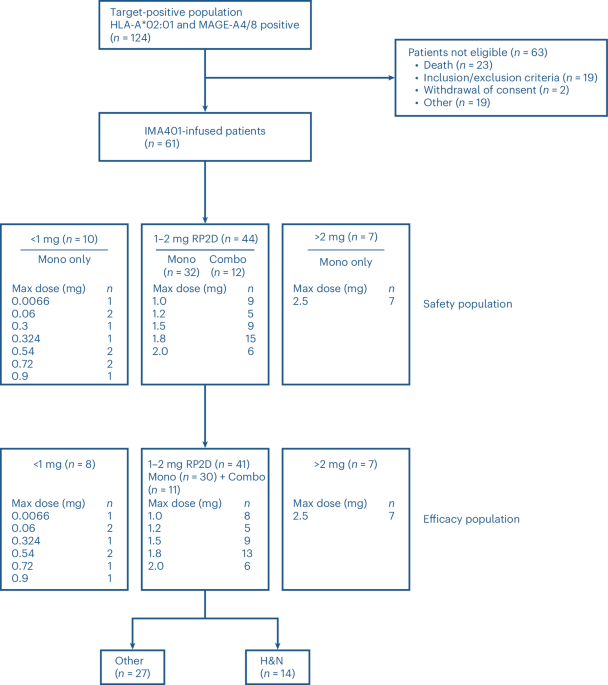
Study conduct
The trial was conducted from 19 May 2022 to 2 March 2026 (data cutoff date) in 23 locations in Germany. The study adhered to the Declaration of Helsinki, Council for International Organizations of Medical Sciences (CIOMS) international ethical guidelines and International Council for Harmonization (ICH) Technical Requirements for Pharmaceuticals for Human Use Good Clinical Practice (GCP) guidelines. The initial clinical trial application (including the initial clinical trial protocol) and all subsequent amendments for all 23 clinical sites were reviewed and approved by the Ethikkommission an der Technischen Universität Dresden (Dresden, Germany) and the Paul Ehrlich Institut, and all participants provided informed consent for screening and trial participation prior to enrollment in the study. Patients were not compensated for their participation in the trial. In addition, an independent data safety monitoring board (DSMB) was convened to monitor patient safety at defined intervals and continuously throughout the study. The DSMB was composed of independent experts in the field of oncology and immunotherapy who provided guidance regarding trial conduct and reviewed pertinent safety events. The trial is registered with ClinicalTrials.gov (NCT05359445; registered 11 April 2022) and the European Union Clinical Trials Register (2023-506854-19-00). The clinical trial protocol and the statistical analysis plan are both available in the Supplementary Information.
Study design
IMA401-101 is a first-in-human, multicenter, open-label, dose-escalation/de-escalation phase 1a/b clinical trial evaluating the safety, tolerability, pharmacokinetics and initial antitumor activity of IMA401 as monotherapy and in combination with pembrolizumab in HLA-A*02:01 and MAGE-A4/8 target-positive patients with recurrent and/or refractory solid tumors. In the phase 1a dose-escalation/de-escalation part of the trial, MTD and/or RP2D were determined for IMA401 as a monotherapy and in combination with pembrolizumab (Extended Data Fig. 8).
Written informed consent was obtained from patients before any procedures were carried out. At the first screening visit, patients were required to sign an informed consent form before HLA screening and subsequent tumor target screening. After completion of the screening procedures, patients signed a second informed consent form before entering the remaining clinical screening examinations and further participation in the clinical trial in case of final eligibility confirmation.
Patients with pathologically confirmed advanced and/or metastatic solid tumors were eligible to enter the screening procedures for HLA and tumor target expression at any time after diagnosis. Patients testing positive for HLA-A*02:01 and negative for HLA-A*02:XX suballeles, as assessed from blood samples, underwent further testing to determine whether tumor expression of MAGE-A4 and/or MAGE-A8 was above a predetermined threshold using archival tumor tissue or tissue from a trial-specific biopsy.
Prior to treatment, demographic information and baseline characteristics were collected. Baseline disease characteristics were evaluated via physical examination, medical history and standard assessments. Demographic information was self-reported by patients and included sex (self-reported), gender, age, race and ethnicity. Patient sex and gender were not considered in the study design nor were demographic subset analyses conducted because of the small sample size, which would preclude obtaining any meaningful results.
All eligible patients received IMA401 or IMA401 in combination with pembrolizumab during the treatment phase. The initial study protocol featured a dose-escalation design with IMA401 only; therefore, all patients at the outset received escalating doses of IMA401 without pembrolizumab. Once the RP2D range was defined, the protocol was amended to also study IMA401 in combination with pembrolizumab but only at IMA401 RP2D doses and only to assess the tolerability of this combination. The eligibility criteria were the same for both the monotherapy and combination therapy cohorts, and specific cohort allocation was based on slot availability. Dose escalation involved cohorts of 1−6 patients and was guided by an adaptive two-parameter and five-parameter BLRM for dose escalation with overdose control (EWOC) for IMA401 monotherapy and combination therapy, respectively. Each cohort consisted of newly enrolled patients. Additionally, patients could be enriched at each dose level once the respective dose level had been declared safe. Once the starting dose level of IMA401 was determined to be safe, dosing was escalated at levels ranging from 0.0066 mg to 2.5 mg IMA401 (Fig. 2). The starting dose of 0.0066 mg IMA401 was chosen based on a MABEL approach as described for other bispecific TCEs for highly potent agonists39,40.
Patients received intravenous IMA401 as monotherapy or in combination with pembrolizumab weekly during weeks 1−4, followed by biweekly (every 2 weeks) infusions according to the assigned dose cohort for a total of six cycles (cycle 1: 13 weeks; cycles 2−6: 8 weeks each) for up to 1 year until the last scheduled IMA401 infusion visit in week 52, premature treatment discontinuation, loss to follow-up or death, whichever occurred first. Initially, per protocol, patients were to receive IMA401 weekly throughout their treatment, but, based on the pharmacokinetic data confirming an antibody-like half-life, the protocol was amended so that patients switched to biweekly infusions after the first four infusions. All patients who started treatment with IMA401 prior to the protocol amendment switched to biweekly dosing at the timepoint that biweekly dosing was implemented. IMA401 was administered as fixed doses, and patients could receive a total of 28 IMA401 infusions. Patients benefiting from treatment after the first year had the option to continue therapy. For patients who received pembrolizumab combination therapy, pembrolizumab treatment started on day −7, 1 week before the first IMA401 infusion. Patients received 400-mg pembrolizumab infusions every 6 weeks administered after dexamethasone infusion (if applicable) and at least 60 minutes before IMA401 infusion. Patients <50 kg were treated with 60% of the corresponding target dose level; adaptions were also made if a patient crossed the 50-kg limit in any direction during treatment.
Intrapatient dose escalations for IMA401 as monotherapy or in combination with pembrolizumab were permitted on approval by the sponsor. Intrapatient dose escalation was only approved to higher dose levels, which had been cleared for safety by the cohort review committee and only if the escalation to the respective dose level would not exceed a 50% dose increase (patients may be dose escalated several times). From the ninth patient onward, step dosing was applied.
For safety reasons, in both monotherapy and combination therapy, the first two patients treated in a dose level cohort were staggered by 7 days, as measured from the time of first investigational medicinal product infusion (day −7 or day 1). Subsequent patients in a dose level cohort were staggered by at least 1 day. Patients exposed to IMA401 were hospitalized for 24 hours after the first four IMA401 infusions. Starting with the fifth infusion (and after all following infusions), patients remained in the hospital for at least 2 hours after IMA401 infusion for observation. All dose-escalation and de-escalation decisions were made on the DDS. DLTs, along with additional safety data (for example, data collected beyond the DLT observation period), were considered by the cohort review committee in its decisions regarding dose escalation. All patients who had completed or discontinued the clinical trial early completed a safety follow-up visit 30 days after their last treatment and a follow-up for an additional 2 years or until death, withdrawal of consent or loss to follow-up.
During the course of the study, the clinical trial protocol underwent numerous amendments. Most (75%) concerned clarifications, administration changes and minor refinements to the schedule of activities and eligibility criteria. Major protocol changes included changing IMA401 administration from weekly to biweekly, initiation of dexamethasone premedication and risk mitigation procedures for potential cytopenias, implementation of step dosing as a safety measures and the addition of IMA401 plus pembrolizumab combination therapy for select patients along with any adaptations to the trial design to support the combination, as needed.
Protocol deviations were identified through clinical monitoring, data review and trial oversight activities and were categorized using the trial-specific Protocol Deviation Assessment Guide. Deviations were classified as important or non-important by the sponsor and relevant subject matter experts against the protocol, ICH E6(R3) GCP guidelines, internal procedures and serious breach criteria, with a special focus on participant rights, safety or well-being or key clinical trial data. Important deviations were reviewed. Corrective actions were implemented where applicable.
Patient eligibility
For enrollment in the IMA401 study, patients were required to be HLA-A*02:01 positive and to have no other HLA-A*02 allele detected. Eligible patients also had to have MAGE-A4-positive and/or MAGE-A8-positive recurrent and/or refractory solid tumors and had received or were not eligible for all available indicated standard-of-care treatments (for example, radiation, surgery, chemotherapy, immunotherapy or targeted therapy). There was no limitation on type and number of prior antitumor treatments patients may have received.
Eligible patients were adults 18 years of age or older and diagnosed with pathologically confirmed and documented advanced and/or metastatic NSCLC or H&N cancer or other solid tumor type accessible for biopsy that expresses the MAGE-A4 and/or MAGE-A8 target. Patients had to have signed a written informed consent form, have measurable disease according to RECIST version 1.1 and been confirmed as being positive for HLA-A*02:01 genotype and negative for another HLA-A*02:XX suballele. In addition, eligible patients had to have a life expectancy of at least 2 months; an ECOG PS of 0−1; adequate baseline hematologic, renal and hepatic function; and acceptable coagulation status. Patients also had to have recovered from any side effects of prior therapy to grade 1 or lower (except for non-clinically substantial toxicities) prior to treatment start. Male patients and female patients of childbearing age were required to use highly effective contraception or be abstinent until 1 month after the last IMA401 infusion.
Patients were excluded if they had other active malignancies that required treatment or that might interfere with the trial endpoints (ongoing adjuvant antihormonal treatment was allowed); they were pregnant or breastfeeding; they had a history of hypersensitivity to components of IMA401 or rescue medications, if no alternative treatment option was available; they had prior allogeneic stem cell transplantation or solid organ transplantation; or they had autoimmune diseases needing disease-directed treatment. Patients were also excluded if they had concurrent severe and/or uncontrolled medical disease that could compromise participation in the trial (for example, uncontrolled diabetes, clinically relevant cardiac condition, pulmonary dysfunction and severe malnutrition); had a history of, or current, immunodeficiency disease or prior treatment relevantly compromising immune function, at the discretion of the investigator, positive for HIV or with active hepatitis B or C infection; had ongoing reactivation of infection within the last 3 weeks; or had sepsis within the last 4 weeks. Patients were excluded if they had received systemic corticosteroids (≥10 mg per day prednisone or equivalent), major surgery, any vaccines, therapeutic radiotherapy, cytotoxic agents or small-molecule treatments within 2 weeks prior to start of trial treatment, monoclonal antibodies within 3 weeks or 5 half-lives or cell therapies within 3 months (use of inhaled or topical steroids was permitted), treatment in another clinical trial or a device study that could interfere with the trial treatment 3 weeks or 5 half-lives prior to start with IM401 therapy. No wash-out period was required for hormonal therapy. Use of inhaled or topical steroids was permitted. Other exclusion criteria included active central nervous system metastases and leptomeningeal metastases; rapid clinical deterioration (for example, worsening of performance status or worsening of clinical symptoms likely associated with rapid disease progression) within 3 weeks; lactate dehydrogenase (LDH) > 2.0-fold upper limit of normal (ULN); clinical or radiological tumor progression on TCR-based therapy; and any other condition that would, in the investigator’s or sponsor’s judgment, contraindicate the patient’s participation in the clinical trial because of safety concerns or compliance with clinical trial procedures. For combination therapy only: patients with hypersensitivity or a history of toxicity leading to permanent discontinuation of prior checkpoint inhibitor treatment or contraindications for pembrolizumab administration were excluded. For patients with HNSCC: patients with primary tumor site of nasopharynx were excluded.
Study interventions
Patients receiving IMA401 monotherapy (n = 49) were administered intravenous infusions weekly (once per week) at a fixed dose per patient ranging from 0.0066 mg to 2.5 mg (Fig. 2) for the first four infusions before switching to biweekly dosing. To increase tolerability and to reduce the risk of CRS, weekly step dosing of IMA401 was implemented with 0.3 mg (step 1) and 0.6 mg (step 2) IMA401 prior to administering the target dose32,41,42. In some dose levels, an additional step dose of 1.2 mg was introduced. For patients receiving IMA401 plus pembrolizumab combination therapy (n = 12), IMA401 was initially administered at 0.3 mg and then stepped to 0.6 mg 1 week later, followed by two weekly infusions of 1.0 mg before either switching to biweekly application (for a target dose of 1 mg) or further increasing the dose to 1.5 mg every 2 weeks. Pembrolizumab doses were fixed at 400 mg every 6 weeks starting 1 week prior to the first IMA401 administration. Patients could receive low-dose dexamethasone as a preventive measure for initial IMA401 doses.
Outcomes and assessments
The primary endpoint was determination of the MTD and/or RP2D of IMA401 monotherapy and in combination with pembrolizumab for the phase 1b extension part as determined by the number of patients with DLTs. Secondary objectives included safety and tolerability, antitumor activity and pharmacokinetics of IMA401 monotherapy and in combination with pembrolizumab.
Tumor assessments were performed at baseline and at weeks 7 and 13 in cycle 1 (6-weekly schedule) and at weeks 21, 29, 37, 45 and 53 in cycles 2−6 (8-weekly schedule), at the end of treatment and quarterly thereafter for 2 years. Responses were categorized as complete response, partial response, stable disease or progressive disease based on RECIST version 1.1 and iRECIST.
Serum samples for pharmacokinetic analyses were collected at multiple timepoints during the treatment course. Dense sampling for the second profile close to the steady state occurred in weeks 4−5 (weekly schedule) or weeks 6−8 (biweekly schedule). Assessed pharmacokinetic parameters included Cmax, Tmax, AUC, clearance, volume of distribution and half-life.
Data on AEs, including TEAEs, TRAEs, SAEs and adverse events of special interest (AESIs), were collected continuously throughout all six cycles of the treatment phase according to National Cancer Institute Common Terminology Criteria for Adverse Events guidelines (version 5.0). AESIs included grade 2 or higher infusion-related reaction, refractory fever (≥38 °C) not responding to standard treatment or intermittent fever (with or without response to standard treatment) for more than 3 days, CRS grade 2 or higher, any grade of ICANS or clinical tumor lysis syndrome (according to Cairo−Bishop classification), any related AE that causes treatment interruption or premature permanent discontinuation of IMA401 and potential drug-induced liver injury.
Estimation of MTD and/or RP2D
An adaptive two-parameter and five-parameter BLRM employing the EWOC principle was used for estimation of the MTD and/or RP2D for IMA401 monotherapy and combination therapy, respectively. The MTD was defined as the highest dose of IMA401 where the posterior probability of the true DLT rate in the target interval (0.16−0.33) of the MTD is above 0.50, and at least six patients have been treated in a confirmatory cohort of patients for the duration of the DLT assessment period (that is, throughout the 13-week cycle 1 treatment phase). A DLT was defined as any grade 3 AE that does not resolve to grade 2 or lower or to baseline value within 7 days or any grade 4 or higher AE, if these events are at least possibly related and occur between the first IMA401 infusion and ≤14 days after the IMA401 target dose has been reached (that is, DLT assessment period). Estimation of the MTD during the dose-escalation phase of the clinical trial was based upon the estimation of the probability of DLT in cycle 1 in patients in the DDS. The RP2D was determined based on the review of DLTs, AEs/SAEs, laboratory and pharmacokinetic/pharmacodynamic data and was selected as the dose resulting in the predicted best therapeutic window for clinical trial treatment.
For IMA401 monotherapy, at least one patient evaluable for the DDS was required at doses lower than 0.25 mg. For higher dose levels, at least three evaluable patients were required per dose cohort until the MTD and/or RP2D was determined, and at least three patients had to have been treated in a confirmatory cohort of patients for the duration of the DLT assessment period. For IMA401 combination cohorts, at least three evaluable patients were required per dose cohort from the beginning until the MTD and/or R2PD were determined, and at least three patients had to be treated in a confirmatory cohort for the duration of the DLT assessment period.
HLA genotyping and tumor target assessment for patient inclusion
During the screening period, after consenting and at any time after diagnosis of advanced and/or metastatic disease, patients underwent HLA genotyping using Sanger sequencing-based typing (SBT) or next-generation sequencing (NGS) at a Clinical Laboratory Improvement Amendments/College of American Pathologists/American Society for Histocompatibility and Immunogenetics (CLIA/CAP/ASHI)-certified laboratory. Patients were required to be positive for HLA-A*02:01 and negative for other HLA-A*02 suballeles. Patients with this HLA genotype identified using SBT underwent a confirmatory NGS-based assay. This approach enabled full-length allele sequencing to accurately resolve HLA-A*02:XX suballeles that cannot be distinguished by SBT.
Patients with the appropriate HLA genotype were tested for tumor expression of MAGE-A4 and/or MAGE-A8 prior to inclusion using a quantitative polymerse chain reaction (qPCR)-based assay from archived formalin-fixed, paraffin-embedded (FFPE) tumor material or fresh tumor biopsies30. Alternatively, FFPE tumor tissue could be used to test MAGE-A4 expression via an immunohistochemistry assay.
Statistical analysis
The safety analysis set consisted of all patients who received at least one dose of IMA401 and was the primary population for all AE-related endpoints except determination of the dose−DLT relationship.
The efficacy analysis set was used for all efficacy-related endpoints and consisted of all patients in the safety set who received four IMA401 infusions in monotherapy and, in addition, at least one pembrolizumab infusion in combination therapy and had a post-baseline efficacy assessment, including clinical progression. Efficacy analyses were conducted using the efficacy analysis set population by dose level.
The pharmacokinetic analysis set consisted of all patients who had received at least one adequately documented dose of IMA401 and at least one adequately documented post-dose pharmacokinetic measurement.
The DDS consisted of all patients in the safety set who had either (1) experienced a DLT at any time or (2) met the minimum treatment and safety evaluation requirements without experiencing a DLT. Minimal treatment and safety evaluation requirements for the DDS included the following: (1) patients must have received at least one step dose and must have completed a period of at least 14 days after the target dose has been reached, or (2) patients must have had a DLT of treatment to be considered evaluable for DLT. The DDS was also used in the BLRM to estimate the dose−DLT relationship.
No sample size calculation was performed, because the primary objectives are the evaluation of safety and tolerability as well as determination of MTD and/or RP2D. Up to 11 provisional IMA401 monotherapy dose levels were planned with at least 1−3 patients treated in dose levels of <250-µg IMA401 (that is, provisional dose levels 1−4) and 3−6 patients treated in any higher dose level. In addition, up to six provisional dose levels for combined IMA401/pembrolizumab treatment were planned with at least 3−6 patients treated per dose level. Provisional dose levels may be adapted and additional intermediate dose levels may be selected during clinical trial conduct. If all dose levels were enrolled, it was estimated that 49 patients at minimum will be treated for the dose-escalation phase. The actual number of patients was driven by the dose-escalation decisions.
Safety data were summarized descriptively. ORR was defined by achieving the best overall response (BOR) of complete response or partial response assessed by RECIST version 1.1. DCR, based on the BOR assessed by RECIST version 1.1, was defined by achieving complete response, partial response or stable disease (lasting at least 6 weeks after baseline). ORR and DCR were presented by percentage rates. DOR by RECIST version 1.1 was measured from the date that complete response or partial response was first achieved until the date of progressive disease, clinical progression or death. Patients with ongoing response at the cutoff date were censored at the cutoff date. PFS by RECIST version 1.1 was measured from the date of the first dose of IMA401 to the date of radiological progression, clinical progression or death from any cause, whichever occurred first. Patients who did not record progression or death as of the cutoff date were censored at the cutoff date. Overall survival was defined as the time between IMA401 infusion and death. Patients who did not record death as of the cutoff date were censored at the cutoff date. DOR, PFS and overall survival were analyzed using the Kaplan−Meier method. DOR was summarized by the median survival time. PFS and overall survival were summarized by their 6-month and 12-month rates, respectively. If data were not obtained from all patients, the number evaluable is indicated in the text and/or legend for the corresponding table/figure.
MAGE-A4/8 mRNA expression, prevalence analysis and absolute quantification of pHLA molecules
Mass spectrometry-based immunopeptidomics and absolute quantification were performed as previously described with minor adaptations43. In brief, samples were lysed by ultrasonication in CHAPS buffer, followed by HLA immunoprecipitation (BB7.2 antibody for tissue samples and cell lines to assess in vitro IMA401-mediated antitumor cytotoxicity; W6/32 antibody for A375 cell line in the IFNγ stimulation experiment) and trifluoroacetic acid (TFA) elution.
For tissue samples, cell numbers were estimated based on total DNA content, whereas cultured cells were quantified by manual counting. The absolute recovered peptide amount was determined by C18 reversed-phase nano liquid chromatography−tandem mass spectrometry (LC−MS/MS) in scheduled parallel reaction monitoring (PRM) mode, using the ratio of the endogenous peptide to a known quantity of an isotope-labeled internal standard. Isolation efficiency was assessed by spiking respective isotope-labeled pHLA-A*02:01 complexes into sample lysates and quantifying their recovery after completion of the isolation procedure by nano LC−MS/MS.
MAGE-A4/8 expression analysis in normal tissue samples is based on data generated by the Adult Genotype Tissue Expression (GTEx) Project: https://www.gtexportal.org/home/. MAGE-A4/8 expression analysis in tumor samples is based on data generated by The Cancer Genome Atlas (TCGA) Research Network: https://www.cancer.gov/tcga. A kernel density estimation was applied to tumor stage III and IV samples of the lung squamous cell cancer (LUSC) cohort to establish a local minimum that best separates the MAGE-A4/8 expression-negative population from the MAGE-A4/8 expression-positive population. The expression value of the local minimum was subsequently used as presumably optimized expression threshold and used for target prevalence estimation for HNSCC.
IMA401 protein design and preclinical characterization
IMA401 was generated by incorporation of variable domains derived from a stability-engineered and affinity-engineered TCR directed against the MAGE-A4/8 pHLA-A*02:01 complex and variable domains derived from a humanized version of the antibody BMA031 into the TCER scaffold based on a heterodimeric and effector function-silenced human IgG1 Fc region. IMA401 was expressed in a stably transfected CHO cell line (Sartorius Stedim Cellca) and purified in a process based on platform antibody purification methods.
The binding affinity of IMA401 to the MAGE-A4/8 pHLA-A*02:01 complex was measured by biolayer interferometry on an Octet RED384. For the measurements, histidine-tagged pHLA complexes were generated by incubating peptide with disulfide-stabilized HLA-A*02:01 (dsHLA) monomers. pHLA complexes at a concentration of 10 µg ml−1 were loaded onto HIS1K biosensors for 120 seconds. Association of a serial dilution of IMA401 was measured for 60 seconds. Dissociation was recorded for 300 seconds. Data evaluation was done using Octet Data Analysis HT Software (version 12.0.1.55). Double reference subtraction was performed by subtracting potential non-specific binding (via unloaded biosensors measured in TCER solution of the respective concentration) and potential dissociation of pHLA loaded onto the biosensor (via a biosensor loaded with the respective pHLA measured in buffer). Data traces were aligned with baseline; interstep correction was done to the dissociation step; Savitzky−Golay filtering was applied; and curves were fitted globally using a 1:1 binding model (with Rmax unlinked by sensor). Affinity measurements for the T cell recruiter part of IMA401 could not be performed with biolayer interferometry due to the inability to produce soluble TCRαβ−CD3 complexes. Instead, binding of IMA401 to a CD3-positive αβ T cell line was analyzed by flow cytometry (IntelliCyt iQue Screener, FlowJo version 10.10.1). For binding analysis of IMA401, Jurkat clone E6-1 cells (American Type Cell Culture Collection (ATCC)) were incubated with a serial dilution of IMA401 for 1 hour at 4 °C. For detection of cell-bound IMA401, cells were incubated with donkey F(ab′)2 anti-human IgG (Fcγ) PE antibody (Jackson ImmunoResearch, 709-116-098, lot no. 135999, diluted 1:50) for 30 minutes at 4 °C. Staining of dead cells was done by incubation with LIVE/DEAD Near-IR Fixable Dead Cell Stain Kit (Invitrogen, L34976, diluted 1:1,500) for 30 minutes at 4 °C. All washing steps were performed in PBS, 2% FCS, 2 mM EDTA and 0.01% azide. Cytotoxic activity of IMA401 was analyzed in LDH release assays. Tumor cells (Hs695T, A375 and U2OS: obtained from ATCC; T98G: obtained from European Collection of Authenticated Cell Cultures (ECACC)) were co-incubated with peripheral blood mononuclear cells (PBMCs) from healthy HLA-A*02-positive donors (effector:target = 10:1) in the presence of increasing concentrations of IMA401. After 48 hours, lysis of target cells was measured using CytoTox96 Non-Radioactive Cytotoxicity Assay Kits (Promega). In vivo efficacy of IMA401 was evaluated in a patient-derived xenograft model (LXFA 1012 lung adenocarcinoma of a White male, aged 58 years). LXFA 1012 cancer tissue was subcutaneously implanted into NOG mice. When a mean tumor volume of 100 mm3 was reached, mice were stratified into a vehicle (PBS) and an IMA401 group. The next day, human PBMCs were injected, and treatment was started with once-weekly, intravenous bolus injections of IMA401 at a dose of 0.5 mg kg−1. Effects on tumor volume were monitored twice weekly by caliper measurements. The study was terminated at day 27. Animal in vivo study was conducted at Charles River Laboratories (Freiburg). Ethics approval was obtained from the local veterinary authority.
Pharmacokinetic analysis
Serum TCER concentrations were measured in patient samples collected at protocol-defined pre-dose, end-of-infusion and post-infusion timepoints using a validated Meso Scale Discovery (MSD)-based sandwich ligand-binding assay in human serum performed by Nuvisan GmBH. MSD 96-well Small Spot SA plates were blocked with 3% BSA/PBS and coated with a biotinylated pHLA capture monomer (Immudex, 220215HM5). After incubation and further blocking, calibration standards, quality controls and patient samples were added. Subsequently, a detection step with a SULFO-TAG-conjugated anti-idiotype detection antibody (developed by Immatics/GenScript; clone: 14C4B6B5) and a development step with MSD Buffer B followed. Electrochemiluminescent signals were acquired on an MSD QuickPlex SQ 120 instrument. Samples were analyzed in duplicate at a minimum required dilution of 1:4, and concentrations were calculated with MSD Workbench and Watson LIMS software using four-parameter logistic regression with 1 / y2 weighting (y, signal strength). Values below the limit of quantification after the first numeric value were set to zero. The validated assay range was 1.60–600 ng ml−1 in patient serum. Individual concentration versus actual time profiles was analyzed by non-compartmental analysis in Phoenix WinNonlin version 7 (linear-up/log-down). Derived parameters included Cmax, Tmax, AUC and elimination half-life for evaluable profiles. TCER concentrations were dose normalized, and their medians with interquartile range were plotted versus the nominal sample collection times.
Circulating tumor DNA analysis
Patient samples were collected in Streck Cell-Free DNA BCT tubes at protocol-defined pre-treatment, on-treatment and end-of-treatment timepoints. Plasma was isolated via a two-step centrifugation process and stored at −80 °C. A methylation-based assay was used for quantification of circulating tumor DNA (ctDNA) (monitoring module of Guardant Infinity).
Reporting summary
Further information on research design is available in the Nature Portfolio Reporting Summary linked to this article.



