
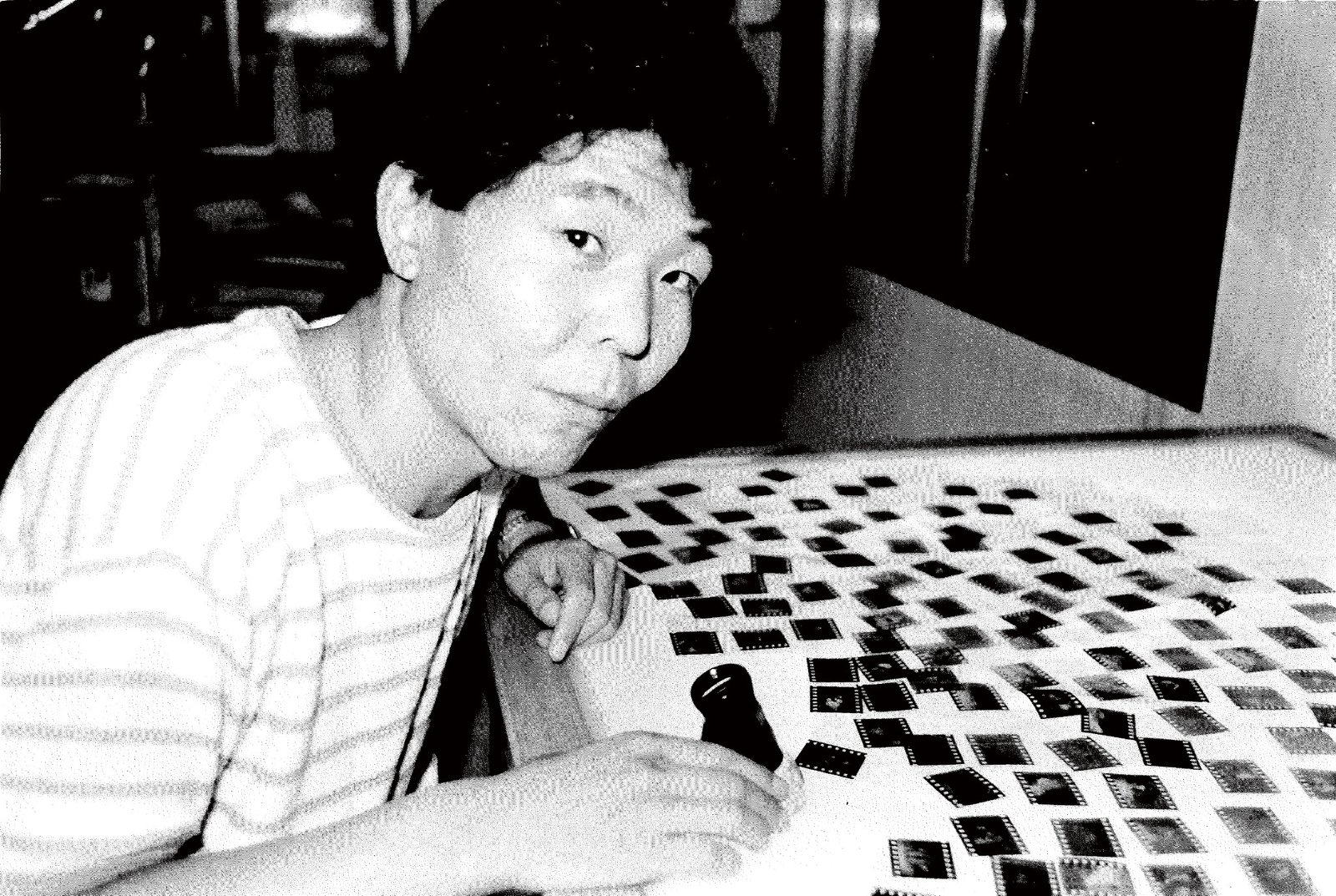
Akira Suei was born in Okayama Prefecture in 1948. After working as a factory worker, a cabaret sign painter, and an illustrator, he participated in the founding of Self Publishing in 1975, later converted into Byakuya Shobo. He went on to launch a series of erotic magazines, including New Self, Weekend Super and Shashin Jidai marking the highlight of his career as chief editor. He is currently active as an essayist and as the tenor saxophonist for Pathos together with Kei Shimamoto. In 2014, he won the 30th Kodansha Essay Award for his work ‘Suicide’. His famous autobiographical essay ‘A Wonderful Dynamite Scandal’ was adapted into a film ‘Dynamite Graffiti’ by Masanori Tominaga in 2018.
Byakuya-Shobo Co., Ltd. is a Japanese publishing company established on December 4, 1975. Originally founded as Self Publishing by Shintaro Morishita, the company initially focused on adult literature and niche subcultures. In 1977, Byakuya-Shobo was officially incorporated, marking its transition into a general publisher. The company is headquartered in Takada, Toshima-ku, Tokyo, Japan Byakuya-Shobo gained prominence in the 1980s for its adult-oriented publications, including the influential magazine Shashin Jidai, which featured works by renowned photographer Nobuyoshi Araki.
The company also published Manga Burikko, a lolicon hentai manga magazine, and Billy, a magazine centered on extreme fetishes In the 1990s, Byakuya-Shobo shifted its focus to general hobby and entertainment magazines and books. The company is now known for publishing idol and entertainment magazines such as BUBKA and BRODY. Byakuya-Shobo is also associated with Core Magazine, a subsidiary established in 1985, which specializes in adult material, including adult magazines and hentai manga Today, Byakuya-Shobo continues to operate as a publisher of general hobby and entertainment content, maintaining a presence in the Japanese publishing industry.
The photos are published through the courtesy of Akira Suei and are reproduced from his private archives.
So, it all began with a stick of dynamite…
Indeed, my mother died in an explosion. Art can sometimes be explosive, but in my case, it was my mother who was caught in an explosion. To clarify, she was not an explosive device herself or anything like that. I’m not trying to brag, but my mother was, without a doubt, a full-fledged human being. To be precise: my mother and a man from the neighborhood were having an affair, and they both committed suicide by placing dynamite between them and lighting the fuse. With a loud bang, the two of them were blown apart and died instantly.
How would someone go about obtaining dynamite?
I was born in a remote area so isolated that even buses didn’t go there — a place called Ōaza Tsurugi in Yoshinaga town, Okayama Prefecture. It wasn’t because the countryside was a producer of dynamite. Rather, the area had lots of mines that extracted minerals used to make things like clay and firebricks where my father also used to work. These mines had dynamite storage sheds up in the mountains, and the management was so lax — they weren’t even locked — that people could just take dynamite whenever they felt like it.
Many artists talk about overcoming hardship or using adversity as motivation. Was that true for you as well?
To be honest, this might sound a bit awkward in Japanese, but—you know how people sometimes come from really difficult backgrounds and use that as a springboard to work hard and turn their lives around? That kind of narrative? I think that’s the image people often expect.
But in my case, there wasn’t anything like that. I’m actually writing something right now—I was asked to do it today—and the title is ‘Flowing in the Clouds’. And that’s honestly how I feel: like I’m just being carried along, shifting shape, drifting wherever life takes me.
Along the way, I’ve met different people. It’s not that I’ve ever taken bold action to change myself. It’s more like I just happen to meet someone—like Nobuyoshi Araki, for instance—by chance. And through that encounter, by doing something together, I begin to change, little by little, influenced by them.It’s a very passive process.
I don’t charge ahead like some wild beast. I guess one could say it’s fundamentally a feminine way of being.
Wasn’t there a second explosive scandal as well?
Yes. At the time, I was painting signs—commercial signage, mostly—for a cabaret club called Pink. Around Christmas, they’d quietly double the prices on the menu. It was a total scam, but everyone was drunk and in a festive mood, so no one really noticed. Or if they did, they didn’t care. Business was booming.
All the signage had to be redone for the holidays, of course—and that was my job. I worked down in the basement, directly underneath the club. From down there, I could hear everything—laughter, shouting, glasses clinking, the muffled chaos of people partying above me.
I remember working on December 24th. It was bitterly cold. There was no heating in the basement, and my hands were so numb I could barely hold a brush. I just kept repainting, one menu after another. At the time, I was deeply anti-establishment. I thought Christmas was a sham—just a commercial spectacle. People caught up in the illusion of generosity and joy, all to buy more, eat more, drink more. It all felt artificial to me, manufactured. I couldn’t relate to the excitement people had for things like Christmas Eve. I felt totally detached from it.
It was around 7:10 p.m. in Shinjuku. A Christmas tree exploded. A fairly large one, apparently—it had been placed next to a police box. Some pedestrians were injured. A police officer—a sergeant—lost his leg. No one was killed, but it was a serious attack. That is known as the Shinjuku Oiwake Police Box Bombing Incident.
A few months later, I found out something that left me speechless: the person who planted the bomb was my wife’s younger brother.
He used to come by our place a lot. He always carried these heavy bags—we never thought much of it. But looking back, they were probably filled with pipes, or maybe bomb-making materials. Of course, he was arrested.
We went to see him after the arrest. At the time, he was involved with a radical leftist group called Black Helmet faction. They had their own internal tribunal system—like a parallel court. The group’s leader was a man named Kamata. From the outside, honestly, they didn’t look much different from the yakuza.
The charges started stacking up. Theft of explosives, attempted murder, and more. He ended up spending around seven years in pre-trial detention before he was even sentenced. Eventually, he got fifteen years—or maybe more. In the end, he served over 20 years.
While we were waiting on the sentencing, a defense committee was formed to try to reduce his sentence. They brought in lawyers and took the case to court. I was part of that effort too—he was basically family. I went to the trial, sat in the gallery.
Eventually, he was moved to a prison in Gifu. In Japan, only immediate family can visit prisoners, so we legally adopted him. Even though he was already my wife’s brother, we made him our legal son—just so I could visit him. Though now, the adoption’s been formally dissolved.
According to Araki’s famous photo book’s title ‘Sentimental Journey’, how did sentiment shape the way intimacy and eroticism are portrayed and experienced differently in Japanese culture compared to Western cultures?
This kind of emotional atmosphere is difficult to explain, especially to someone from a culture like America’s. When I look at explicit photographs from the U.S., there is often a strong sense of physicality—almost like watching a sport. It’s just bodies colliding, flesh meeting flesh.
For Japanese people, however, there is usually something more complex and layered. There is a feeling of shyness, hesitation, even embarrassment. It is as if the person is acting out of love or wrestling with the uncertainty of whether they should, yet wanting to anyway. It’s hard to put into words, but it is not just about the act itself—it’s about the emotions behind it. This is what we refer to as jōcho (sentiment).
In that respect, I don’t think we were truly influenced by American erotic media. Magazines like Penthouse and Playboy existed, and naturally, we looked at them. But mostly out of curiosity—observing details like visible genitals, pubic hair, even the layout of the room. It wasn’t that we found it deeply erotic.
Even with full nudity and exposed interiors, we remained observers. Some may have analyzed the sexual acts, but I don’t believe there was a strong emotional or erotic connection. At least, not in the way intimacy is experienced in Japan—with all its subtlety and unspoken feelings.
When you showed me the magazines you edited, I was shocked—full frontal nudity wasn’t allowed, yet there were minors featured. What was the common understanding of censorship back then?
Yes, surprisingly, it was allowed at that time. It feels strange thinking about it now, especially with how severe the penalties have become. Of course, sexual acts were completely off-limits even then, but nudity itself wasn’t necessarily a problem. As long as the child was below a certain age and no genitalia was visible, it was generally accepted. But once that boundary was crossed—like exposing genitalia—it was immediately forbidden. There were no organized model agencies or clubs for this kind of work. When someone needed a child model, and if a family had a child who might pose, they would just ask around— ‘Would your child be willing to model?’. Sometimes they agreed. It was very informal and based on word of mouth.
What about during the photo shoots? Were there specific rules?
Absolutely. We couldn’t just take a child alone to photograph. The parents had to be present at all times. That was non-negotiable. If a parent wasn’t there. We simply couldn’t proceed. Whether it was the mother or father, someone had to be there. They would watch over the shoot and observe everything we did. In that way, their presence acted as a form of consent.. As long as they were watching and didn’t say ‘stop’, it was understood they were giving permission. It also served as legal protection. If any problems came up later, the fact that a guardian was present could reduce potential legal issues. There might even have been laws requiring a parent or guardian to be there. At least in Japan, photographing minors without a parent or guardian present simply wasn’t allowed.
Can you tell me about some actual controversies from that era?
Yes. One famous case involved the photographer Kishin Shinoyama. The first big controversy was probably around Kanako Higuchi’s photo book. Rie Miyazawa was in the ‘Santa Fe’ photobook, too, but Kanako Higuchi’s late-1980s photo book really caused a stir.
How did you navigate the censorship regulations?
Erotic magazines couldn’t afford to disappear, so we filled all the color pages with nude photographs. If any pubic hair was visible, the police would get upset, so everything was shaved. This wasn’t my own invention. At one point, a female model arrived for a shoot already shaved. I don’t know whether she naturally had no hair or had shaved it for some other reason, but it was fantastic. The area that needed to be censored was reduced to less than half of what it had been before. I was delighted, convinced that from then on shaving would solve the problem. That optimism didn’t last long, however, because the police summoned me again and informed me that any place where hair is supposed to grow still had to be fully concealed.
What was the general reaction?
We were shocked when it came out. It felt sudden—like, are they really publishing this? Later, I heard there was unofficial coordination with the Tokyo Metropolitan Police to get tacit approval to release it. The idea was that since the photos weren’t too explicit, banning the book would only cause more backlash. So they went ahead and published it.
Did the laws change after that?
No, the laws stayed the same. The rule prohibiting genitalia being shown remained firm. It was more of a gray area—like, if it was only pubic hair, maybe it was allowed. I don’t remember the exact title, but that photo book featured full exposure of pubic hair throughout.
Have you actually had any complaints yourself?
One of the biggest issues was with a yakuza’s girlfriend. She posted a photo where part of the room was visible. The husband—or rather the yakuza guy—saw it and got really angry. He said something like, what the hell has my woman done, because the room was visible in the photo. But honestly, that’s their problem. How much money they decide to extract from it is up to them. As for me, I just kept apologizing. I said I was really sorry for the mistake and that it was an accident that the room was shown. But in the end, they were not willing to forgive me…
But there were no complaints from the women?
Well, you can tell when you look at the photos—there aren’t any pictures of girls who look upset or crying or anything like that. Everyone is smiling. So even if the photos are provocative or edgy, as long as everyone is willingly and happily participating, I thought that alone would be proof of that.
Earlier, you mentioned that you’re okay with the idea of getting caught by the police. Could you elaborate on why that is?
Every month, I received a summons. The Metropolitan Police Department purchases adult magazines regularly, and a division within it, known as the Morals Unit, reviews the content. Any inappropriate sections are marked with sticky notes, and the person responsible for the magazine with the most notes is called in. If I was told to report the next day, I would cancel my plans and prioritize going to the police department.
Some ask why I got chewed out or what I did wrong, but I’ve never had a serious issue with the police. The police represent power, and if you keep fighting power, eventually the military gets involved. Like if I were trying to lead a revolution, the military would come and crush it. The police won’t send the military after you, but the system is there. I don’t oppose power or the police, but I do mess with them—not directly opposing them, but turning the tables in my own way.
How does the police crackdown affect the distribution of material?
Interviewee: It often has the opposite effect. When they order a recall of material, it’s basically a ban. Like with obscene literature distribution—they never explicitly said, ‘You can’t release this’, but told us to recall it. In Japan’s system, once recalled, the material can’t be released again, even if it’s the same title. So it’s a de facto ban.
Does this raise issues about freedom of expression?
Some argue about free speech rights, but that’s not the real issue. The problem is the distribution system itself—it just becomes impossible to release the material. Instead of telling readers it’s officially banned, we say, ‘As the police put it, this is like a death sentence’, because that’s how they see it. Essentially, it means no more publication. So, we end up moving the material to another magazine—turning it into a bit of a joke.
You said you ‘mess with’ the police. What does that mean exactly?
It’s like teasing or playing with them. The Tokyo Metropolitan Police can’t fully crack down either, so I resist in this subtle way. People have opinions about it, but really, nothing’s changed much over time—just a bit more relaxed. Even now, some see me as left-wing or right-wing. I get it, but what I do is basically the same.
Have you changed your approach over time?
Definitely. I’ve gained experience and gotten better. What I’m asked to create now is more innovative. For example, here’s something [shows image]. The girl’s in a slightly provocative pose, but nothing explicit. If you look closely, you might notice something funny about the name—it kind of looks like my father’s head wearing a headband. I did that on purpose for the bookstore.
What about making material accessible for younger buyers?
We make it easy for kids to buy by pricing it at 500 yen—no change needed—so they can just grab a coin and pay. The problem is bookstores don’t want to display this stuff in windows, which is an issue, but the strategy works. It’s made to be easily bought without resistance.
Has the police morality section been consistent in monitoring?
Not really. The person from the morality section who always called me never actually checked the photos in detail. Everything looked the same to them. But someone from a different department saw a photo they’d never seen before and got shocked. They wondered what it was and how it was being distributed. Those people then took direct action, bypassing the morality section. They decided they needed to catch this. It was surprising but also reassuring to see that kind of initiative within the police.
New Self must have been a major breakthrough for you?
That was the first magazine I edited after serving as a cabaret sign painter and illustrator. Back then, erotic magazines in Japan were generally divided into six categories: rough-paper publications centered on text-based ‘true stories’; gravure-printed nude photo magazines; erotic manga magazines; general-interest erotic magazines in a weekly format that combined nude photography, real-life stories, and erotic manga; SM specialty magazines; and sealed magazines containing more explicit content.
Despite the variety, all of these magazines were essentially created with the same reader in mind: the construction worker.
It’s not that there was a sudden explosion in the number of construction workers in Japan at the time. I think their numbers were probably about the same as they are today. But I once heard an editor say: ‘The readers are all construction workers anyway, so they won’t understand the difference’.
Until I met that editor, it had never even occurred to me that erotic magazines were being made specifically for construction workers. In fact, I had never really thought about the readers at all.
Was it at that time when you met Kei Shimamoto?
I first came to know Shimamoto-san through a coterie magazine called Kanden King. It featured interview-style pieces with people like Araki-san, as well as contributions from Yūtokutaishi Akiyama. It wasn’t sold through bookstores or traditional channels but was distributed directly.
Since I was interested in that kind of underground work, I bought a copy and discovered Shimamoto-san’s name there.
At first, Kanden King was more of a joke magazine—the manga were fairly dull and silly, but it stuck with me. That’s when I decided to ask Shimamoto-san if he’d contribute some manuscripts.
Around that time, Shimamoto-san was working part-time at a printing company in Takadanobaba. When I visited him, he gave me a cold look, but I explained that we wanted him to write some pieces for us.
Shimamoto-san didn’t have an office then; he was simply working part-time at the printing shop. The company president was someone who appreciated art and even created things himself, so Shimamoto-san just hung out there.
Later, I was preparing Weekend Super and we invited Shimamoto-san to write short columns and create illustrations for it on a monthly basis. Since we were all in Takadanobaba, we occasionally had meals together.
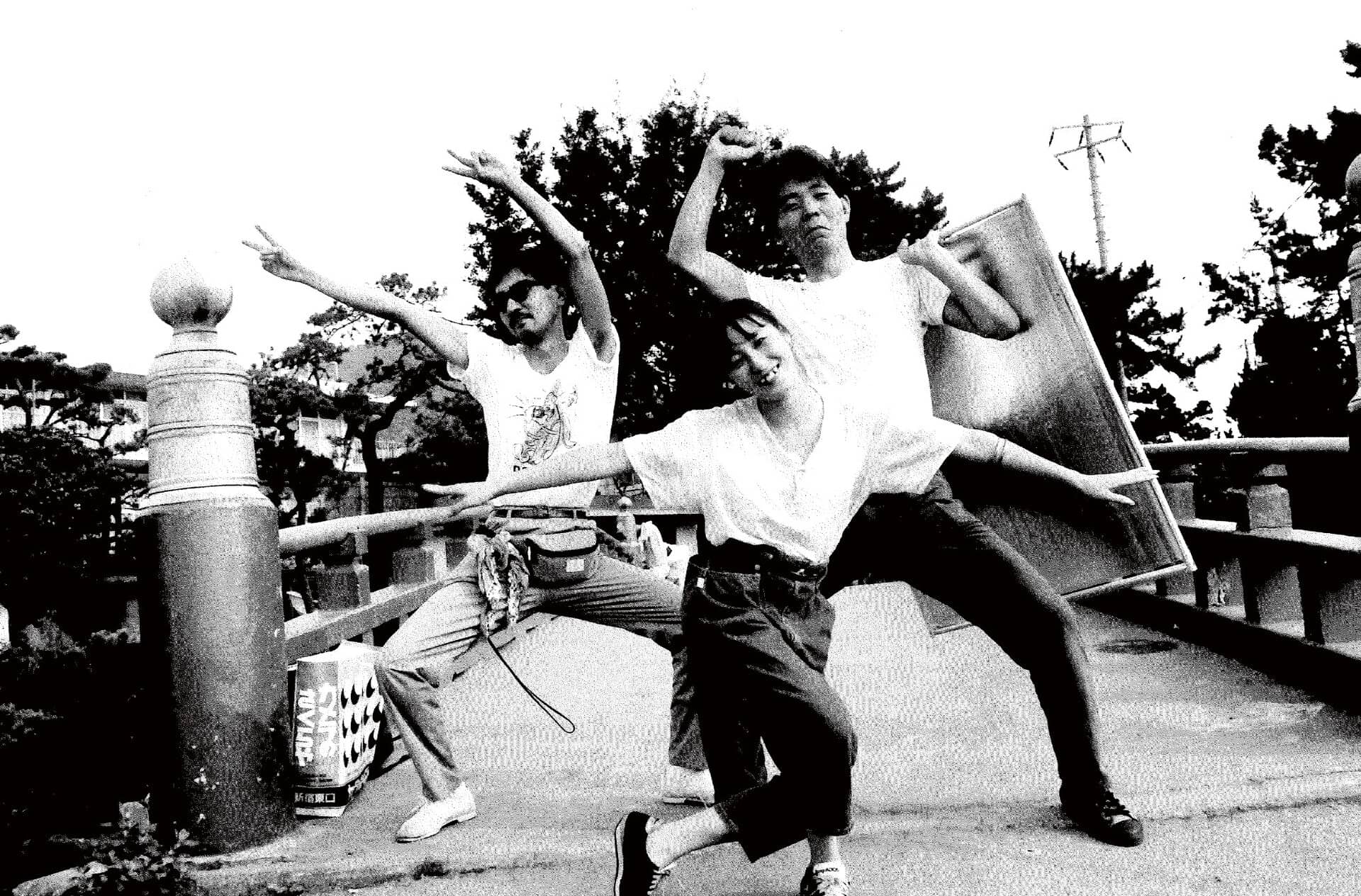
I’d heard the punk scene was incredible, so I suggested we check it out. The two of us went to Osaka with an instant camera and started taking photos. It was a lot of fun.
Could you tell more about New Self’s development?
In the beginning, we approached the coverage with real seriousness. While we did feature idols, we quickly realized that it alone wouldn’t sell. To broaden the appeal, we brought in elements from Nikkatsu action films. We featured figures like Isogai and even included actress Kahori Takeda, who was a major name at the time. We also invited entertainers from other fields—singers, performers, and cultural personalities. That particular issue included a special feature on notable public figures, primarily from the entertainment world.
We were deliberate in our editorial choices, putting genuine effort into highlighting the supporting actors of Nikkatsu cinema while mixing in idol content to balance commercial appeal. It was clear that film coverage alone wasn’t going to be enough.
One standout feature was the ‘Araki’s Actresses’ series, which had originally been passed down from Ryo Rusei. It quickly gained popularity for its striking, provocative visuals. The photos had a raw energy and a freshness that made them impossible to ignore. It was a bold new direction, though not without controversy.
There was even an ambitious and cheeky attempt to photograph the Emperor—we ended up on the same flight. Though the original idea didn’t pan out, we turned it into a cabaret-style shoot, a kind of visual pun. That issue caused a stir, largely because we placed the Japanese flag on the cover. The structure of the magazine was compelling, and the entire issue was text-driven, with a clear editorial voice.
That particular issue marked a turning point for the magazine. We began with a strong focus on cinema—especially pink films—but gradually started shifting toward deeper explorations of subculture. As the editorial direction changed, so did our readership. Sales began to decline somewhat; honestly, it wasn’t selling that well during that transitional phase.
In retrospect, it’s remarkable to see how the content evolved. The final issue was published in June 1981, bringing that era to a close. Just two months later, in July, we launched an entirely new magazine — Shashin Jidai — an incredible feat in such a short time and our tour de force.
Considering both New Self and Weekend Super had ceased publication, weren’t you worried about launching Shashin Jidai as editor-in-chief?
Inevitably it would have happened anyway, but the company was hanging by a thread. Supermarket sales had completely dried up, and other magazines were failing too. The president had built up about 100 million yen in debt and eventually just said, ‘It’s over.’ I said, ‘Got it,’ and that’s when we went ahead with the photo book. He was basically out of options—desperate, really—so we pushed forward with a print run of 140,000 copies.
I didn’t even write a real proposal. It was the golden age of photography, so I simply wrote that we’d collect a variety of photographs and turn them into a book. I listed names like Araki and Daido Moriyama, framing it as if we were launching a new photography magazine. That approach got the attention of distributors. When they saw we were printing 140,000 copies, they said, ‘That should work.’
We kicked things off with that massive run—and nearly all of it sold out. None of us expected it to do so well. But it ended up being a huge success, and that’s really where everything began.
Were you concerned about how it would be received?
I was, yeah. I thought it might be too dark—maybe something that would make people uneasy or even keep them up at night. But in the end, it sold out. I remember calling around to different stores, and they all told me it was gone. My wife’s family is from Niigata, so I asked her to check a bookstore near Niigata University—and they had it there. I was really surprised. Honestly, I never imagined our cover model would one day become a member of parliament.
Apart from Nobuyoshi Araki, Daido Moriyama’s involvement seems pivotal. What was his situation at the time?
He hasn’t been very active during the past years. That kind of lifestyle wears on you. At the same time, he’d been working on his book ‘Bye Bye Photography’ for about two years. Up to that point, he was mostly shooting in black and white. But then he decided to push himself—take on color. He started photographing everything in color, using an instant camera. The results were a bit blurry, not especially large prints, but that became part of their charm.
How about the development process?
By that time, Moriyama was handling his own development. Most of the photos were made in the darkroom. Honestly, they might not even look exactly like what was originally shot. He would project the negatives onto photographic paper and burn parts of the image using tools—like a circular cutout. That technique really defined the look.
It was like a photo wallet. Moriyama taught me something fundamental: photography is about light and shadow. That’s the foundation. It’s not just about pressing the button—it’s about judgment, about decision-making. Later, he wrote that his ‘flower bloomed’ through photography—and it really felt that way. That’s when everything started clicking.
What made the photos so distinct?
Well, Moriyama was also a designer, so he understood how to play with contrast, deepen shadows, and shift emphasis in the frame. These weren’t just straight prints—they were sculpted in the darkroom. I believe he handled all of that himself. Those hands-on techniques are what gave the images their uniqueness. And once it was finished, he didn’t stress over it. He just let it be.

In your essays you portray Shinjuku as a central hub for those involved in the erotic magazine industry. Could you tell us more about the culture of Shinjuku during that time?
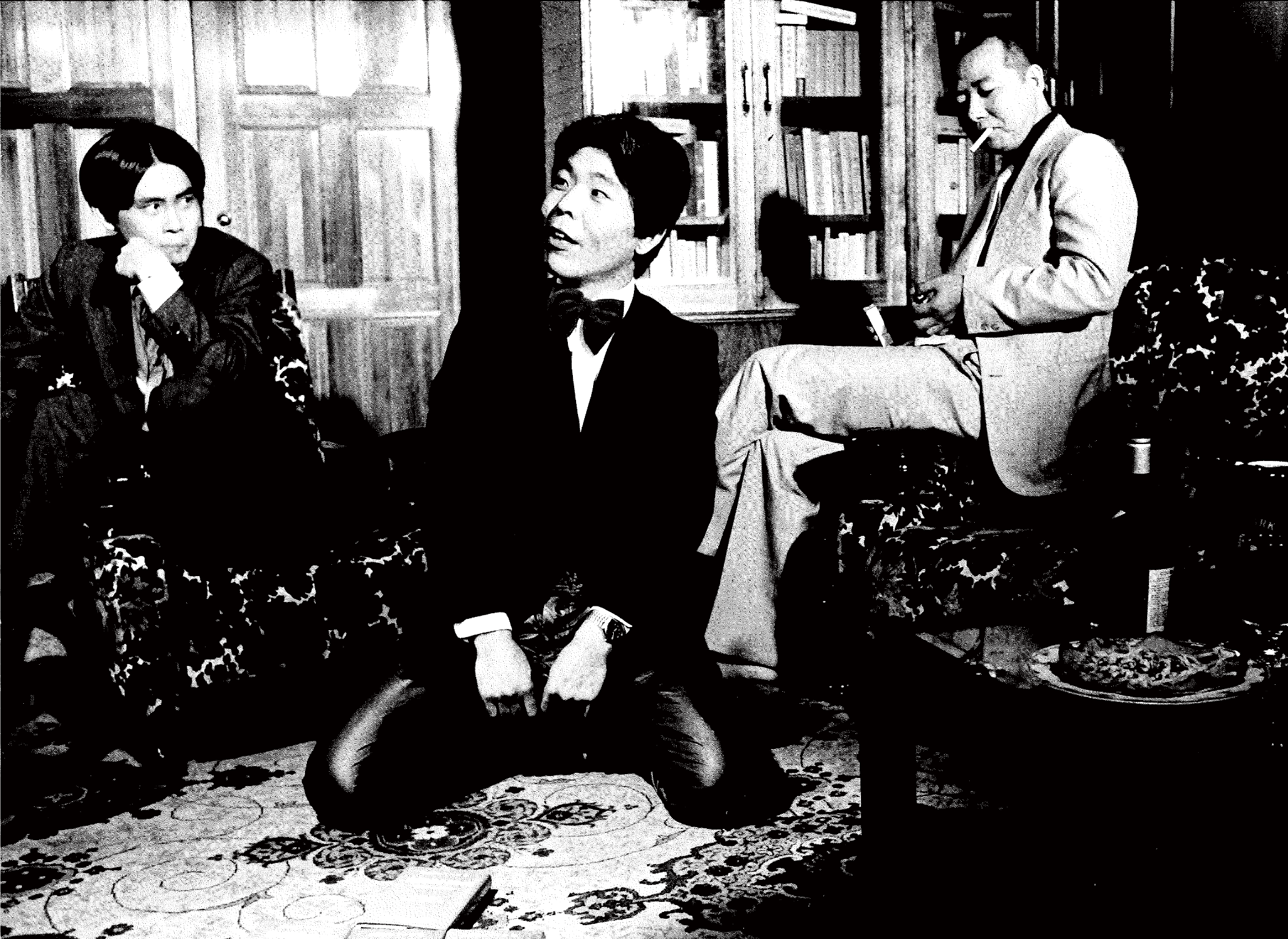
Back then, it wasn’t unusual to carry big shopping bags full of underwear, tights and go straight to the studio. We’d grab items that had texture or sheen—anything that would catch the light just right. Sometimes we didn’t even know what we were shooting for yet. We just needed options. Maybe it was for a gravure piece, maybe a special insert. We’d figure it out once we saw the model and the location.
A lot of times, the shoots were done on instinct. There wasn’t much in terms of pre-production or planning boards. We’d meet at Coffee Road Shimizu, decide on a loose direction, grab the clothes, grab the model, and head off. That was it. If we got stuck, someone would know a hotel manager, or a driver, or a lighting guy who happened to be free that day. It was all about knowing who was around. It was fluid, fast, and somehow everything always worked out.
And even though we had our go-to locations like the Keio Plaza or Sagamiko, we also did guerrilla-style shoots—parking lots, rooftops, empty trains. There was a kind of freedom back then. You could just show up with a camera and start shooting. No permits, no questions. If someone came by, we’d just say it was for a magazine, and that was usually enough. People were curious, but mostly polite. It was a different time.
There was one time we shot in the women’s restroom of a department store—very discreetly. We just needed one or two frames, something with mirrors and reflections. It took maybe ten minutes. Nobody said anything. Try doing that now—it’d be impossible. But that was the atmosphere then. It wasn’t lawless, just flexible.
The models, too, had this relaxed energy. Most of them weren’t trained or managed in today’s sense. They might’ve been part-timers or referred through friends. You’d meet them, hand them an outfit, and they’d change behind a curtain or in the back of the van. We weren’t trying to make them look like celebrities. We wanted to capture something casual, something raw.
After the shoots, we’d usually head back to Shinjuku, sometimes with the model still in costume. We’d go straight to one of the coffee shops or meet up at a bar nearby. If we were in the mood, we’d have a small party with some of the crew. And sometimes the best ideas for the next shoot would come from those drunken conversations—scribbled on napkins, barely legible the next morning, but somehow they’d turn into the next project.
The labs we used were just as much a part of the process. There was one small place near Kabukicho where the guy knew our style so well, he’d start adjusting contrast or push-developing film without even asking. He’d say: ‘You want this gritty, right?’ and he was usually right. You didn’t have to explain much.
Looking back, those weren’t just photography sessions. They were small adventures. You’d wake up not knowing exactly where the day would take you—maybe a hotel, maybe a lake, maybe a shopping spree. And by evening, you’d have five rolls of film and a story to tell.
Even now, when I pass by that part of Shinjuku—where Coffe Road Shimizu used to be—I feel a strange nostalgia. The street’s cleaner, the buildings are taller, and the coffee shops are long gone. But for a while, that tiny corner of the city was the center of everything. It was where shoots began, where crews gathered, where models were scouted, and where ideas turned into images.
It wasn’t polished, but it was alive. And honestly, I don’t think we’ll ever see something like it again.
Do you feel nostalgic about that past?
Back then, this kind of thing was pretty common. I don’t really feel nostalgic about it, though—things just change over time. Sometimes I get a little nostalgic, but mostly because it was a different era. It felt like a more laid-back time compared to now. And by ‘laid-back’ I mean there was a kinder, more forgiving attitude. Even if people caused trouble or made mistakes, there was this unspoken sense of letting it go.
Today, with how society is structured, a lot of people struggle to fit in—whether they have disabilities or just don’t easily conform to social norms. Back then, many folks made their living through things like pachinko. Pachinko parlors were booming, and when those people showed up, no one said a word. Things have changed now, and that kind of acceptance just isn’t there anymore.
Back then, if you wanted to see nudity, it was a whole experience—you actually had to go out and buy something. You’d sneak into a store, act casual, quietly make your purchase… That kind of effort made it memorable, even meaningful in a way.
Now, all you have to do is open social media or browse your phone for a few seconds. It’s as easy and casual as grabbing a snack. There’s no buildup, no sense of occasion.
In that sense, I think something’s been lost. It’s all become a bit dull—too easy, too accessible, and not very creative anymore.




