
For people experiencing homelessness, getting to a doctor’s appointment can be nearly impossible.
Lacking reliable transportation, health insurance, stable housing or even a phone, they find routine medical care falling to the bottom of an overwhelming list of daily challenges. For many, an untreated illness turns into a crisis and an emergency room visit.
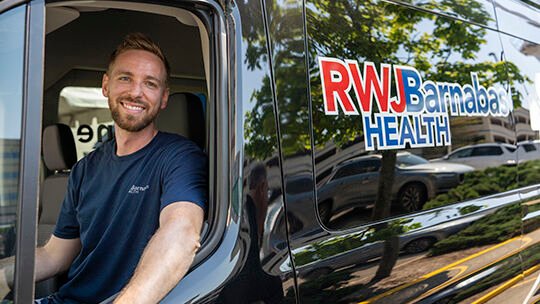
Now, in a first-of-its-kind program in New Jersey, RWJBarnabas Health is sending a mobile medical unit to Union County shelters, transitional housing, encampments and other locations where unhoused people live. Street Medicine, as it’s called, was inspired by HBO Max’s hit medical drama “The Pitt,” and at its heart is a mobile medical unit staffed by physicians, residents and other health professionals.
“We know the unhoused population face disproportionate barriers to receiving the care they need,” said Dr. Edward Egan, M.D., medical director of Street Medicine. “This program will make a meaningful difference in our patients’ lives and help prevent hospitalizations, ensuring we can continue to deliver world-class care to our patients at Trinitas Regional Medical Center and support the broader Elizabeth community.”
The team treats wounds and infections, manages chronic illnesses such as diabetes and high blood pressure, provides vaccinations and preventative screenings and offers medication assistance. It also addresses behavioral health needs by connecting individuals struggling with mental illness, trauma or substance abuse to counseling, psychiatric care and recovery services.
‘The Pitt’
For many patients, the support extends far beyond immediate treatment.
Street Medicine teams often help people enroll in Medicaid, obtain identification documents, connect with food assistance, secure transportation to appointments and navigate housing resources. Those services, advocates say, can become critical first steps toward long-term stability and permanent housing.

The program aims to catch medical and behavioral health issues before they become life-threatening emergencies, reduce preventable hospitalizations, lower health care costs and improve long-term health outcomes.
“The Street Medicine Program advances RWJBarnabas Health’s mission of providing quality, compassionate and accessible care to the communities we serve,” said Balpreet Grewal-Virk, senior vice president of community health for RWJBarnabas. The model succeeds, supporters say, because it focuses on trust — which can be scarce among vulnerable populations.
Like the critically acclaimed “The Pitt,” whose street team of doctors treat homeless people in Pittsburgh, the RWJBarnabas service focuses on a particular area.
The Street Medicine team repeatedly shows up in the same communities and building relationships over time, Egan says. That allows physicians, nurses, social workers and outreach staff to engage people who otherwise might avoid seeking care until a crisis develops.
Rising homelessness
The initiative comes as New Jersey faces a growing homelessness crisis. According to Monarch Housing Associates, which coordinates New Jersey’s annual Point-in-Time Count, 13,748 people were experiencing homelessness on a single night in January 2025, an 8.4% increase from the previous year and the highest number recorded in more than a decade.
Homelessness has increased annually since 2021, with advocates citing rising costs, evictions, income loss and economic instability as major contributing factors. Among the leading causes reported by those experiencing homelessness were being asked to leave a shared residence, eviction or risk of eviction, and loss or reduction of job income.
In Elizabeth, the seat of Union County government, more than 300 people lack permanent homes, according to Monarch data. That’s roughly 25% of the county’s homeless population.
“This initiative will be life-changing for our city,” Mayor J. Christian Bollwage said. “I am grateful to RWJBarnabas Health and the team at Trinitas Regional Medical Center for launching this program that will provide care to the homeless in our city and strengthen community health across the region.”
Street Medicine has its roots in RWJBarnabas’ Our Healthy Communities initiative, for which $60 million in state funding is proposed for the fiscal year that starts on July 1.
“Our Street Medicine Program is born from a culture that recognizes everyone, regardless of circumstance, is deserving of compassion and access to the world-class health care we provide,” said Mark E. Manigan, president and CEO of RWJBarnabas Health. “Being the first in New Jersey to put such a focus on the immediate health care needs of some of our most vulnerable residents is something in which RWJBarnabas Health takes tremendous pride.”



