
Welcome to Foreign Policy’s China Brief.
The highlights this week: China is rocked by two fatal mining accidents, a top Chinese cartographer is placed under investigation, and tech giant Tencent prepares to launch a WeChat artificial intelligence agent.
Welcome to Foreign Policy’s China Brief.
The highlights this week: China is rocked by two fatal mining accidents, a top Chinese cartographer is placed under investigation, and tech giant Tencent prepares to launch a WeChat artificial intelligence agent.
China Rocked by Fatal Mining Accidents
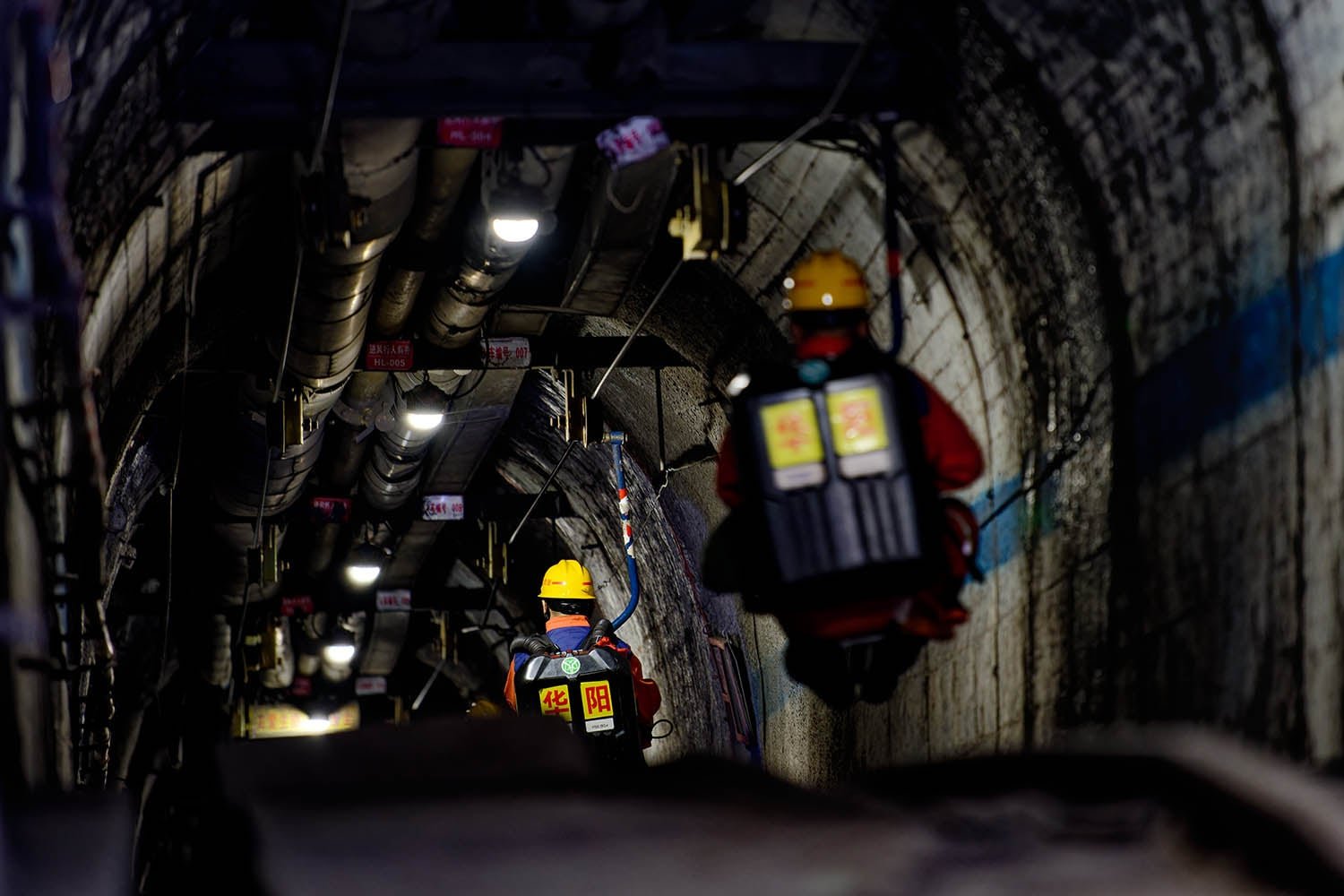
An explosion at Liushenyu, a privately run coal mine in Shanxi province, killed at least 82 people on May 22, marking China’s worst mining accident in more than 15 years. Then, on Sunday, an illegal operation in Yunnan province—likely mining rare earths—collapsed, killing five people.
The official handling of these disasters followed a familiar pattern. Local authorities initially downplayed the casualties before the central government took over the investigation and published higher death tolls. Major accidents are a stain on officials’ records and often lead to prosecutions of low-level staff, creating strong incentives to suppress news about them.
An outpouring of online anger came in the days after the Liushenyu incident, but that discussion is now being curtailed by censorship. Chinese state media will be unable to publish follow-up stories unless they closely adhere to the official line.
Coal mining is a particularly sensitive topic in China because it has long been presented as a success story of government-led safety reform. After annual mining fatalities peaked at more than 7,000 in the late 1990s, Beijing launched an initiative in 2005 that pushed for increased safety regulations, stricter prosecution for negligent managers, and a crackdown on illegal mining.
By official measures, the reforms were successful. Annual mining deaths declined steadily, falling into the low hundreds by the late 2010s. The number of known illegal mines also dropped substantially after 2014, when small mines began phasing out and were consolidated under large, state-run companies.
Beneath the rosy statistics, serious problems remain. Safety reforms undoubtedly saved lives, but the reduction in fatalities was due in part to statistical manipulation. Unregistered workers were often excluded from official counts, local governments systematically underreported fatalities, and some deaths were reclassified as due to natural disasters rather than safety failures.
Today, outright illegal mines are less common than illegal production within ostensibly legal operations. Many mines maintain so-called black faces—zones where output isn’t recorded to evade quotas and taxation. Large mines are honeycombed with unmapped tunnels staffed by unregistered workers.
At Liushenyu, only 124 of the 247 miners present during the explosion were employed legally.
Those working in illegal operations are typically older, less qualified, and lack basic safety equipment, such as the geotagged safety cards that enable rescuers to locate people in case of emergency. Desperate for income, they work 12- to 16-hour shifts at wages below legal standards. As elsewhere in China, independent unionization is illegal.
For mine owners, however, the incentives are substantial. By relying on undocumented labor and circumventing regulations, some operations can produce as much as three times their official output and sell the surplus on the black market.
Regulatory officials often turn a blind eye to illegal practices and are known to leak inspection schedules to mine owners, who can then put on a Potemkin facade. The latest disasters will almost certainly lead to tightened enforcement of regulations, at least until the authorities turn their attention elsewhere.
In the long term, China’s green transition may reduce the need for coal. In 2025, coal power generation declined for the first time in more than 50 years. Yet coal still supplies a majority of China’s electricity, and production is at record highs. Stricter enforcement would mean a drop in production—and that may be a hard price to pay amid a global energy crisis.
What We’re Following
Shangri-La Dialogue. For the second consecutive year, Chinese Defense Minister Dong Jun did not attend the Shangri-La Dialogue in Singapore, the region’s premier security forum; a major general represented Beijing instead. China only began regularly sending its defense minister to the event in 2019, during a period of heightened tensions with the United States.
The decision to downgrade its representation at Shangri-La might be motivated by a belief that multilateral forums work against China. Beijing has long called for clashes with neighbors to be handled on a bilateral basis.
Dong may also want to avoid being seen with Western figures at a politically sensitive time for the Chinese military, lest it become fodder for accusations of collusion or espionage. Although Dong frequently travels abroad, it is mostly to ideologically friendly states such as Cambodia or Russia.
Xinjiang atrocities. New reporting by the Financial Times maps the extensive network of prisons and detention facilities in Xinjiang, revealing the continued mass incarceration of Uyghurs. Efforts to destroy Uyghur culture persist even as the region has become a tourist destination for Han Chinese.
Meanwhile, Uyghurs are subject to severe travel restrictions and are largely unable to move freely within China, save for when they are transported to factories under forced labor programs.
FP’s Most Read This Week
Tech and Business
Mapmaker purged. China’s most successful cartographer, Zhou Chenghu, has been detained and put under investigation for corruption and “serious violations of duty.” Zhou, 62, built a business empire on spatial data while working as a scientist, including a pioneering role in China’s so-called low-altitude economy, which uses drones for everyday transport of goods.
Mapping in China is both highly politicized and commercially lucrative. Sensitive areas are omitted or distorted for security reasons, while disputes over land use often hinge on survey data. I would wager that Zhou likely went astray by providing false map data in order to aid one side in a legal battle.
WeChat AI agent. Chinese tech giant Tencent saw its stock surge after reports that it plans to launch an artificial intelligence agent—a semi-autonomous assistant capable of executing user commands—within WeChat, the country’s most ubiquitous app. Though Chinese users have embraced AI agents, full integration into the WeChat ecosystem could drive greater adoption.
One question is why Chinese users appear more enthusiastic about AI agents than their Western counterparts, despite agents’ security vulnerabilities and proclivity to critical mistakes. It follows a general pattern of recklessness in online financial behavior, the first round of which culminated in the peer-to-peer lending crisis of 2018.
That crisis illustrates another factor: The Chinese public seems to believe that the government will intervene in the event of mass fraud and so is willing to take greater risks.



