
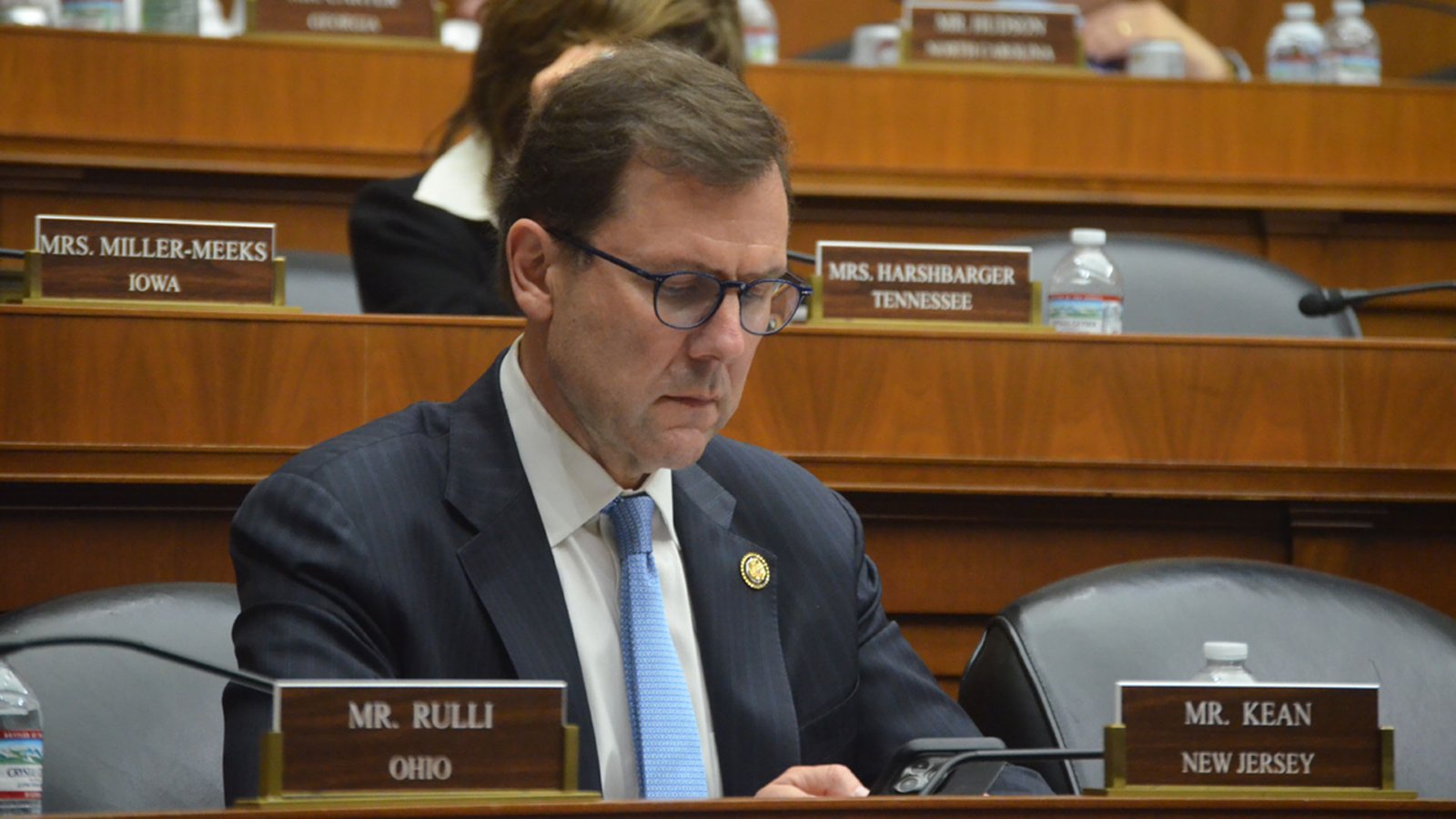
 WASHINGTON — A man who has not been seen in public in nearly three months won an election on Tuesday and will appear on the ballot for one of the nation’s most crucial congressional elections in November.
Primary campaigns are now over in New Jersey, and the focus shifts in the state and nationwide to the midterm elections, the first time U.S. voters will get a chance to weigh in the Trump administration’s record.
Republican Tom Kean Jr., the incumbent in New Jersey’s 7th Congressional District, won his party’s nomination. Kean ran unopposed, voted by mail and said on social media Tuesday that he plans to end the disappearance that drew national attention and return to work “in person in a matter of weeks.”
“I understand the need for transparency on this matter and I look forward to sharing my experience with the public,” Kean’s statement read, promising to explain the heath issue that has kept him from voting and appearing in public.
— Tom Kean (@KeanForCongress) June 2, 2026
That absence and his support for President Donald Trump are expected to be significant factors in Kean’s re-election bid.
Trump endorsed Kean on Monday night, saying “Tom is working tirelessly” for the nationalist “America First Agenda.”
Kean, sidelined since early March with an undisclosed health matter, will face Rebecca Bennett, a former U.S. Navy pilot and political newcomer who campaigned on her military record and time working for healthcare firms. And in the 12th Congressional District, voters picked surgeon Adam Hamawy to succeed Democrat Bonnie Watson Coleman (D-12th), who is not running for reelection, in the safe Democratic seat. Hamawy emerged from a cacophonous field of 13 Democratic candidates.
Rapidly retiring
Trump’s second stint in the White House has been marked with a mass deportation campaign, lingering inflation, sweeping cuts to federal regulations, a multitrillion-dollar tax law, which contains cuts to social safety net programs, tariffs against imports, fraying alliances with foreign powers and military operations against Iran and Venezuela that Congress has not approved.

Sitting members of Congress, including Republicans from safe seats, are retiring at the highest rate since 1992, according to the Brookings Institution, a think tank.
Thirty-seven percent of the U.S. public approved of his job as president, while 62% disapproved, according to an AP-NORC poll conducted in late May. The average of RealClearPolitics, which aggregates polls, places Trump’s approval rating at 40%.
Republicans, including Kean and Reps. Jeff Van Drew (R-2nd) and Chris Smith (R-4th), have largely stood by Trump, including over foreign military entanglements.
“We did the same thing under Obama,” Van Drew said about the January capture of Venezuelan strongman Nicolás Maduro. “He took him out, which I thought was appropriate and did support.”
Kean and Van Drew have bucked Trump and their Republicans on healthcare. In the fall, the pair urged Congress, without success, to reach a “conservative path” to keep premiums for the national healthcare system known as Obamacare from rising.
Many bills, little time
The congressional calendar is slim for the remainder of this year. After busy work periods in June and July, Congress is scheduled to be out for essentially all of August and past Labor Day, then return for a few weeks of votes in September. Lawmakers will be gone the majority of October until Election Day, Nov. 3.
That schedule leaves little time to pass the bevy of significant bills, including an overdue bill that sets agriculture policy, a national spying bill and legislation to provide $70 billion in new money to immigration agencies.
Using a maneuver that allows them to pass the bill on party-line votes, Republicans are looking to “supercharge” federal immigration agencies.
A year and a half into Trump’s second term, Republicans on Capitol Hill and in state houses are loath to cross their party’s head.
After Indiana state lawmakers this year voted against redrawing voting maps to favor themselves in congressional races, Trump fumed against them, and the majority lost reelection.
Other recent warnings against breaking party ranks include John Cornyn, a sitting Texas Republican senator who lost a primary fight last week to a hard-right firebrand, and Kentucky congressman Thomas Massie, who also went down in a primary race. Massie defied Trump by pushing a bipartisan measure to release government records related to the federal investigations of Jeffrey Epstein, the deceased sexual abuser.
A Democratic majority in the House, according to political analysts, is an easier goal for Democrats than retaking the Senate, where Republicans hold a 53-47 majority, would serve as a legislative break against the Trump agenda.
“If we lost the midterms — heaven forbid, if we lost the majority in the House — it would be the end of the Trump presidency in real effect,” Speaker Mike Johnson, the Louisiana Republican who leads that chamber, said after Trump’s State of the Union address in February.
What about impeachment?
Tuesday’s elections also mark the latest turnover in the New Jersey congressional delegation, which has seen a significant churn of outgoing lawmakers and new incoming faces between the first Trump presidency, the administration of Joe Biden and a second Trump term.
New Jersey lawmakers are expected to jockey for Watson Coleman’s seat on the powerful House Appropriations Committee — the panel that writes funding legislation — just as they did for now-Gov. Mikie Sherrill’s seat on the House armed services committee. Democrat Herb Conaway (D-3rd) holds that spot.
If they win the House, Democrats are expected to have top priorities including reinstating federal tax credits for the national health insurance system known as Obamacare, reining in deportation and immigration agencies like Immigration and Customs Enforcement, economic policies and investigating the Trump administration.
Some rank-and-file Democrats are eager to bring articles of impeachment against the president, too. House Minority Leader Hakeem Jeffries, the presumed next speaker in a Democratic House, said that is not a priority “at this moment.”
“We haven’t ruled anything in, we haven’t ruled anything out,” Jeffries said Tuesday at a business meeting in Washington organized by CNBC, the business news channel,. “A lot of the focus from an accountability standpoint, I think it’s fair to say, will be centered around delivering the type of government that’s actually focused on improving the quality of life of the American people, as opposed to the self-dealing that we’re seeing occur right now.”
Twice impeached, Trump urged Republicans to win in November to stave off a third impeachment. “You got to win the midterms, because if we don’t win the midterms, it’s just going to be — I mean, they’ll find a reason to impeach me,” Trump said in a January speech to House Republicans.
7th District as bellwether
The party that wins the Kean-Bennett race in the November midterm elections— the marquee congressional race in New Jersey this year, and the type of political swing district that will determine the House majority in the next Congress — will likely go on to win the House majority.
“New Jersey deserves a member of Congress who will actually show up and fight for our community, not an absent and corrupt career politician who plays the stock market and looks out for himself while the rest of us get left behind,” Bennett, alluding to Kean’s financial disclosures during his absence, said Tuesday night after her victory.
“I will transition from virtual work to in person work within a matter of weeks.” — Online post attributed to Rep. Tom Kean Jr.
Maureen O’Toole, a spokeswoman for the National Republican Congressional Committee, which tries to elect Republicans, said Kean has “lowered taxes, cut costs and made New Jersey’s communities safer” during his time in office.
“I will transition from virtual work to in person work within a matter of weeks,” read the online post, released Tuesday evening, attributed to Kean. “At that time I will be completely transparent as to the nature of my medical condition.”
The post did not give a firm timeline on when Kean would return to Washington.
Kean has missed more than 100 roll-call votes in the House and other votes in committee since his disappearance, though his presence would not have made a difference in most of those circumstances.
State records show Kean and his wife, Rhonda, filed for voting ballots for this election on May 15, that the ballot was mailed on May 19 and that she placed both of their ballots in a drop box on May 28.
Colleen O’Dea contributed reporting.



