
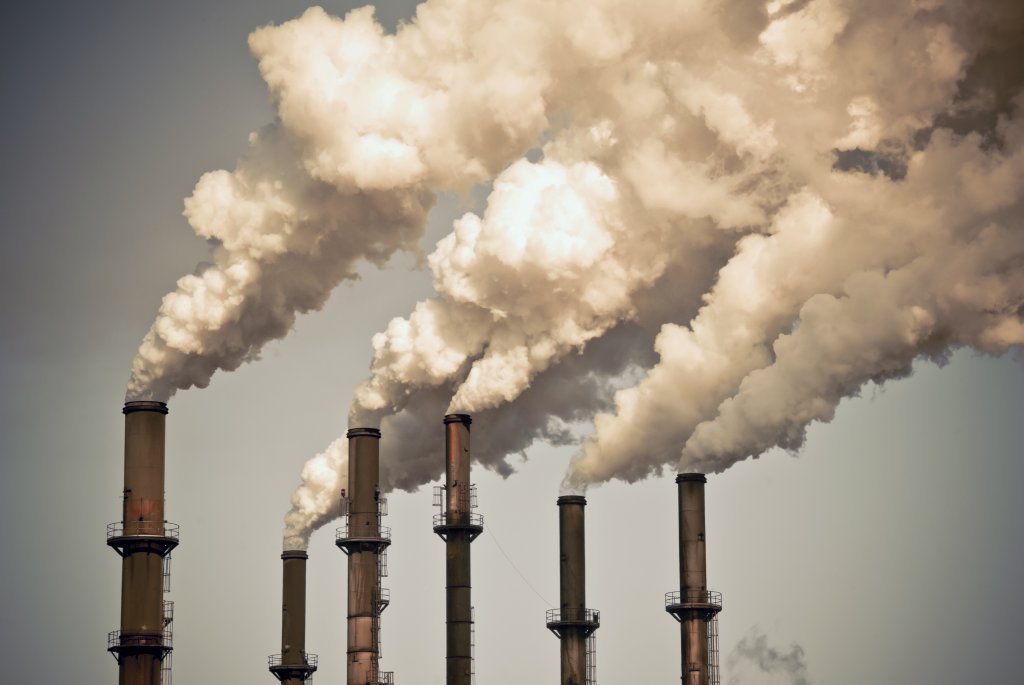
An Assembly panel passed legislation directing oil firms to pay New Jersey $50 billion for climate harms. Critics say consumers would end up paying. (Getty Images)
Some New Jersey companies that extracted fossil fuels over a 20-year period would be ordered to pay the state $50 billion to make up for climate harms under a bill advanced by an Assembly panel Thursday.
The Assembly’s environment committee advanced the newly renamed “Polluters Pay to Make New Jersey Affordable Act” in a party-line vote to cheers from environmentalists and doomsaying from business groups that warned oil firms would pass those costs on to consumers.
“Fossil fuel companies have known for decades about the climate consequences of their products, have profited enormously in the process, and it’s only right that they contribute to addressing the damages communities across the state are now facing,” said bill sponsor Assemblywoman Alixon Collazos-Gill (D-Essex).
The bill’s provisions would apply only to a limited set of fossil fuel extractors. To be captured by the bill, a company or its corporate predecessor must have been engaged in fossil fuel extraction between 1995 and 2024, have sufficient links to New Jersey, and be deemed responsible for at least 1 billion metric tons of greenhouse gas emissions by the state Department of Environmental Protection.
Assemblyman Ravi Bhalla (D-Hudson), a committee member and one of the bill’s more than three-dozen Democratic Assembly co-sponsors, said those provisions would capture only Shell, ExxonMobil, and British Petroleum, more commonly known as BP.
Payment responsibility would be spread across those firms based on their greenhouse gas emissions, whose attribution would be determined by state environmental officials.
Those payments would go out in equal installments over 20 years, but the total unpaid balance would come due immediately if a firm misses a payment, liquidates, or otherwise ceases business.
Funds collected under the bill would go into a special trust fund for grants to pay for climate adaptation projects in the state, and the bill would allow the trust fund to issue bonds against the $50 billion in revenue it would collect from fossil firms, with some restrictions.
Business groups decried the legislation, arguing it would spur oil giants to pass more costs onto consumers at a time when energy prices are already spiking due to growing demand and lower supply because of the Trump administration’s invasion of Iran.
“Every cost finds a citizen in the end because money is like water: It always runs downhill, and here in New Jersey, it runs right into the ratepayers’ basement,” said John Goodnight, a lobbyist for Americans for Prosperity.
They also questioned the program’s legality, arguing lawmakers are seeking to punish oil firms for business practices that were and remain legal.
Similar laws passed in New York and Vermont have faced suits from fossil fuel industry groups, Republican state attorneys general, and the Trump administration. Those suits are ongoing.
“New Jersey will spend years and millions of dollars establishing a bureaucracy, conducting studies, hiring personnel, and defending lawsuits before seeing a single dollar in revenue,” said Assemblyman Mike Inganamort (R-Sussex). “That is not sound government.”
Environmentalists that back the bill said oil companies had not passed on past costs related to ecological disasters, like the Deepwater Horizon oil spill in 2010, when a BP-operated drilling rig spit nearly 5 million barrels of oil into the Gulf of Mexico
The $20.8 billion that BP and related firms agreed to pay made that the largest environmental settlement in U.S. History.
“In fact, those costs were borne by BP through reductions in shareholder dividends, asset sales, and ultimately paid for by BP shareholders and their profits,” said Matt Smith, a regional organizer with Food and Water Watch.
Others added New Jerseyans are already paying for the effects of climate change — like damage from increasingly common severe storms — through their taxes.
“Someone has to pay those actual costs for infrastructure damage, removal, rebuilding, and more,” said Milena Bimpong, an environmental justice policy associate with the New Jersey League of Conservation Voters.
GET THE MORNING HEADLINES.



