
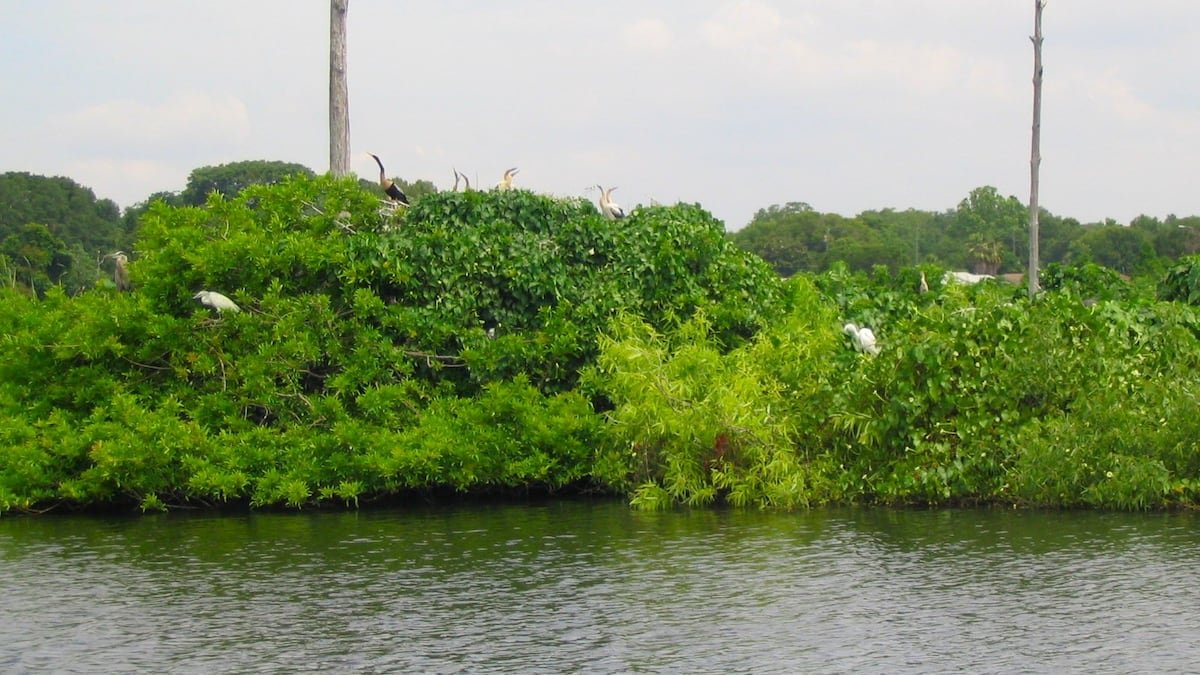
Safety Harbor officials said Monday they are exploring other options for the annual July 4 fireworks show after wildlife advocates raised concerns about the event’s proximity to islands with threatened nesting birds.
The city’s Independence Day celebration is planned for Safety Harbor City Park, a 26-acre property that borders Alligator Lake in the Old Tampa Bay watershed.
The freshwater lake holds two islands that are key gathering grounds for protected birds, with regular visitors including at least four state-threatened species: wood storks, little blue and tricolored herons and the reddish egret, North America’s rarest egret species.
Both islands sit a few hundred feet from the city park where fireworks would launch, according to Google Maps.
“It was brought to our attention that there are concerns regarding nesting birds in the area. The City shares this concern and is equally committed to their protection,” city manager Josh Stefancic wrote in an email to the Tampa Bay Times Monday afternoon.
City staff is exploring alternative locations for the fireworks and coordinating with the Florida Fish and Wildlife Conservation Commission, representatives from the nonprofit Audubon Florida and the fireworks vendor, he said.
While nothing was firm as of Monday afternoon, Stefancic said the city is exploring options that include either reducing or moving the fireworks display, or possibly holding the event again at Waterfront Park.
The event was moved to Safety Harbor City Park this year because of several construction projects in and around Waterfront Park, including on the pier and marina and other restoration projects in the wake of the 2024 hurricanes, according to Stefancic.
When the city was planning the upcoming July 4 celebration this year — the nation’s 250th anniversary of American Independence — Veterans Memorial Lane was fully closed, removing access to the park from the south.
“I am hopeful we will have a plan outlined shortly,” Stefancic said.
Birds often choose to breed and lay eggs on the Pinellas County islands because of the surrounding lake’s namesake: alligators. Land-dwelling mammals that eat bird eggs, like raccoons, cats and skunks won’t try and feast when gators are nearby.
“The fact fireworks would be going off so close to these birds is a concern,” said Ann Paul, a retired biologist and past president of the Tampa Audubon Society.
Loud bangs could cause birds to leave their nests and chicks behind, making them more vulnerable to flying predators like vultures, great blue herons and birds of prey, Paul said.

It wouldn’t be the first time a fireworks display would be either canceled or moved because of nesting birds in the Tampa Bay region.
In 2023, a summertime fireworks display planned for after a Clearwater Threshers game at BayCare Ballpark was scrapped over concerns the blasts could harm a pair of eagle chicks nesting in a nearby cell tower.
“In general, fireworks are hard on wildlife,” said Jeff Liechty, manager of Audubon’s Florida Coastal Islands Sanctuaries. “And that’s especially true for nesting birds.”
“Every effort should be made to minimize impacts to the nesting colony,” Liechty said.
The Tampa Bay Times launched the Environment Hub in 2025 to focus on some of Florida’s most urgent and enduring challenges. You can contribute through our journalism fund by clicking here.



