
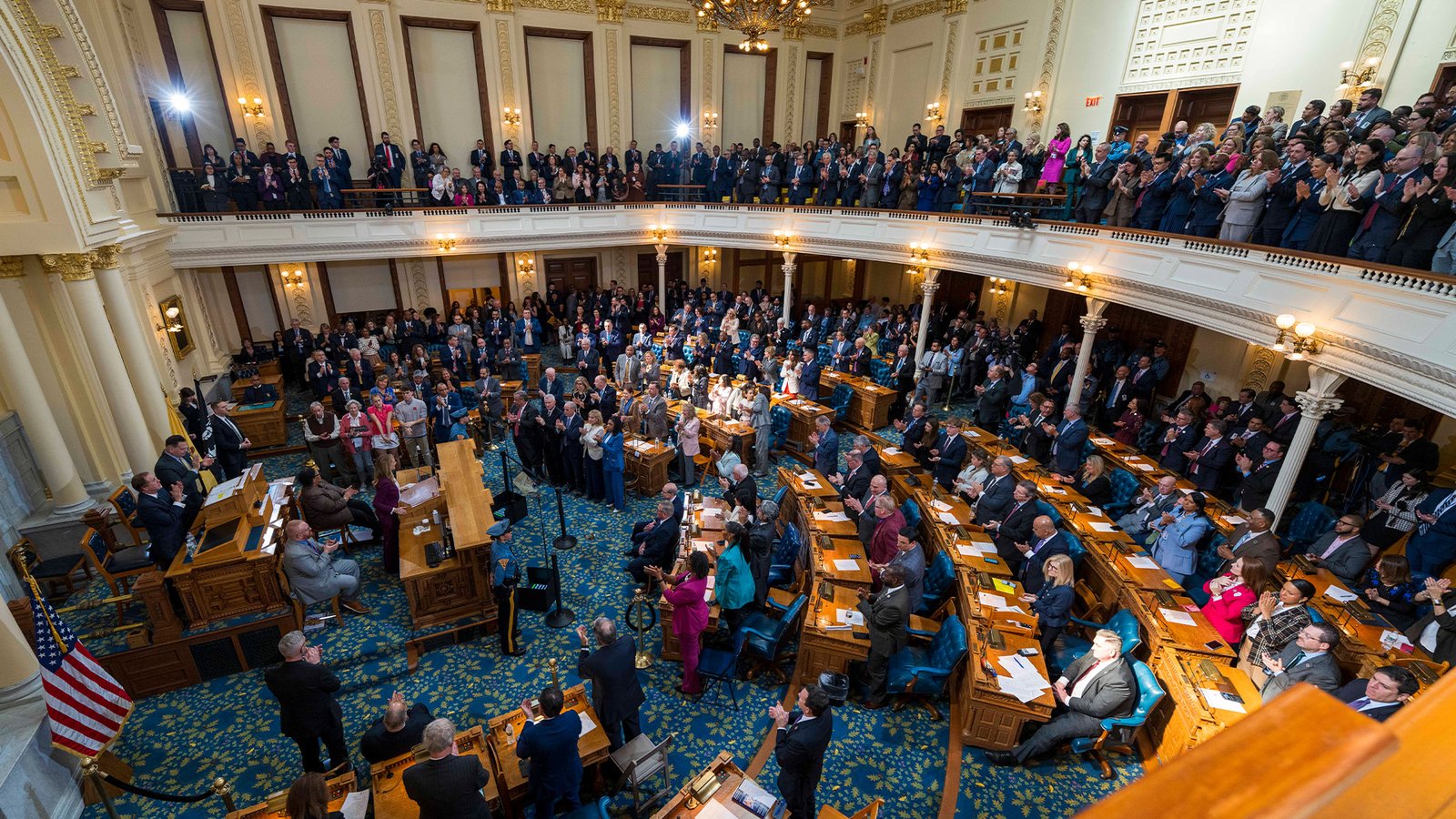
 Lawmakers now drafting the legislation that will become state government’s next annual budget are flexing powers of the purse solely held by New Jersey’s Legislature.
An appropriations process dictated by the state constitution grants members of the Legislature, and not the governor, the authority to write spending bills put up for votes each year in the Assembly and Senate.
Sections of the same constitution, though, do give the governor and the executive branch some key budget-making powers as well.

These include the final say on the revenue projections that set the foundation for each annual spending plan approved by lawmakers.
And once a spending bill clears the Legislature, the governor also gets another powerful tool that the constitution says can be used only when policing appropriations: the authority to remove individual line items, or language, from the spending bill, and still sign into law what’s called the appropriations act.
That tool, known in Trenton as the line-item veto, this year may give Gov. Mike Sherrill an upper hand in budget negotiations with lawmakers in the run-up to a July 1 deadline also set in the constitution.
Long-term stability
Last year, then-Gov. Phil Murphy kicked off the appropriations process in late February when he delivered the annual budget message to a joint legislative session at the State House.
It wasn’t until late June, though, when majority Democrats in the Legislature drafted a record-high spending bill that would become state government’s budget for the 2026 fiscal year. While doing so, they inserted hundreds of millions of dollars in new spending into a revised budget plan that had been put forward by Murphy in late May.
Murphy, a Democrat serving his final year in office, largely accepted those added appropriations, leaving a wide structural gap between annual spending and revenues that was sustained only by depleting budget surplus and making some similar adjustments.
This year, Sherrill, a Democrat in her first year in office, has identified the structural gap as a key fiscal concern. The gap, she argues, threatens the state’s long-term financial sustainability and must be narrowed.
In her own budget plan, Sherrill cut the projected structural gap in half, to less than $1.5 billion, according to budget documents released in recent weeks by her administration.
She has also indicated a willingness to make changes to her overall $60.7 billion budget plan, but only if corresponding cuts are proposed by lawmakers alongside any spending additions they put forward in the coming weeks.
Constitution basics
It remains to be seen whether lawmakers will heed her request this month when they formally introduce the spending bill that will become the fiscal year 2027 budget.
One way Sherrill can restrain legislative spending is through her administration’s issuance of a formal revenue certification for the fiscal year that begins July 1.
That power to certify annual revenues – which is the official tax collection forecast for a given fiscal year — is granted solely to the governor in Article VIII of the state constitution.
Meanwhile, Sherrill has power via Article V of the constitution to remove individual spending items or language from budget legislation approved by lawmakers.
Typically, the constitution requires the governor to send rejected legislation back to the Legislature in the form of an outright veto, or with recommended changes through what’s known as a conditional veto.
If lawmakers accept the recommendations made by a governor in a conditional veto, instead of having to start the legislative process all over again, the measure can go right back to the governor for final approval to become law, according to the constitution.
Any bill that is rejected via an outright veto from a governor, though, must win approval from a two-thirds majority in both the Assembly and Senate to become law, the constitution states.
‘Comprehensive deal’
The line-item veto is available for governors to use only during consideration of a spending bill, and it can help prevent a state government shutdown during budget impasses.
That’s because the constitution generally requires a government shutdown if a balanced budget is not in place each July 1.
A governor’s line-item veto lets a budget become law even if the governor objects to specific items in it.
Indeed, unnoticed by many last year was Murphy’s limited use of this authority to make several minor changes to the $58.8 billion spending bill that lawmakers sent to his desk just before the July 1 start of the current fiscal year.
Those changes, Murphy said in a signing statement, restored consistency with a “comprehensive deal struck with my legislative partners.”
Override failures
Perhaps the highest-profile flex of the line-item veto authority was carried out in 2011 by then-Gov. Chris Christie. At the time, Christie, a Republican, was at odds with Democrats who controlled the Legislature on both spending and tax policy.
After Democrats sent Christie budget legislation that called for spending more than was forecast in the administration’s official revenue certification, Christie removed nearly $1 billion from the Democrats’ insertions using the line-item veto. And he rejected Democrats’ attempts to increase taxes, including on millionaires, to help sustain a larger annual budget.
“I will not give in to their tax-and-spend agenda, no matter how many times they and their special interests try to demagogue me to do so,” Christie said at the time.
Lawmakers, though, do not simply have to accept a governor’s line-item vetoes. Under Article V, they can override each removed item or deleted budget language, though only with a two-thirds majority in each house.
In the wake of Christie’s liberal use of the line-item veto power in 2011, then-Senate President Steve Sweeney, a Democrat, oversaw numerous override votes in his chamber. Each failed to generate the required support needed to upend the cuts.
This story is made possible in part by the Corporation for Public Broadcasting, a private corporation funded by the American people.



