
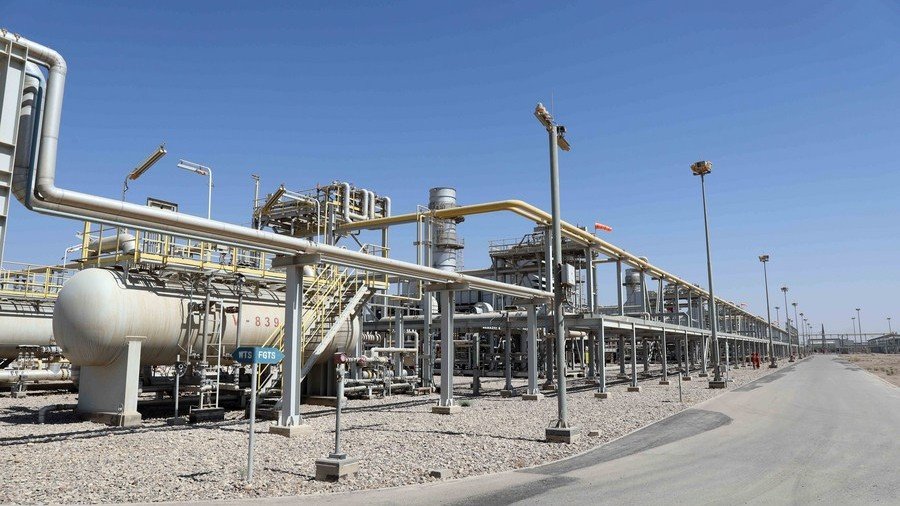
OPEC’s second-largest oil producer, Iraq, has less than two months before it loses the key means to export its crude, with the agreement to move its product through two pipelines into Turkey expiring on 27 July. These routes have become vital to Iraq’s ability to monetise its oil flows since the effective closure of the Strait of Hormuz from 28 February. Up until then, around 95% of Iraq’s crude was shipped through that route to key export destinations in Asia, including China. The blockade of the Strait meant Iraq’s domestic oil storage tanks filled quickly to maximum capacity, and because it has very limited options for transporting its crude elsewhere, it has been forced to shut down production wells. The longer that goes on, the more likely it is to result in permanent damage to Iraq’s oil production through a loss of reservoir pressure, water infiltration, and corrosion, among other factors. For Iraq, this poses an existential risk, as over 90% of its annual budget historically still comes from oil. So, how has it come to this, and what are Iraq’s options now?
The genesis of the current nightmare for Iraq lies in the March 2023 ruling by an international arbitration court that Turkey pay the Baghdad US$1.5 billion in damages for breaching the 1973 ‘Crude Oil Pipeline Agreement’. This resulted from Ankara allowing the semi-autonomous northern Iraqi region of Kurdistan’s government (the KRG), based in Erbil, to bypass the Baghdad-based Federal Government of Iraq (FGI) and export oil independently. According to a separate agreement struck between the FGI and the KRG in 2014, the KRG was obliged to send the oil produced in its region (around 550,000 barrels per day at the time) to the FGI for sale through the state-owned State Organization for Marketing of Oil. In exchange, the FGI would send the KRG a percentage of central budget revenues each month (about 17% at that point). The KRG was explicitly not allowed by the FGI to sell oil independent of this agreement, as Baghdad believed the potentially enormous income from this would be used by the KRG as a war chest to help secure the region’s full independence from Iraq, which was true, as fully analysed in my latest book on the new global oil market order. After the arbitration court’s verdict in Baghdad’s favour in March 2023, Turkey triggered a clause in the contract in July 2025, giving a mandatory one-year notice that it was terminating the 52-year-old pact permanently, effective as of 27 July 2026. With the Strait shut, April saw Iraq’s crude oil production fall to an average of 1.389 million barrels per day (bpd), compared to 3.47 million bpd from January 2002 to the end of March this year and over 4.1 million bpd in the three months leading up to 28 February. The last time oil production fell to the current level in Iraq was immediately following the 2003 U.S.-led invasion. In response, Baghdad began to move oil for export, however it could, mostly on tanker trucks overland. Iraq has since reached around 500 trucks per day (each truck contains, on average 200 to 250 barrels of oil).



