
Refresh
Iran peace deal has big implications for the Fed
Stocks are starting Fed week on a positive note thanks to news that the U.S. and Iran have agreed to a potential peace deal.
Daniela Hathorn, senior market analyst at Capital.com, says the deal has “major implications” for global central banks, given that higher oil prices have accelerated inflationary pressures — and have led many to believe the next moves from policymakers will be tightening rather than easing.
Indeed, CME FedWatch shows that futures traders aren’t pricing in any rate cuts this year. At the start of 2026, many folks were anticipating at least two quarter-point rate cuts by December.
And while the recent decline in oil prices “does not eliminate inflation risks altogether,” says Hathorn, “it does reduce some of the urgency surrounding them.”
And while the Federal Reserve is likely to maintain a cautious stance this time around, the peace deal may give policymakers “greater flexibility to maintain a neutral stance rather than immediately leaning toward further tightening,” she adds.
Hathorn believes Fed Chair Warsh’s messaging “could prove critical,” as markets look “for clarity on whether the Fed views current inflation pressures as temporary and manageable, or whether policymakers still see a need for tighter policy later in the year.”
– Karee Venema
May CPI came in hot as energy prices kept climbing
The Bureau of Labor Statistics (BLS) released the May Consumer Price Index (CPI) report last Wednesday and it confirmed that energy prices continue to boost inflation.
According to the BLS, headline inflation was up 0.5% from April to May and 4.2% higher than the year prior. The monthly increase was slower than the 0.6% rise seen in April.
The annual rise signaled an uptick from the 3.8% increase from the month prior and was the highest yearly pace since April 2023. Both figures matched economists’ estimates.
“The index for energy rose 3.9 percent in May, after rising 3.8 percent in April and 10.9 percent in March. The energy index accounted for over sixty percent of the monthly all items increase,” wrote the BLS in its report.
Core CPI, which excludes volatile food and energy prices, was up 0.2% month over month, a downshift from April’s 0.4% increase and slower than economists expected. Year over year, core inflation was 2.9% higher, slightly faster than the 2.8% increase from the year prior and in line with estimates.
Prices for airfare, medical care and recreation were all higher in May, while costs for new cars, household furnishings and car insurance were lower.
Ahead of the June Fed meeting, many are wondering if higher inflation readings mean the central bank’s next move will be a rate hike.
But Skyler Weinand, chief investment officer at Regan Capital, doesn’t see that happening any time soon. “It’s clear that rate cuts are off the table, and while there is chatter about a potential rate hike, we believe it’s unlikely that we’ll see a rate hike before the midterm elections, and any such hike is likely a year away,” he says.
Read more: May CPI Shows Inflation Rose at Its Fastest Pace in 3 Years
– Karee Venema
What Kiplinger economist David Payne is expecting at this week’s Fed meeting
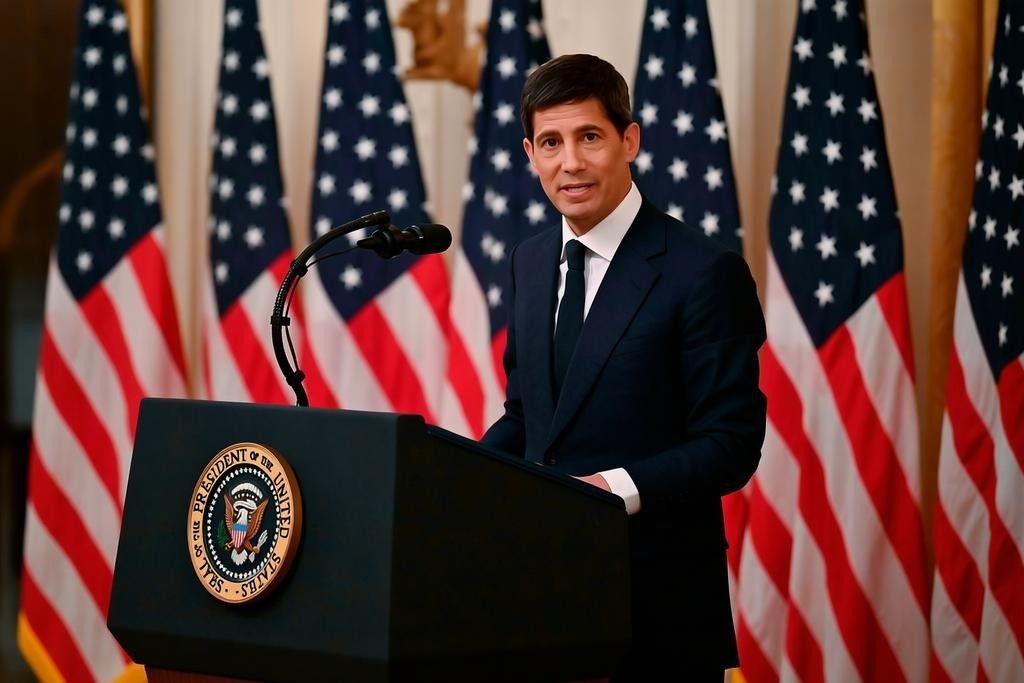
Wednesday will be Kevin Warsh’s first monetary policy meeting since taking over the chairmanship of the Federal Reserve from Jerome Powell in May. It is not likely that there will be any changes in rates.
The decline in crude oil prices following the agreement to stop the U.S.-Iran war is welcome news for Warsh and the Fed, but it will not be enough for the new chair to persuade his fellow committee members to cut. For the moment, at least, the agreement likely prevents any move to fight inflation by increasing short-term interest rates.
– David Payne
David Payne is both staff economist and reporter for The Kiplinger Letter, overseeing Kiplinger forecasts for the U.S. and world economies. Previously, he was senior principal economist in the Center for Forecasting and Modeling at IHS/Global Insight, and an economist in the Chief Economist’s Office of the U.S. Department of Commerce.
Who gets to vote at the June Fed meeting?
The Federal Open Market Committee (FOMC) has 12 total members, eight permanent and four who rotate each year.
The eight permanent voting committee members include the Fed chair and vice chair, the five Fed governors and the president of the New York Fed.
Four regional Fed presidents are rotated in each calendar year.
The 2026 FOMC voting committee consists of:
Fed Chair Kevin Warsh
Vice Chair Philip Jefferson
Fed Governor Michael Barr
Fed Governor Michelle Bowman
Fed Governor Lisa Cook
Fed Governor Jerome Powell
Fed Governor Christopher Waller
New York Fed President John Williams
Cleveland Fed President Beth Hammack
Minneapolis Fed President Neel Kashkari
Dallas Fed President Lorie Logan
Philadelphia Fed President Anna Paulson
In 2027, the presidents from Chicago, Richmond, Atlanta and San Francisco will rotate in as FOMC voting members, according to the Federal Reserve.
– Karee Venema
Who is Kevin Warsh?
On May 13, the Senate voted 54-45 to confirm Kevin Warsh as the new Federal Reserve chair, replacing Jerome Powell, who had served in that position since 2018.
But who is Kevin Warsh?
Warsh previously served on the Federal Reserve Board from February 2006 through March 2011. He was Fed Chair Ben Bernanke’s right-hand man during the 2008-09 global financial crisis and was his primary liaison to Wall Street, which earned him credibility he still retains.
Before his time at the Federal Reserve, Warsh was special assistant to the president for economic policy and executive secretary of the White House National Economic Council from 2002 through 2006, during the George W. Bush administration. From 1995 to 2002, Warsh worked for Morgan Stanley.
Prior to being confirmed as Fed chair, Warsh was a visiting fellow in economics at Stanford University’s Hoover Institution, a lecturer at the Stanford Graduate School of Business and a member of the Panel of Economic Advisers of the Congressional Budget Office.
He is widely viewed as a “hawk” on monetary policy who generally favors higher interest rates rather than the risk of inflation.
At the same time, Warsh, who was said to be a candidate for Treasury secretary before Trump picked Scott Bessent, was on the short list because he has a great relationship with the president.
Warsh said in mid-2025 that “the independent operations in the conduct of monetary policy is essential,” adding “that doesn’t mean the Fed is independent in everything else it does.”
Though he consistently took the hawkish line on inflation during his time inside the central bank, Warsh has more recently advocated for lower interest rates.
Read more: The New Fed Chair Was Announced: What You Need to Know
– David Dittman
David Dittman
David Dittman is the former managing editor and chief investment strategist of Utility Forecaster and the former editorial director of Investing Daily, Charles Street Research, and Weiss Ratings. A former stockbroker, David has been working in financial media for more than 20 years.
The stock market is trading higher to start Fed week
Stocks are solidly in positive territory on Monday as market participants cheer signs of potential peace in the Middle East.
Over the weekend, Pakistani Prime Minister Shehbaz Sharif announced on X “that the Peace Deal between the United States of America and Islamic Republic of Iran has been REACHED.” President Donald Trump later confirmed the news.
At last check, the blue-chip Dow Jones Industrial Average was up 1% at 51,928, the broader S&P 500 was 1.9% higher at 7,573, and the tech-heavy Nasdaq Composite had gained 3% to 26,667.
Over in the bond market, the yield on the 2-year Treasury note is down 3.3 basis points at 4.052%, and the 10-year Treasury yield is off 2.4 basis points at 4.461%.
– Karee Venema
With over a decade of experience writing about the stock market, Karee Venema is the senior investing editor at Kiplinger.com. She joined the publication in April 2021, and oversees a wide range of investing coverage, including content focused on equities, fixed income, mutual funds, ETFs, macroeconomics and more.
Fed meeting schedule for 2026
The next Fed meeting, which runs from June 16 through June 17, marks the fourth gathering of 2026.
“The committee meets eight times a year, or about once every six weeks,” explains Kiplinger contributor Dan Burrows.
The Federal Open Market Committee “is required to meet at least four times a year and may convene additional meetings if necessary,” Burrows adds, noting that “the convention of meeting eight times per year dates back to the market stresses of 1981.”
Fed meetings last two days and wrap up with the release of a policy decision at 2 pm Eastern Standard Time. This is typically followed by the Fed chair’s press conference at 2:30 pm, though this could change under Warsh’s leadership.
Here is the full remaining Fed meeting schedule for 2026:
June 16 to 17
July 28 to 29
September 15 to 16
October 27 to 28
December 8 to 9



