
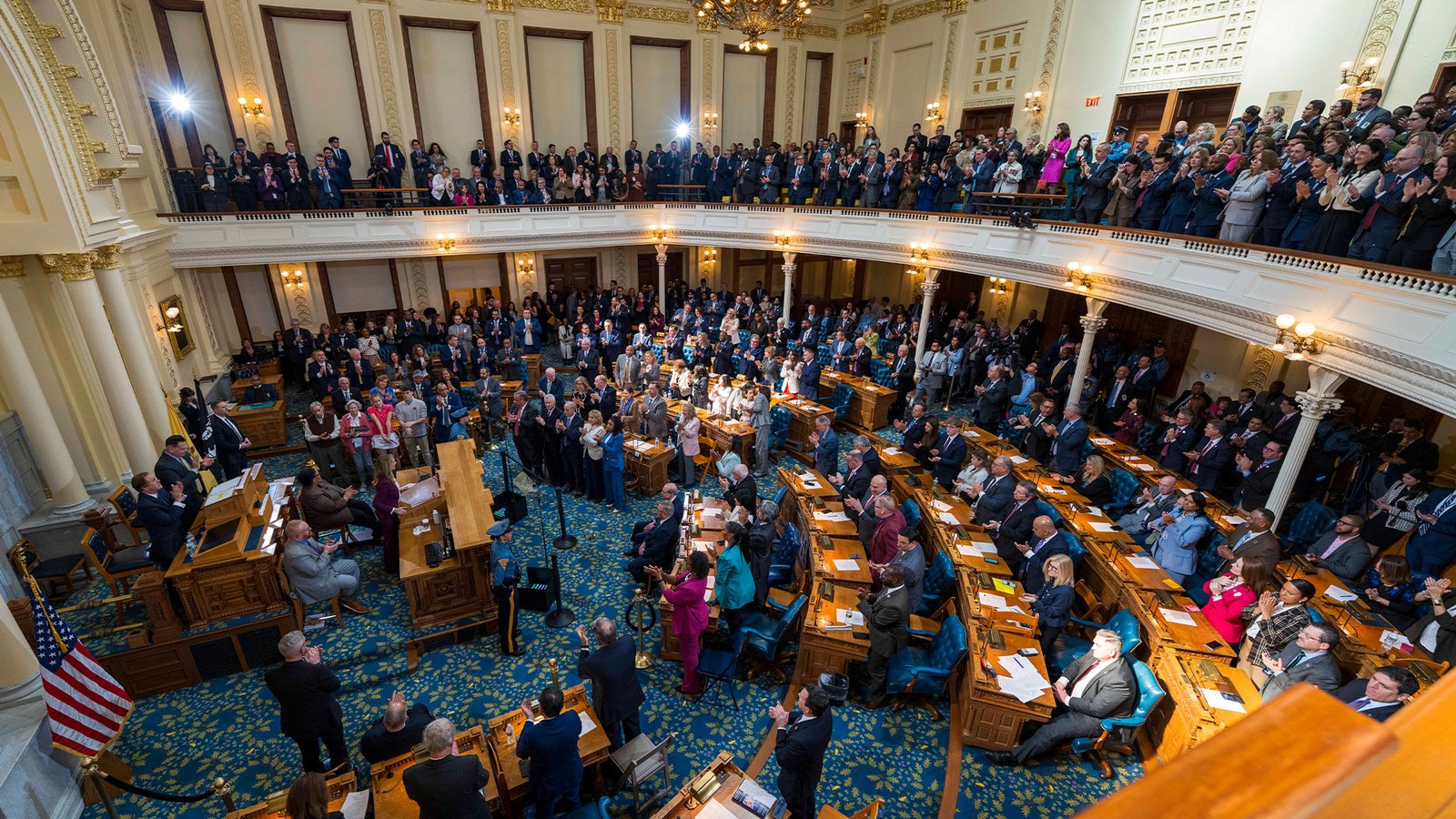
With little time to spare, New Jersey lawmakers are prepping state government’s latest record-setting annual budget for Gov. Mikie Sherrill’s signature.
A nearly $61 billion spending plan that increases funding for direct property tax relief and K-12 public school aid, while also temporarily expanding New Jersey’s child tax credit, is planned to clear the full Legislature in time for Wednesday’s start of a new fiscal year.
But to stay on track — and avoid a midweek government shutdown — members of the budget committees in the Assembly and Senate were called in for rare Sunday meetings, with agendas packed full of legislation.
Several measures needed to advance the fiscal year 2027 budget were also on the weekend to-do list.
Final action on the appropriations legislation drafted by majority Democrats is expected to take place in both full houses sometime on Tuesday. From there, the legislative spending bill and related legislation is expected to quickly garner Sherrill’s signature.

Sherrill, a first-term Democrat, announced a budget agreement with key legislative leaders last week following a series of closed-door negotiations.
Their pact means total annual spending will be above $60 billion for the first time in state history.
To do so, state government will once again spend more during the next fiscal year than it collects annually from taxes, fees and other resources, with budget surplus being tapped to help bridge the gap, according to budget documents.
A remaining structural imbalance, though, will be about half of the roughly $3 billion gap policymakers were facing earlier this year when they began to work on the new budget. Sherrill has made reducing the structural budget gap a key policy goal this year.
Record-setting budget
To help narrow the gap, Sherrill, a former congresswoman who is a newcomer to state government, proposed making several business-tax policy changes to generate hundreds of millions of dollars in new revenue.
Lawmakers this week are advancing the legislation needed to implement these tax changes, which many Republicans have characterized as thinly disguised tax hikes.
The legislation includes tweaks to existing deductions and credits, as well as the establishment of a new fee for some employers whose workers are covered by Medicaid instead of company benefits.
However, none of the major taxes paid by New Jersey residents, such as the sales and income taxes, would be increased under the budget agreement backed by Sherrill and majority Democrats.
Instead, the Sherrill administration is forecasting some revenue growth to occur naturally, without adjusting any tax rates. And the year over year increase in planned spending was on course to measure less than the rate of annual inflation.
Some senior homeowners, though, are expected to be jettisoned from the Stay NJ property tax relief program as part of efforts led by Sherrill to shave spending on a program that has been criticized as being too costly and overly generous for wealthy senior homeowners.
The annual income limit for Stay NJ recipients, which is currently set at $500,000 for senior homeowners, was expected to be slashed to $200,000 under the budget agreement announced by Sherrill and legislative leaders.
Among the new legislation introduced in time for Sunday’s committee votes was a measure that calls for a temporary, 25% expansion of New Jersey’s child tax credit.
The total allocation for aid payments to K-12 public schools was also set to increase year over year to over $12 billion. Sherill and lawmakers, though, did not appear to address broader concerns about the state’s school funding formula, including policies causing some individual districts to receive less state aid, even as the total amount of aid is rising.
Meanwhile, overall state funding for New Jersey Transit was also set to increase, but not enough to avoid a pending fare increase.
‘It doesn’t have to be this way’
The proposed budget would also fully cover state government’s annual pension obligation. But left out was funding for a restoration of retiree cost-of-living adjustments that have been frozen for well over a decade as a cost-saving measure, enraging many retirees.
With full details of the final budget agreement once again being kept under wraps until just before the July 1 deadline, several advocacy groups voiced concerns about transparency and public oversight that have become commonplace at the end of June in Trenton during the majority Democrats’ tenure.
It has also become a tradition for lawmakers to attempt to insert additional spending into the governor’s final draft of the proposed budget at the very end of June through what are known as written budget resolutions.
“Schools, higher education, housing programs, clean energy programs, disability services, legal aid organizations, and countless other priorities are left waiting until the final days of the budget process to learn their fate,” said Eric Benson, manager of the For The Many, a coalition of groups that incudes religious leaders and housing advocates.
“It doesn’t have to be this way,” Benson said.
Earlier this year, lawmakers from both parties put forward budgeting reform proposals. These included calls to set a firm, mid-June deadline for when a final spending bill must be introduced by lawmakers and made available to the public.
In the end, legislative leaders in both houses ignored those suggestions.



