
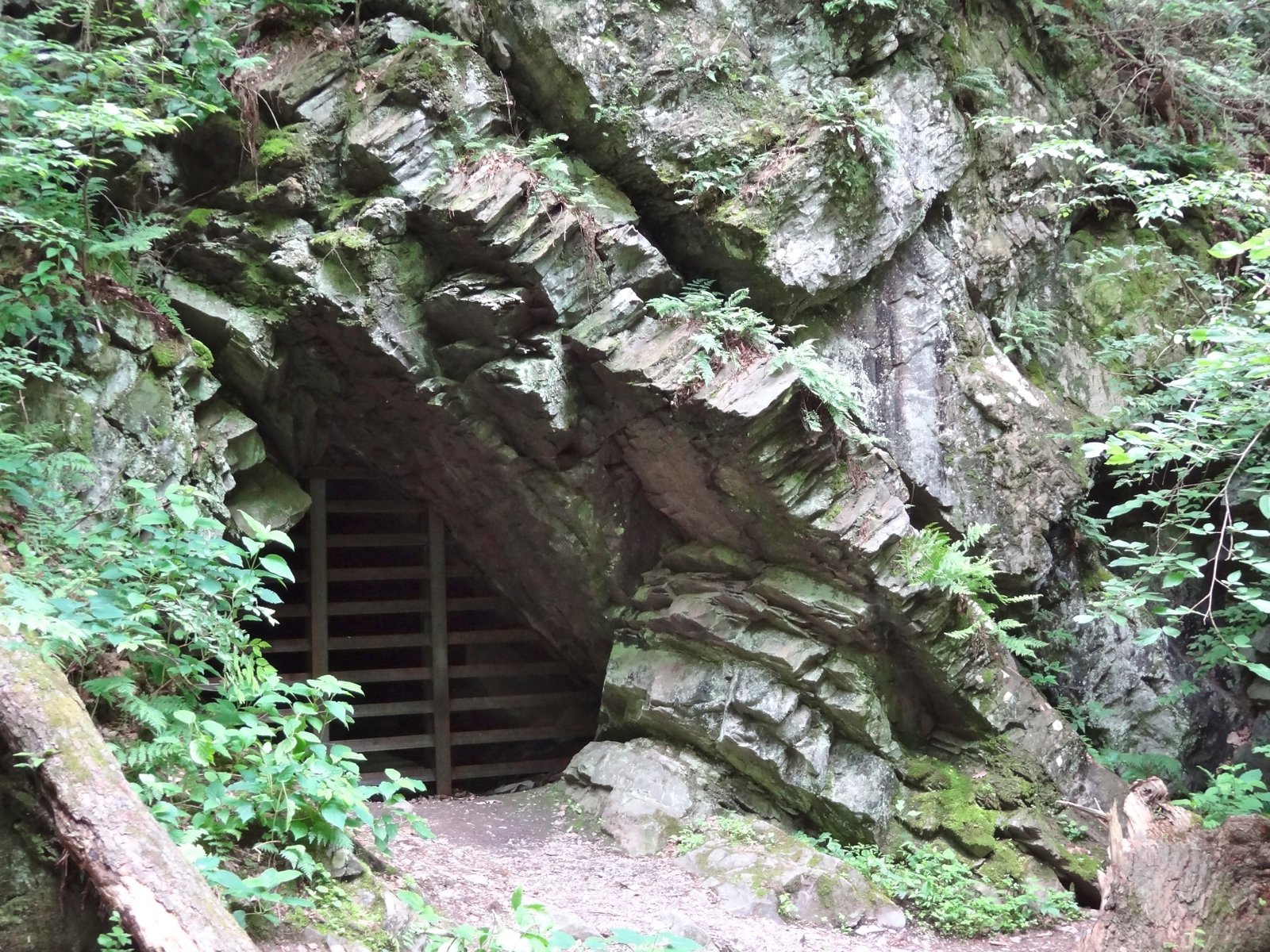
The now-defunct Pahaquarry Township did not disappear overnight. Instead, the tiny Warren County municipality was gradually eaten away until it no longer made sense to remain a municipality.
Located in the northwest corner of Warren County, in what is now part of Hardwick Township, Pahaquarry was formed in 1824 from portions of Walpack Township.
The area that would become Pahaquarry was first settled by the Lenni-Lenape, who lived off the land for hundreds of years before any contact with Europeans.
The name Pahaquarry is derived from the Lenni Lenape word Pahaqualong, meaning “the place between the mountains beside the waters.”
The first Europeans to come to Pahaquarry were the Dutch, who arrived around 1650 to dig for copper. Pahaquarry was the first area in modern-day Warren County to be settled by Europeans.
During this period, the Dutch constructed a road from Pahaquarry to Kingston, N.Y., over which they transported the proceeds of their mining ventures. That road, now known as Old Mine Road, was the first commercial highway built in the United States and is still widely used today.
Pahaquarry was a mining and grist-mill community for much of the 19th century, with other small businesses opening in the area. By the early 20th century, many of those businesses had moved elsewhere or closed. The main attraction, the copper mine, was less profitable than it once had been, despite advancements in extraction methods.
Gradually, the town’s population diminished, although a small, close-knit community remained.
Trouble began in 1955, when Hurricanes Connie and Diane battered the eastern seaboard, particularly Northwestern New Jersey and the Poconos. Almost 100 people lost their lives.
The federal government resolved to act and sought to ensure that this would never happen again. It proposed the Tock Island Dam project, which would have created a reservoir roughly 40 miles long and 40 miles wide. Hundreds of families had their land taken through eminent domain.
In 1975, amid environmental concerns, the Delaware River Basin Commission voted to shelve the project. For Pahaquarry, that meant the town would get to live another day, but the damage caused by eminent domain had already been done.
The commission handed the land over to the Federal Park Service. By that point, the town’s population had already declined significantly, and the federal government allowed those who remained to stay.
By the early 1990s, the population had dwindled from 63 in 1960 to just six by 1997, with four of those residents living in one household.
In 1997, the town’s two remaining committee members, Mayor Jean Zipser and Harold Van Campen, voted to adopt an ordinance allowing the town to be annexed by Hardwick Township.
The merger gained some statewide attention because it aligned with Gov. Christine Todd Whitman, who was then recommending that municipalities merge. Hardwick received a state reimbursement of more than $24,000 in merger-related costs.
The merger officially made Hardwick Warren County’s largest municipality by area.
The merger was widely seen as a positive measure by most residents in Hardwick. However, some residents, including former Mayor Dennis Russell, submitted a petition with more than 250 signatures to the township committee in May 1997, asking that the merger be delayed for a public referendum and an examination of the move’s merits. However, the movement quickly dissolved. were saddened to see a town of more than 170 years dissolve. As of July 2nd 1997, Pahaquarry Township ceased to exist.
Other groups were saddened to see a town of more than 170 years dissolve, including Pittsburgh-based indie rock band Vehicle Flips, which made a song to commemorate the town on its 1999 album, For You I Pine. The song is still available on YouTube and Spotify.
Despite the town No Longer Existing, it has left a lasting impact on Garden State History.



