
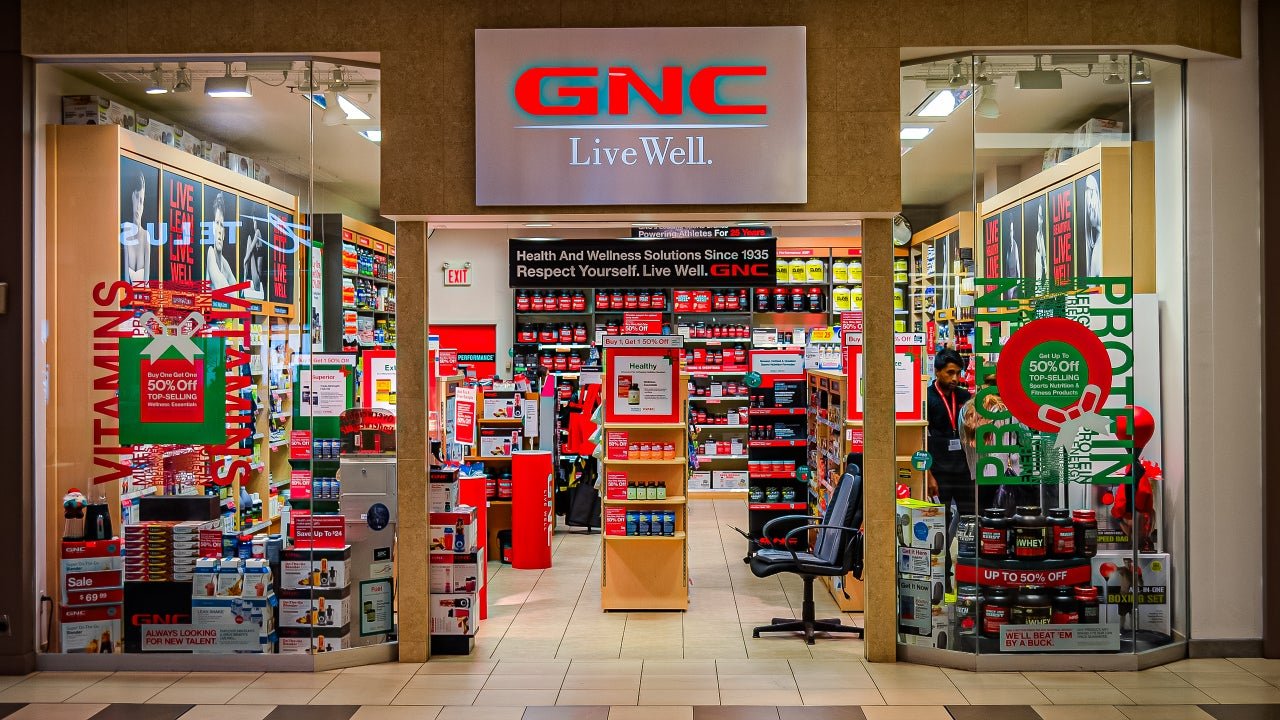
Years ago, stocking up on protein powder and herbal supplements meant stopping by your local GNC store, but that option is quickly disappearing for local communities around the country.
Six years after it was acquired out of bankruptcy by a China-based pharmaceutical company, the once-ubiquitous nutrition and wellness retailer continues to shrink its U.S. physical footprint, a recently released franchise disclosure document shows.
At the end of last year, GNC had 1,960 locations around the country, compared to 2,300 locations at the beginning of 2023. That’s a net decline of 340 stores over the three-year period disclosed in the document.
In 2025 alone, GNC’s store count declined by 180 locations, while 2024 saw a net decline of 165 stores. In 2023, GNC actually gained a net 5 stores.
More than half of GNC’s stores are company owned, with California, Florida, and Texas having the most locations.
What happened to GNC?
GNC’s reported store count of 1,960 marks a dramatic downsizing compared to the roughly 5,200 U.S. stores that it had when it filed for Chapter 11 bankruptcy protection at the height of the COVID pandemic in 2020.
Perhaps ironically, that sizable count included GNC’s store-in-store locations inside Rite Aid, the drugstore chain that also filed for Chapter 11 bankruptcy—twice—before eventually closing all of its locations in 2025.
At the time of GNC’s 2020 bankruptcy petition, the vitamin retailer was saddled with debt and attempting to refinance with its lenders, court documents showed, but lockdown orders and temporary store closures disrupted its business and scuttled the efforts.
Pittsburgh-based GNC Holdings filed for bankruptcy in June of that year and immediately announced plans to close as many as 1,200 stores.
GNC exited bankruptcy in October 2020 after being acquired by China’s Harbin Pharmaceutical Group, which had been an affiliate of the retailer’s largest shareholder.
More recently, the company has been investing more heavily in its digital operations, with GNC this year hiring a former Gap Inc. executive to lead its modernization efforts.
Fast Company reached out to GNC for comment.
Which GNC stores have closed?
GNC’s franchise disclosure, issued in July, doesn’t list specific locations, but it does offer a window into how and where GNC has continued to adjust its store footprint in the years since its bankruptcy.
According to the document, the following states saw the biggest net declines in store counts between 2023 and 2025. The counts below include both franchise and company-owned stores.
- Florida: -42 stores
- Texas: -40 stores
- California: -20 stores
- Ohio: -20 stores
- Georgia: -17 stores
- South Carolina: -15 stores
- New Jersey: -14 stores
- North Carolina: -14 stores
- Illinois: -13 stores
- Indiana: -12 stores
- New York: -12 stores
- Michigan: -11 stores
Over the period, 11 franchisees moved locations, the document shows.
It’s not immediately clear how many additional stores may close this year, as GNC did not respond to our request for further details. However, the document shows that GNC did not plan to open any new stores this year.
Why are GNC stores closing?
GNC dates back to 1935, when it was founded as a small health food store in downtown Pittsburgh called Lackzoom. It later became known as General Nutrition Centers.
Over the decades, the company expanded to become one of the largest global nutrition retailers, at one point operating in some 50 international markets. It changed hands among private equity owners multiple times from the 1980s through early 2000s.
GNC went public on the New York Stock Exchange (NYSE) in 2011. Its IPO was seen as among the most successful stock listings that year, as CNBC reported. But even then the company had an oppressive debt load of roughly $900 million.
In the years that followed, GNC couldn’t outrun a shifting retail landscape that favored online retailers such as Amazon and larger chains like Target and Walmart. Even before the pandemic, the retailer had been closing hundreds of its stores, particularly those located in shopping malls.
This story is developing…



