
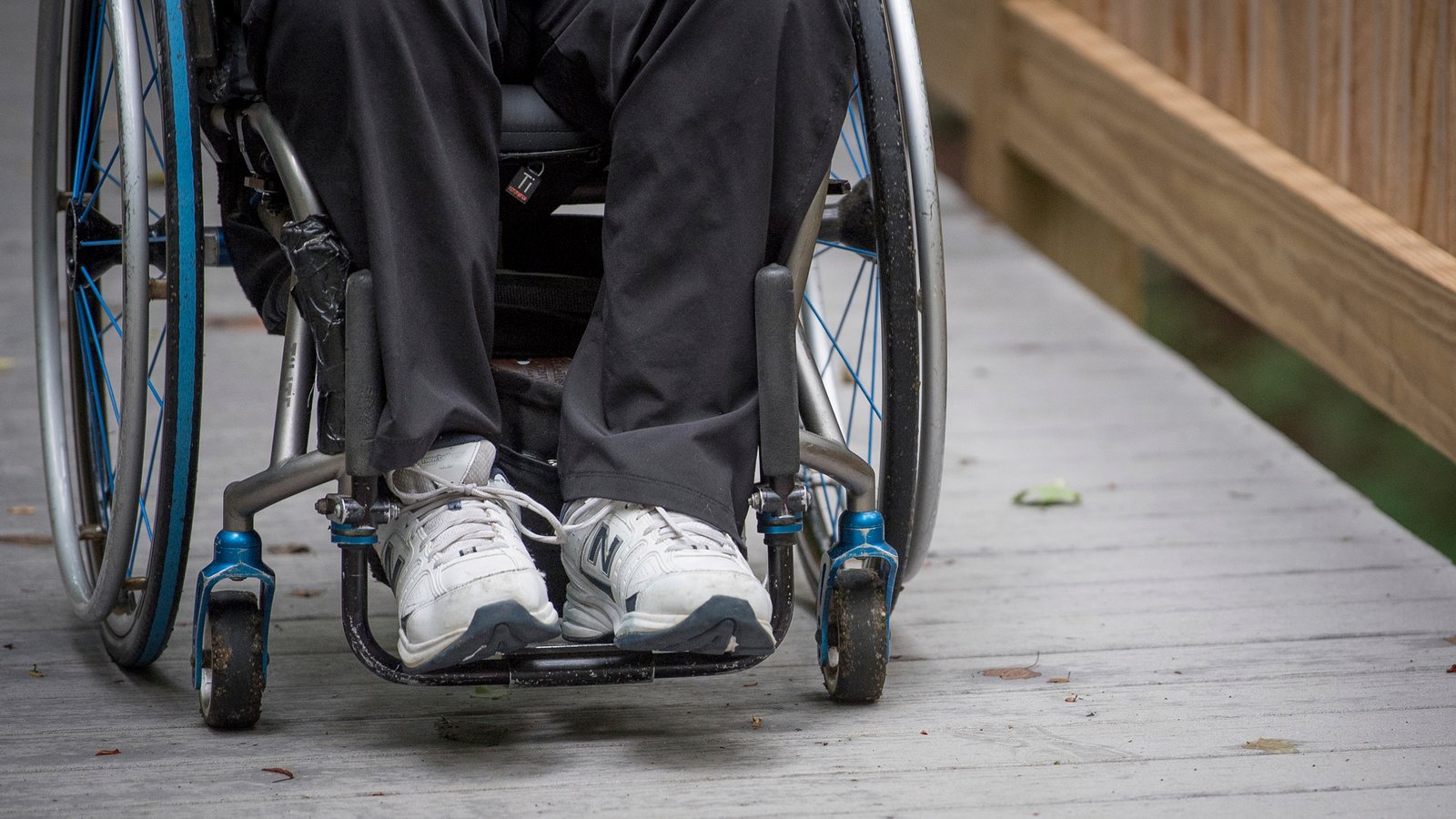
More than 11,000 wheelchairs or mobility scooters are damaged, delayed or lost each year during air travel, according to the U.S. Department of Transportation. Behind that statistic are the profound hardships and indignities for people who depend on them. One is Emily Ladau, whose wheelchair has been damaged on multiple occasions, most recently this month. Ladau is the author of the book “Demystifying Disability: What to Know What to Say and How to Be an Ally.” In an interview with NJ Spotlight News, Ladau shares her experience and how airlines can better accommodate passengers with disabilities. This interview has been lightly edited.
Joanna Gagis, anchor: What happened to your wheelchair?
Emily Ladau: I wish it was under better circumstances, but I am really glad to be raising awareness about this issue. I flew from LaGuardia Airport to Minneapolis-St. Paul Airport, and it was on Delta Airlines. When I arrived, I was informed that my wheelchair had taken a fall while they were removing it from the airplane. And it is a 450-pound device. A fall is quite dangerous for something that heavy. And it turned out that the wheelchair was totaled. It was completely destroyed.
JG: The cost of that wheelchair — what is it?
EL: It is a little over $75,000 because it is a custom wheelchair. So it’s not just a standard-issue. There are multiple features that it has, including elevation, because it helps me reach things. It has a tilt and recline function, which is for my safety, so that I can relieve pressure and avoid pressure sores. It’s also custom measured to my specifications.
JG: Here you are landing in Minneapolis, about to go do a speech. You are a disability rights advocate. What happens next? How do you then get around? What is your mobility at that point?
EL: Well, I was at first in quite a panic because without my wheelchair, I have no way of getting around. I am unable to walk. So my wheelchair is essentially akin to legs for me. It is my freedom of movement and mobility. The complaint resolution team at the Minneapolis-St. Paul Airport immediately got in touch with the company that they contract with called ScootAround, and it is ScootAround’s job to help source a loaner wheelchair.
My wheelchair is custom. So it’s not as though you can just pull one off the shelf and give it to me. And it’s not as though they’re always in immediate supply. But miraculously, within about four-and-a-half hours, they were able to source a wheelchair for me.
It was not at all the right dimensions. It was much too large for me and it was hard for me to sit in. But it did have an elevation feature which was essential for me to be able to transfer in and out of it. I actually consider myself quite lucky that they were able to find a functional solution for me to get out of the airport.

JG: You had posted on social media just before this trip because you shared concerns about this. What is the impact on you and so many thousands of others who depend on their wheelchairs or scooters for mobility when it comes to deciding whether or not you can travel — whether or not you can go on a honeymoon, in your example?
EL: I’m really glad that you mentioned it’s not just me. The implications are incredibly far-reaching. There are so many times when stories like this go completely under the radar and the implications are very far reaching.
For me, I was traveling because it was a business trip. I was going to the University of Wisconsin-La Crosse for a speaking engagement. And so not being able to travel puts my livelihood at risk. But my husband and I were also supposed to go on our honeymoon to London next month. And after the, quite frankly, trauma of having my wheelchair broken, we just could not fathom getting back on an airplane.
Not to mention, we didn’t know if I would yet have a replacement workable wheelchair. So this is a matter of impacting livelihood. It’s a matter of impacting leisure. And beyond that, it’s just a matter of impacting people’s freedom of choice to go where they want to go, when they want to go there.
JG: You are calling on the Federal Aviation Administration to make a change that allows folks who depend on a wheelchair to stay in that wheelchair on their flights. Where is the FAA, as far as you understand, in terms of considering that rule?
EL: Under the previous administration, there was a lot of work being done to hold airlines accountable and hopefully either prevent damage to a wheelchairs or at least eliminate the hoops that people have to jump through if their wheelchairs or mobility equipment are damaged in flight. I am at the very least calling on the Federal Aviation Administration to not roll back the work that was done on implementing those heavier protections for the disability community in the hopes that they really will hold the feet of the airlines to the fire.
But beyond that, there is an organization called All Wheels Up that’s been working with the FAA to crash-test the technology needed to allow wheelchair users to roll their mobility equipment right onto the airplane and stay in their mobility equipment and just have it tied down and secured in the same way that you might if you were rolling onto a public bus, for example.
JG: Would that then require more open rows on airplanes to accommodate folks who need wheelchairs?
EL: There’s a financial concern about it, but the technology that’s being developed is such that the airline wouldn’t have to lose money because the seats would be replaceable if they weren’t filled by a wheelchair user. So it’s not as though the seats would go empty. Right now we have the testing. We have the technology.
What we need is the airline industry and the FAA to work together to implement it. And it will be time and effort, but it will not be at a significant loss because it will open up more travel opportunities for people with disabilities and people who use mobility devices. And they won’t have to pay for the damaged equipment. And beyond that, they’re not going to lose the seats on the airplanes. It’s really a win-win for everybody.



