
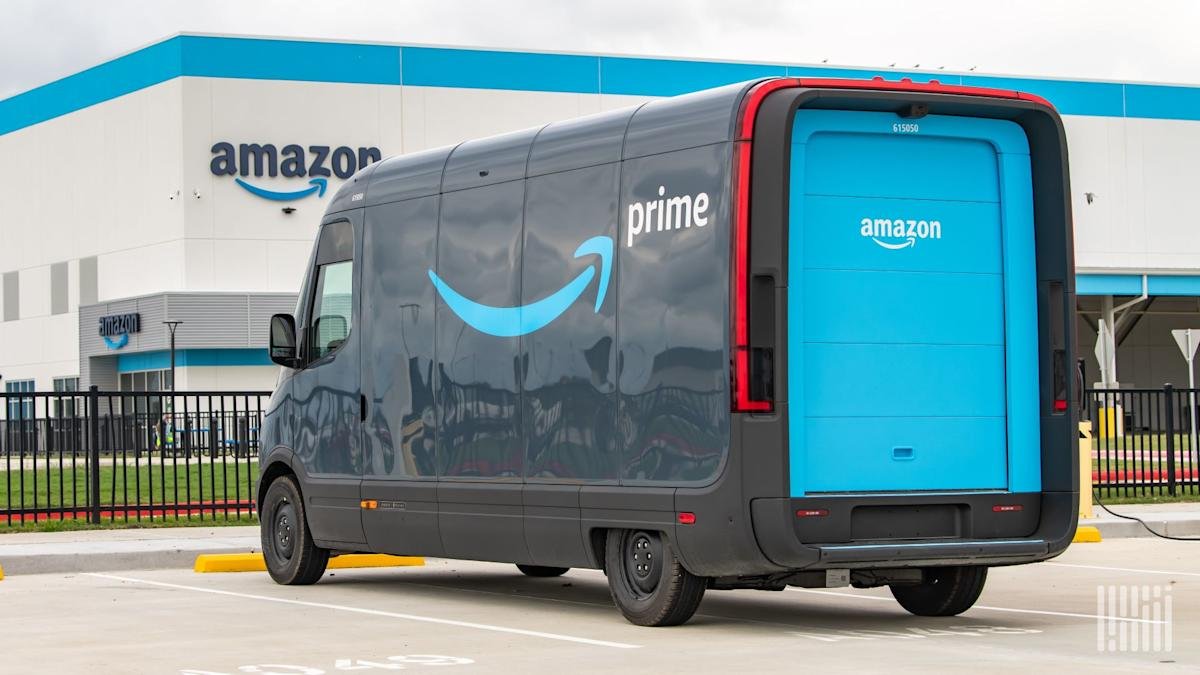
Amazon passed the U.S. Postal Service as the largest domestic parcel carrier in 2025, anchoring a broader market shift away from traditional couriers, as it in-sourced a large amount of last-mile delivery work previously handled by UPS, according to data published Monday by ShipMatrix Inc.
Amazon (NASDAQ: AMZN) handled 6.7 billion parcels last year, up 9.8% year over year, compared to an 8.3% decline for the U.S. Postal Service to 6.6 billion pieces. UPS (NYSE: UPS) also experienced an 8.3% volume decline at 4.4 billion deliveries. FedEx (NYSE: FDX) delivered 3.6 billion parcels in 2025, up 5.9%. Amazon’s parcel growth isn’t just fueled by its own online orders, but new contracts from third parties that don’t sell on the retailer’s platform.
Overall, industry volume was essentially flat (+0.4%) at 23.9 billion packages. Volumes for alternative carriers grew 13% to 2.6 billion units, highlighting a continued market shift to logistics services from online retailers like Walmart and Target, and low-cost start-ups and other independent carriers such as UniUni, Veho, Gofo, Jitsu, SpeedX, OnTrac and Better Trucks, said ShipMatrix, a provider of carrier benchmarking software for parcel shippers.
UPS and FedEx are making a strategic retreat from commodity last-mile delivery — short-distance transport of lightweight merchandise from e-commerce fulfillment centers to residential addresses — to focus on B2B logistics and high-value e-commerce shipments where they can command a premium for complex services. The companies have made clear that low rewards from local courier service don’t cover the high-cost structure associated with operating global integrated express delivery networks. Instead, they are consolidating ground shipping centers and reducing capital investments to focus on shipments that are heavier, cross multiple shipping zones, and in high-density routes that generate higher revenue per parcel.
But UPS and FedEx face a challenge targeting a smaller base of B2C parcels and B2B business. B2C represents 75% of the parcel delivery market, while the B2B delivery segment’s market share has shrunk to 25%, the report showed. Meanwhile, delivery distances have become shorter in recent years as Amazon shifted from a national distribution model and fulfillment companies like Radial, Shipbob, Shiphero and Stord stocked products at multiple facilities to be closer to consumers. Also, the Postal Service’s Parcel Select product travels less than 150 miles.
Even as FedEx focuses on B2C parcels that weigh more than 50 pounds, and parcels over 2 pounds that travel more than 300 miles, ShipMatrix data on billions of shipments shows that less than 5% of B2C parcels weigh more than 50 pounds and fewer than 50% of B2C parcels travel under 300 miles.




