
State funding for New Jersey Transit is among the few spending items set to rise in Gov. Mikie Sherrill’s proposed budget.
With direct state support set to exceed $1 billion in the new fiscal year that begins July 1, the head of the nation’s largest statewide bus and rail service on Thursday highlighted numerous service and capital improvements that are planned or underway.
These range from new buses and rail cars coming into service this year to enhanced station cleaning and safety initiatives, according to testimony submitted to the Senate Budget and Appropriations Committee by Kris Kolluri, NJ Transit’s president and chief executive officer.
Mobile app and agency website improvements are also in the works, and NJ Transit is about halfway through the replacement of more than 15,000 damaged and much-maligned windows on its rail cars, Kolluri said in his prepared statement.
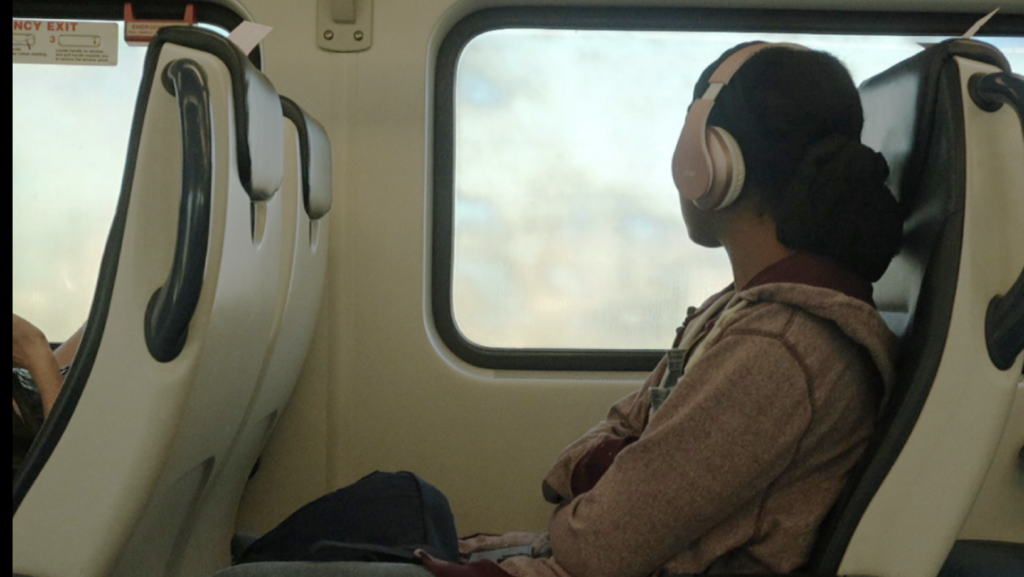
Among the complaints regularly lodged by NJ Transit riders — who’ve been hit with a series of fare increases in recent years — are those about windows left cloudy and nearly opaque as a result of ultraviolet rays and other environmental factors.
Kolluri also cited an executive order signed by Sherrill last month that calls for additional improvements within 45 days, such as better real-time tracking, as part of an overall enhanced “digital experience.”
“We’re so grateful to the governor for giving us the budget that she’s giving us,” Kolluri told members of the Senate committee during a lengthy hearing in Trenton.
The hearing came as the Legislature continued a close review of the more than $60 billion budget Sherrill put forward last month.
Other state officials appearing before the budget panel Thursday included the leaders of the Department of Transportation and Motor Vehicle Commission. Earlier this week, state Treasurer Aaron Binder also appeared.
 Sherrill, a first-term Democrat, is asking lawmakers to approve a modest increase in overall state spending for fiscal year 2027.
She is also proposing about $2 billion in spending cuts to help offset rising costs, including for state Medicaid obligations and employee salaries and benefits.
Sherrill’s proposed budget cuts are hitting many line items that were inserted into the current state budget by lawmakers in late June, just before it was signed into law by then-Gov. Phil Murphy. The impact of the proposed cuts dominated public hearings convened by lawmakers last month.
At the same time, Sherrill is calling for increased investment in several areas that have widespread public benefit, such as state aid for K-12 public education, as well as mass transit. In all, NJ Transit would receive a more than $215 million year-over-year increase in direct state funding, according to budget documents, if lawmakers go along with Sherrill’s proposed spending plan.
That increase would help cover NJ Transit’s non-discretionary cost-drivers, including contractual salary and benefit obligations to employees, plus material and supply cost inflation, according to the budget documents prepared by nonpartisan legislative staff ahead of Thursday’s hearing.

Kolluri told lawmakers the proposed increase reflects Sherrill’s general prioritization of mass transit, and her view that it plays an integral role in the state economy.
“The governor intuitively understands that in order for us to have a successful economy, you have to have a mass transit system that actually functions,” Kolluri said during the hearing.
Kolluri, while answering lawmakers’ questions, defended a series of fund transfers that traditionally have been used to help balance NJ Transit’s more than $3 billion operating budget, which is only partially supported by farebox revenue.
Other revenue NJ Transit will receive during the next fiscal year include an estimated $485 million contribution from the New Jersey Turnpike Authority and a $140 million transfer of state clean energy funds, according to budget documents.
Kolluri, who also leads the Turnpike Authority, praised Sherrill for viewing the transportation network holistically, and he said NJ Transit aligns with the state’s clean energy goals, which include reducing pollution.
“I can’t think of a more impactful way to reduce greenhouse gas emissions in the environment than New Jersey Transit,” said Kolluri, referring to the agency’s lessening of automobile traffic.
NJ Transit is slated to receive $282 million during the 2027 fiscal year directly from the state budget’s general fund, representing a nearly $65 million increase compared with the adjusted appropriation for the current fiscal year, according to budget documents.
The agency is projected to collect $765.5 million in dedicated funding from a tax on top-earning businesses that is called the corporate transit fee. That tax has unperformed expectations during the current fiscal year, requiring an increased general fund subsidy, according to the budget documents.
Meanwhile, the long-term fate of the corporate transit fee itself remains in question. Established during Murphy’s second term, the tax is due to expire at the end of 2028, unless Sherrill and lawmakers agree to renew it.
In comments included in the budget documents prepared ahead of Thursday’s hearing, NJ Transit officials said the revenue generated by the fee will cover more than 20% of the agency’s operating budget in FY2027.
“NJ Transit looks forward to continuing to work with the governor and the Legislature to ensure reliable funding that provides for robust transit services for the state and its residents,” the agency officials wrote in the budget documents.
This story is made possible in part by the Corporation for Public Broadcasting, a private corporation funded by the American people.



