U.S. Army medical professionals gathered at Fort Bragg, North Carolina, for the three-day Operational Medical Summit hosted by the newly activated U.S. Army Western Hemisphere Command, Feb. 24-26, 2026.
More than 100 Soldiers and civilian medical professionals from across the globe and at all levels of leadership came together to focus on one thing: providing operational medical support to a transforming Army. This was the theme for the 2026 summit, and the agenda reflected that focus.
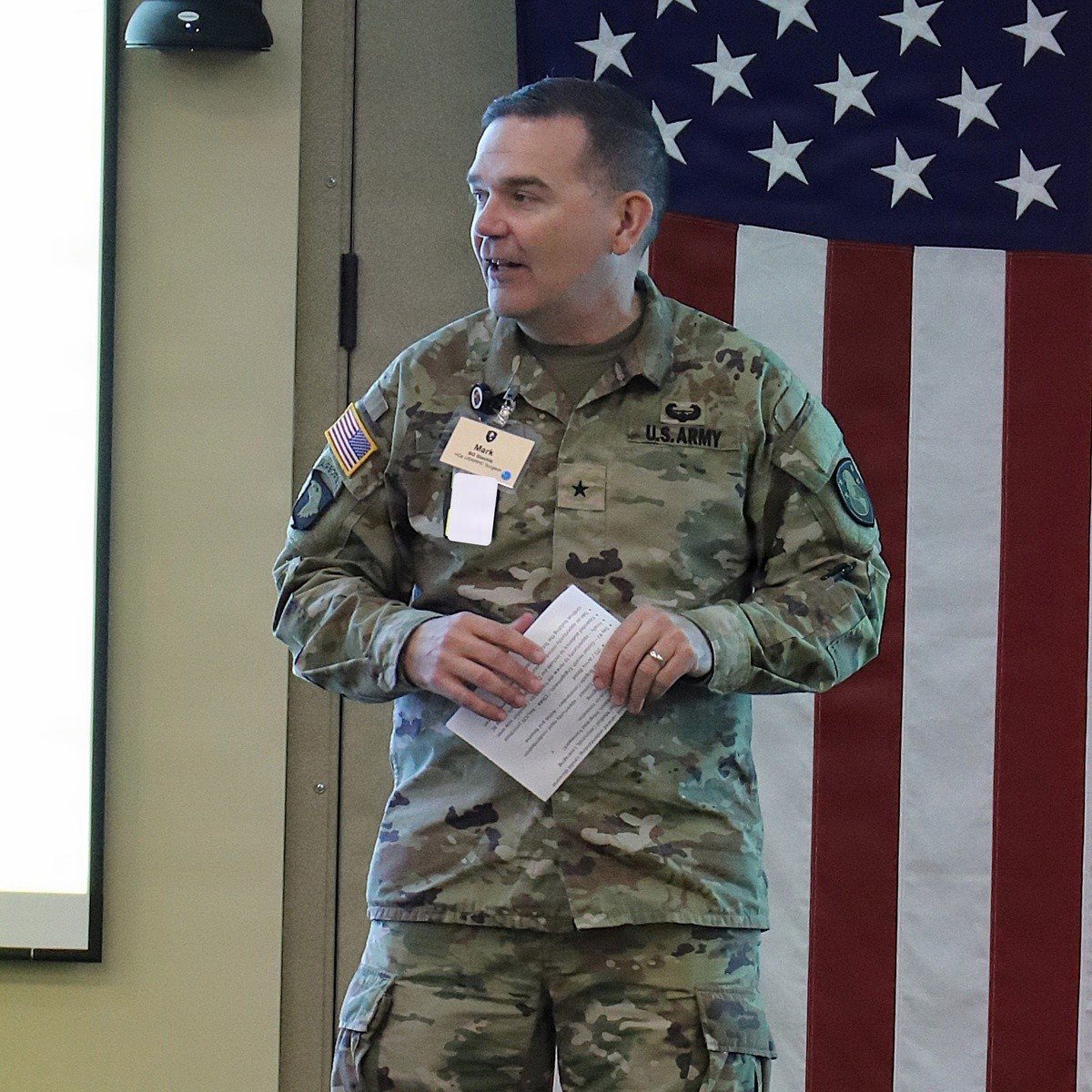
Brig. Gen. Mark Stackle, U.S Army Western Hemisphere Command Surgeon, welcomed the Operational Medicine Summit attendees. U.S. Army medical professionals gathered at Fort Bragg, North Carolina, for the three-day Operational Medical Summit hosted by the newly activated U.S. Army Western Hemisphere Command, Feb. 24-26, 2026. (U.S. Army photo by Adam Luther, USAWHC PAO)
VIEW ORIGINAL
Brig. Gen. Mark Stackle, USAWHC Surgeon, and Sergeant Maj. Curt Conklin, surgeon sergeant major, welcomed the group and expressed their excitement for the upcoming few days.
“This year we expanded the audience to include our division level leaders as well as our Reserve Component medical commanders,” said Stackle. “The inclusion of these important perspectives generated rich discussion and reflection on how Army Medicine can continue to adapt and improve how we support our rapidly transforming Army.”
The purpose of the medical summit is twofold. First, it is to provide a shared understanding of the recent changes in Army medicine, including what is being done and what opportunities can be capitalized on. Second, it is for Army medicine leaders at all levels to have a conversation about how to improve the practice of Army medicine.
“Our Army is transforming at a rate that has not been seen by many before, and that offers some challenges,” explained Stackle. “But it also offers a tremendous amount of opportunities.”
Stackle went on to explain that the deactivation of U.S. Army Forces Command and the establishment of USAWHC has meant shifting tasks to the Army Service Component Commands and Corps, which brings increased responsibility and new opportunities.
The U.S. Army Surgeon General, Lt. Gen. Mary K. Izaguirre, joined the group virtually from the Pentagon to give her keynote remarks with the underlying theme of being able to provide operational medical support to an Army undergoing transformation.
“Over these next few days as you step away from your day-to-day job,” said Izaguirre. “I encourage you to have an open mind and to thinking of how you enable the transformation being described at your space.”
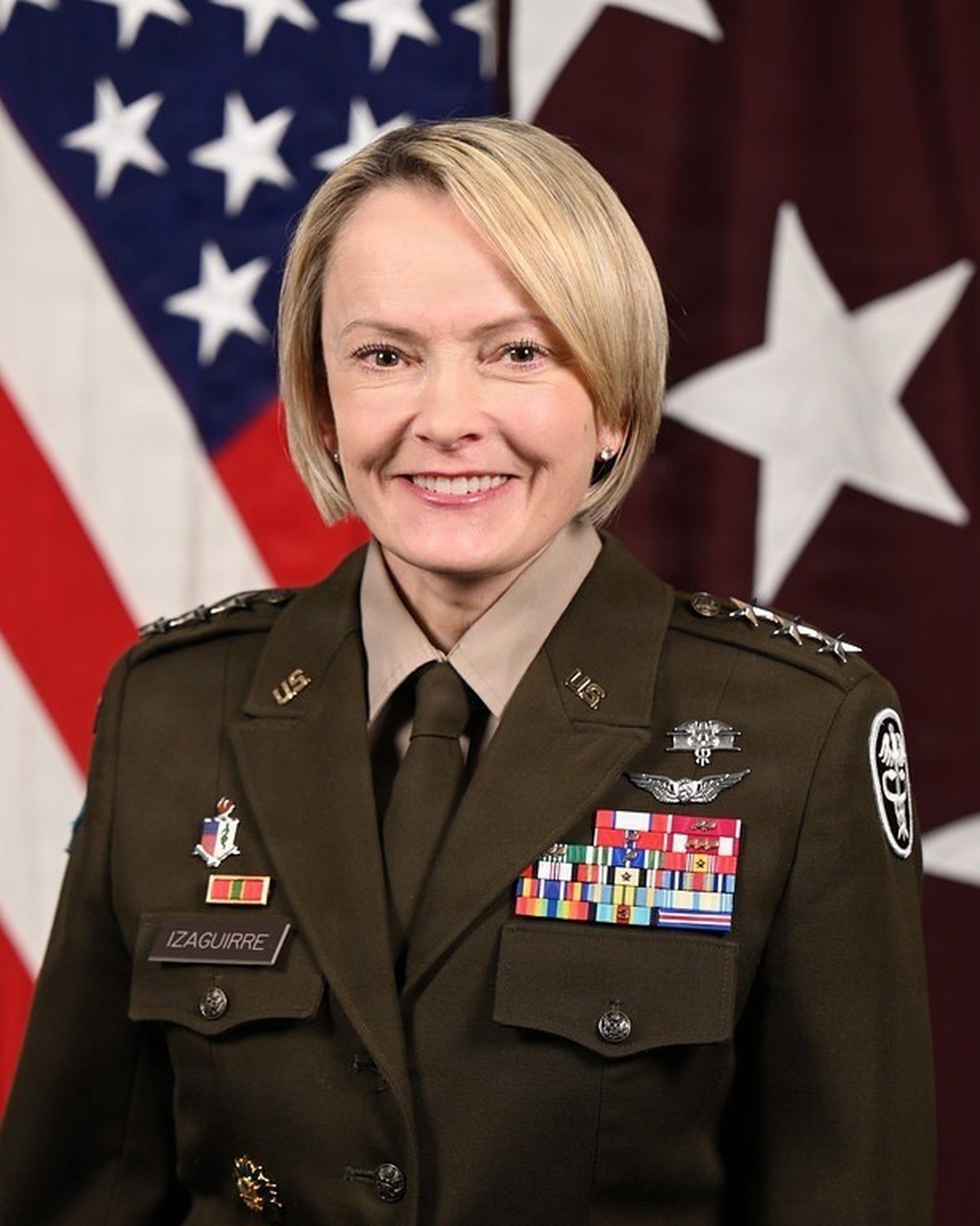
U.S. Army Surgeon General, Lt. Gen. Mary K. Izaguirre, joined the group virtually from the Pentagon to give her keynote remarks. U.S. Army medical professionals gathered at Fort Bragg, North Carolina, for the three-day Operational Medical Summit hosted by the newly activated U.S. Army Western Hemisphere Command, Feb. 24-26, 2026.
VIEW ORIGINAL
Izaguirre went on to describe the five groups of people they may find in their formations: innovators, early adopters, mainstream, late adopters, and laggards. She challenged leaders to be part of the first group – the innovators. She described them as those who see the need for change and have the bold courage to lean forward even though there are some uncertainties.
The three-day summit covered a variety of topics all focused on providing the best possible care. Each day’s schedule was filled with planned learning opportunities and panel discussions. The first panel discussion focused on how to leverage enabling technology on the battlefield as well as at home station, using Battlefield Assisted Trauma Distributed Observation Kit-Joint and data transformation to enable medical operations.
The second panel brought a discussion on delivering combat credible medical formations. Leaders from the 1st, 44th, 65th, 307th medical brigades and the 3rd Theater Medical Command comprised the panel, each diving into their area of expertise and discussing the challenges that they face.
Col. Caryn Vernon, commander of the 44th Medical Brigade, explained their unique mission support to the Immediate Response Force and the unique challenges that it brings.
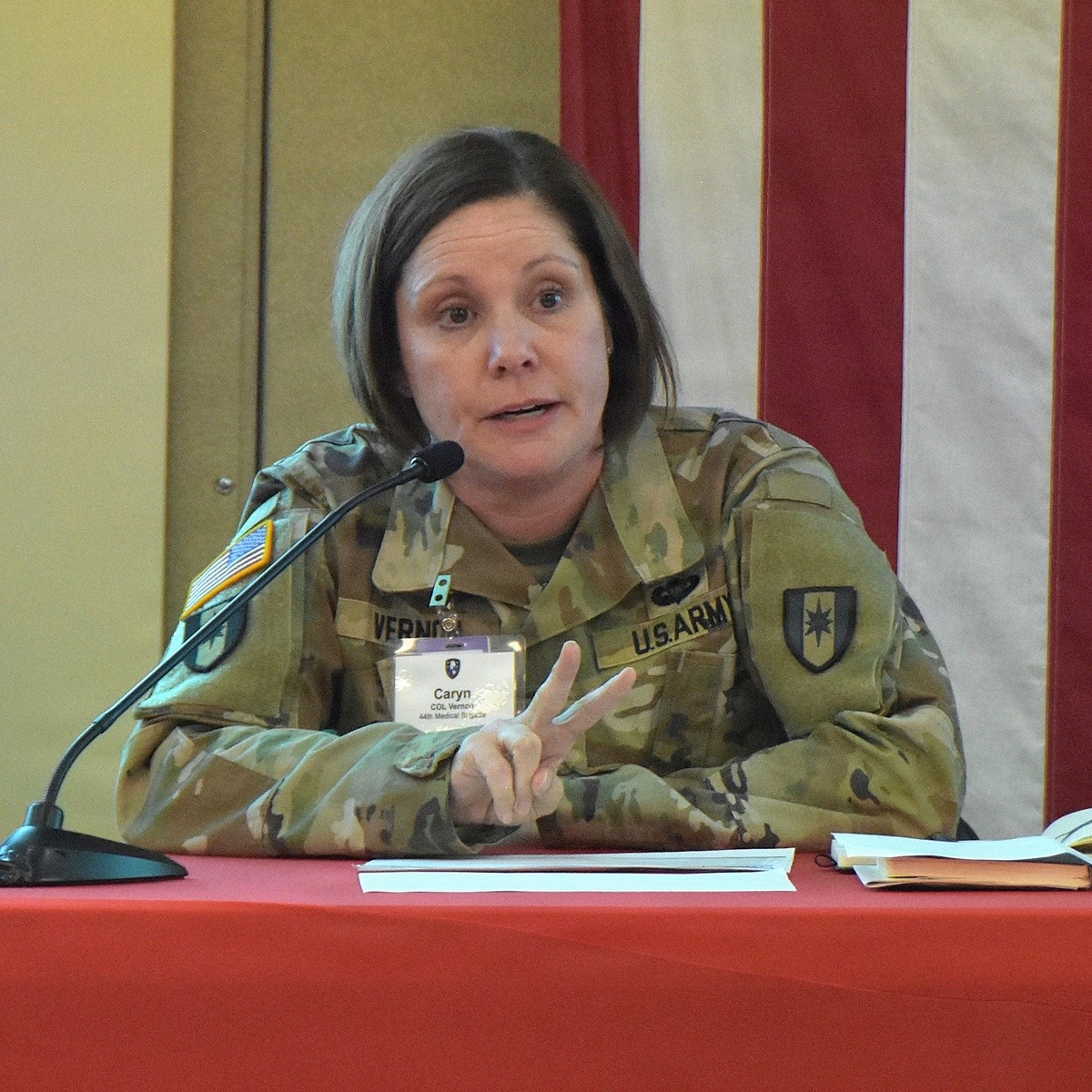
Col. Caryn Vernon, commander of the 44th Medical Brigade, explained their unique mission support to the Immediate Response Force. U.S. Army medical professionals gathered at Fort Bragg, North Carolina, for the three-day Operational Medical Summit hosted by the newly activated U.S. Army Western Hemisphere Command, Feb. 24-26, 2026. (U.S. Army photo by Adam Luther, USAWHC PAO)
VIEW ORIGINAL
“For the Immediate Response Force, it has to be an airborne Forward Resuscitative and Surgical Detachment because we align them with the IRF rotation of the 82nd Airborne Division,” said Vernon. “We have taken this opportunity, because of that alignment, to do a lot of collective training with the 82nd Airborne Division.”
The third and final day of the operational medical summit featured the last panel discussion on Health Security Cooperation from the 18th Theater Medical Command and the newly re-established Jungle Operations Training Course – Panama. Each highlighting the unique challenges they face in their specific area of operation.
“You are always wet. Even when you are dry, you are always wet,” explained Maj. Cordell Hachinsky, Joint Security Cooperation Group – Panama Surgeon’s Office. “We’re dealing with trench foot all over again for the first time, venomous snakes like the fer-de-lance, the bushmaster and the coral snake have required us to have anti-venom protocols. Something I as a physician have never been trained on, my medics have never been trained on, but we are figuring it out.”
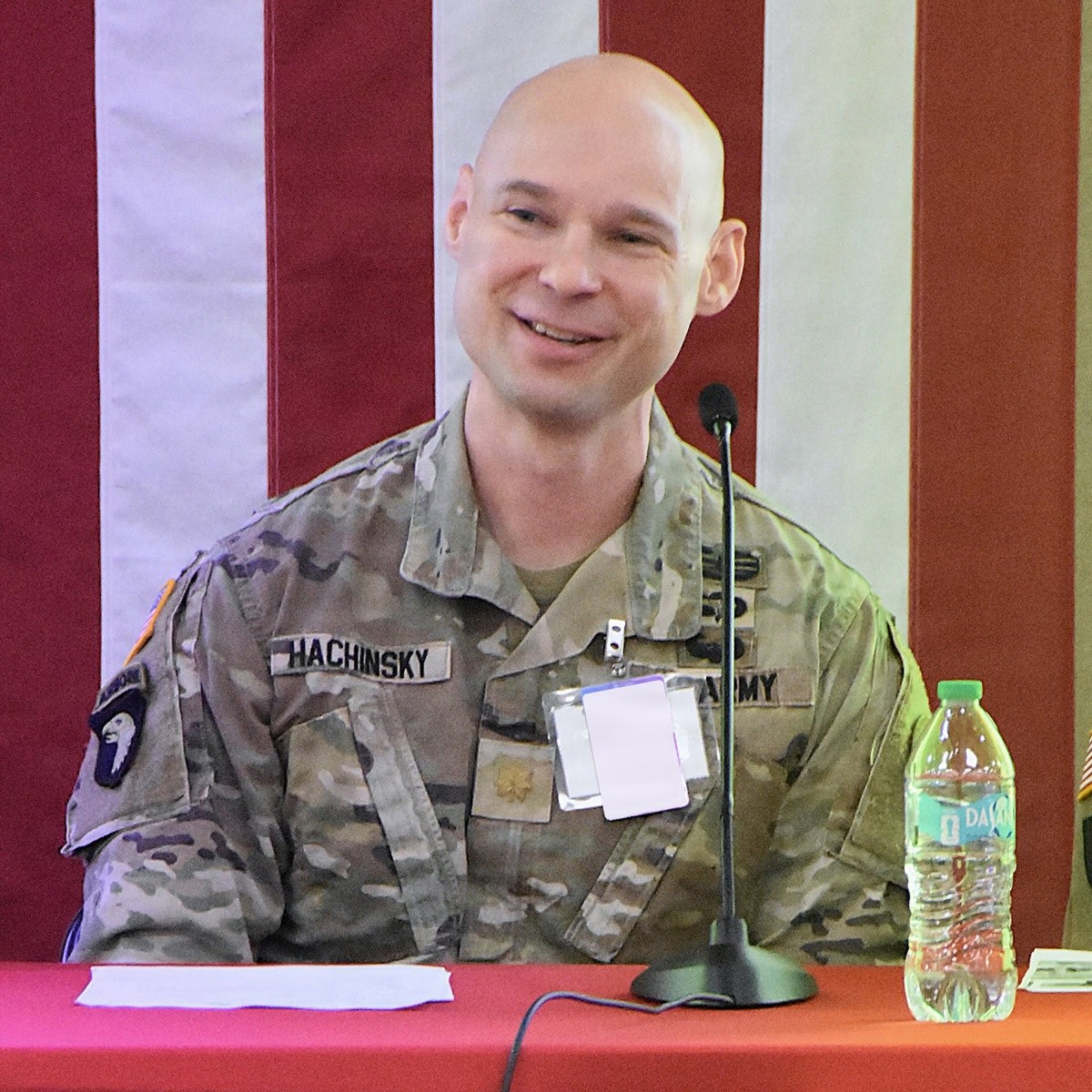
Maj. Cordell Hachinsky, Joint Security Cooperation Group – Panama Surgeon’s Office, discussed the unique challenges faced by him and his medics. U.S. Army medical professionals gathered at Fort Bragg, North Carolina, for the three-day Operational Medical Summit hosted by the newly activated U.S. Army Western Hemisphere Command, Feb. 24-26, 2026. (U.S. Army photo by Adam Luther, USAWHC PAO)
VIEW ORIGINAL
By the end of the final day, these leaders in Army medicine had discussed and learned about the opportunities and challenges facing their peers and colleagues around the globe and throughout the Army medicine enterprise. They left with the understanding that they are not alone in the difficulties they face. They also recognized that an Army in transformation creates opportunities for innovation, new technology and reformation into an improved Army in line with the National Defense Strategy.
“It was rewarding to hear the many remarkable things that our operational medical units are doing across the globe,” expressed Stackle. “Whether that is supporting direct combat operations or supporting critical theater security cooperation efforts with our allies and partners, Army Medicine continues to make a dramatic impact across the Army.”
– Freedoms Guardian –