 WASHINGTON — Three years ago, real-estate company Dalfen Industrial purchased a warehouse in Roxbury, a suburban township in Morris County.
The Dallas-headquartered firm touted the 48 docks on site plus parking for cars and trailers. “Dalfen is excited to expand our New Jersey footprint,” said Mike Cohen, then-head of acquisition, touting the location’s proximity to Interstate 80.
Built to hold goods, the Roxbury site soon may hold humans.
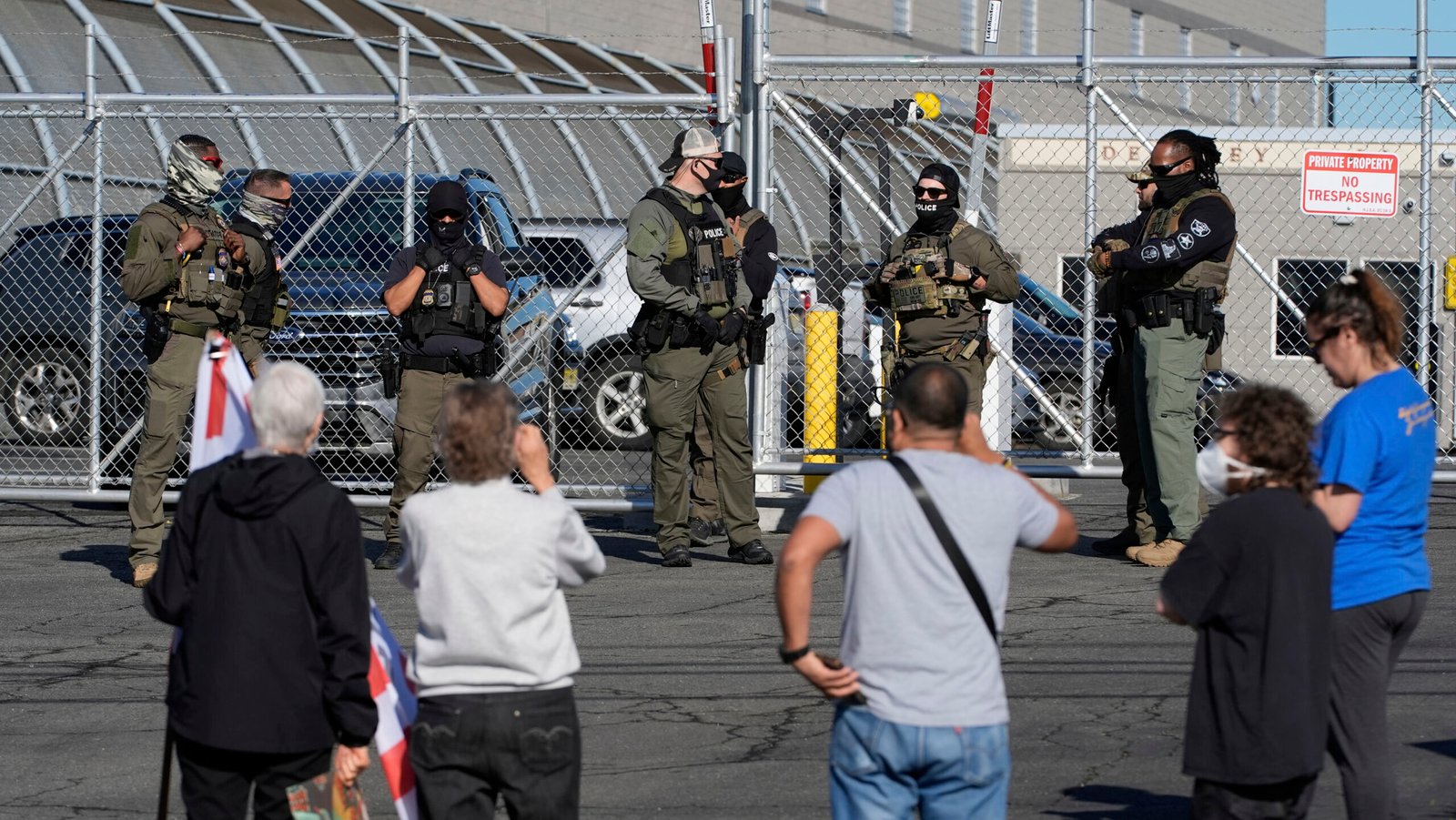
The warehouse is part of an expanding network of detention centers the Trump administration operates in New Jersey and across the county, generally with the day-to-day help of private-prison companies, to hold detainees.
“It should not come as news that ICE will be making arrests in states across the U.S. and is actively working to expand detention space,” said Christine Cuttita, a spokeswoman for ICE. Cuttita confirmed the Roxbury purchase but said she did not know how much the U.S. government paid, when the property would be put into use or how many people would be detained inside.
Before the second Trump administration began in January 2025, the Immigration and Customs Enforcement agency operated two detention sites in New Jersey: Delaney Hall in Newark and the Elizabeth Detention Center. Using a South Jersey military base to hold and detain immigration is also an option under consideration, according to federal records.
Under Trump, a descendant of Scottish immigrants who said immigrants are “poisoning the blood of our country” while campaigning in 2023, ICE is growing in the state — most recently with the purchase of the Roxbury site from Dalfen.

“ICE purchased a facility in Roxbury, New Jersey,” said Cuttita in an emailed statement, saying detention sites “will not be warehouses — they will be very well-structured detention facilities meeting our regular detention standards.”
In marketing materials, Dalfen describes itself as a business that operates in industrial real estate and owns warehouses.
Dalfen purchased a separate warehouse in January 2025 in Lumberton, New Jersey, part of Burlington County.
The Trump administration finalized the purchase over the objections of Roxbury Mayor Shawn Potillo and the town council, all Republicans.
In a letter, Potillo and the council members said they heard nothing in response from the Department of Homeland Security, which includes ICE, to their questions about the warehouse purchase.
“Despite repeated outreach, our federal representative, Congressman Tom Kean Jr., did not engage to the level we had hoped to provide the advocacy our residents deserved,” they said in a letter, adding that the council was considering its legal options to challenge the purchase.
“It is also inconceivable and frankly stunning that all of our communications to DHS on issues related to this selection as a detention center were never answered,” they wrote. “This community is the most impacted by this facility, yet we received absolutely no feedback from DHS.”
In a statement online, Rep. Tom Kean Jr. (R-7th) said his office “worked closely with officials in Roxbury and engaged directly with the highest levels of DHS on their behalf,” adding that he would “not stop fighting for a workable solution.”
Kean voted for the federal law that made the Roxbury purchase possible.
Tucked in a sweeping domestic policy bill President Donald Trump signed into law last summer is $45 billion for ICE to purchase “new detention capacity” to arrest and hold single adults and for families. With that sum, the Trump administration has been able to purchase warehouses even though the Department of Homeland Security is currently shut down because Congress did not agree on a department budget.
Kean has generally talked up the tax elements of the law, not its sections that undergird the Trump administration’s hardline anti-immigrant stance.
Other Republicans in Congress, including Mississippian Roger Wicker, have bristled at ICE facilities operating in their home states or districts. Wicker, for one, criticized the idea of an ICE facility in Byhalia, Miss., in a Feb. 4 letter to Kristi Noem, the head of the Department of Homeland Security, citing the potential that detainees’ medical needs could overwhelm local authorities.
Roxbury officials made a comparable argument, pointing to “significant limitations in water and sewer infrastructure.”
The number of people held in immigration detention ballooned from about 40,000 a day when Trump took office last year to about 66,000 a day nationwide, according to the American Immigration Council, an advocacy group.
“Yet this is just the start for the Trump administration, which according to leaked plans originally hoped to have nearly 108,000 immigration detention beds online by January 2026,” the council said in a report published in January.
Calls from Democratic lawmakers, activists and the clergy to “defund ICE” are effectively impossible since the Republican-majority Congress provided $178 billion in funding for DHS in the bill that became law last summer. Congress approved that funding through the budget year 2029, guaranteeing money throughout Trump’s entire second term.
The vast majority of people held at detention sites, like Delaney Hall, do not have criminal records, according to data from TRAC, a nonpartisan research group that obtains and analyzes federal records.
After Reps. Frank Pallone (D-6th) and Rob Menendez (D-8th) visited Delaney Hall on Saturday, Pallone criticized the conditions inside.
“So many of the people had pre-existing conditions — diabetes, strokes, heart conditions — and they were not getting their medicine, they were not seeing a doctor, they were not getting physical rehabilitation that they really needed,” Pallone said. “The conditions there are just terrible.”
Julie Daurio contributed reporting for this story.