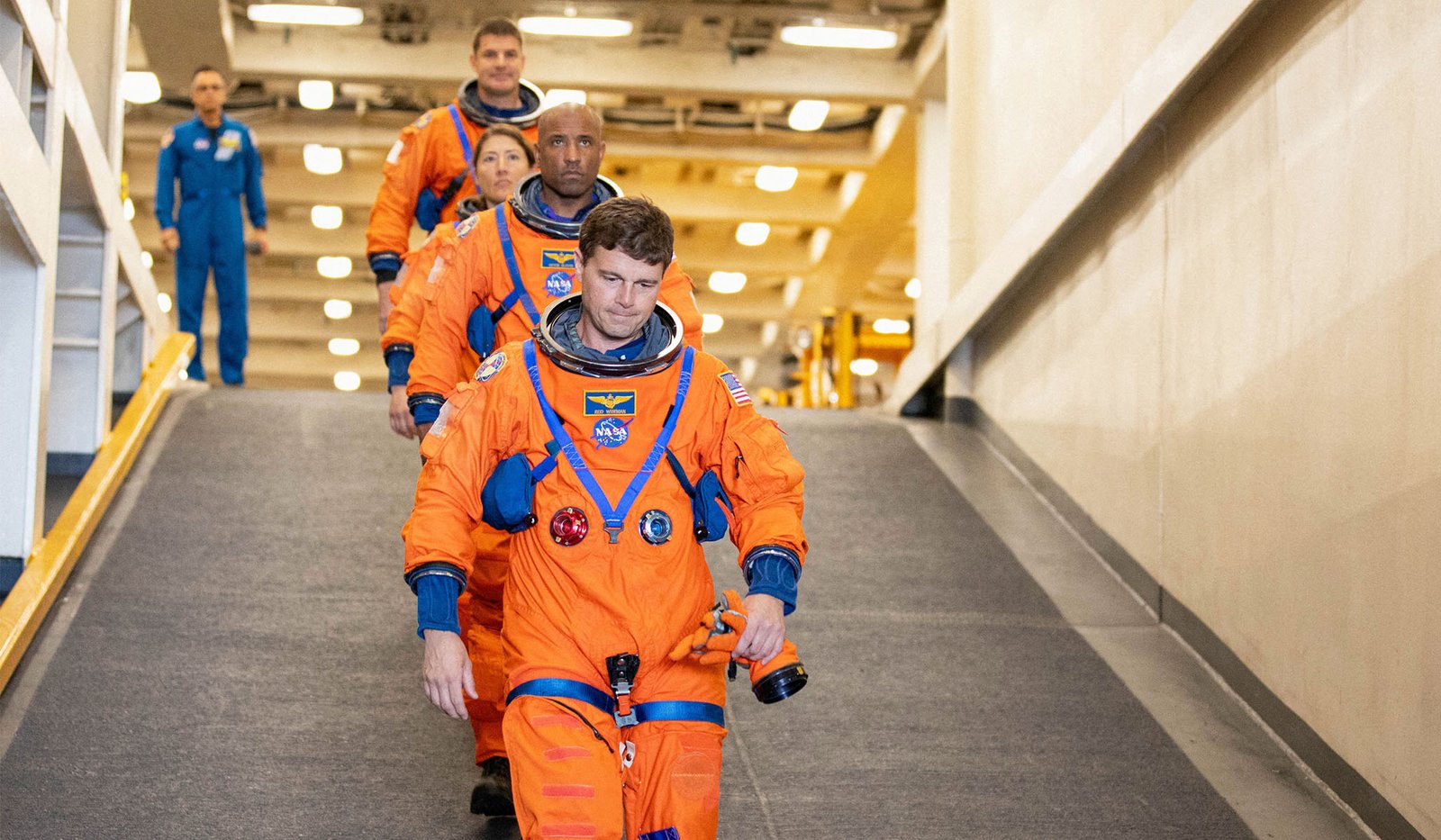
Artemis II and the New Moon Race
For the first time in more than 50 years, humanity is preparing to send astronauts beyond low Earth orbit and around the Moon again. Artemis II, NASA’s upcoming crewed lunar mission, represents a major milestone in America’s return to deep space and a key moment in the evolving new Moon race.
While the original Moon race of the 1960s and ’70s was defined by Cold War rivalry, today’s competition blends science, geopolitics, and international cooperation—with multiple nations and commercial partners aiming for leadership in lunar exploration and infrastructure.
🚀 What is Artemis II?
Artemis II is the first crewed mission of NASA’s Artemis program. It will launch four astronauts aboard the Orion spacecraft atop the powerful Space Launch System (SLS) rocket for a journey around the Moon and back to Earth.
Unlike Artemis III, which will attempt the first lunar landing of this program, Artemis II will not land on the Moon. Instead, it will perform a close flyby and return, testing essential systems and gathering critical data for future missions.
👩🚀 Astronaut Crew
The Artemis II crew includes:
Reid Wiseman (Commander) — NASA astronaut
Victor Glover (Pilot) — NASA astronaut
Christina Koch (Mission Specialist) — NASA astronaut
Jeremy Hansen (Mission Specialist) — Canadian Space Agency astronaut
This team will become the first humans to travel beyond low Earth orbit since Apollo 17 in 1972.
📅 Launch Date & Time
Artemis II is scheduled to launch on February 7, 2026 at approximately 02:41 UTC (about February 6, 9:41 p.m. EST) from Kennedy Space Center’s Launch Complex 39B in Florida.
The mission is planned to last about 10 days, with a planned splashdown in the Pacific Ocean upon return.
🛰️ Why Artemis II Matters
Artemis II serves multiple strategic and technical purposes that go beyond a historic trip around the Moon:
🔧 Mission Validation
This flight will be the first human test of the SLS and Orion spacecraft together, verifying life support, navigation, communication, and deep-space operations with crew aboard.
📡 Deep Space Capability
By traveling tens of thousands of miles beyond Earth and performing maneuvers in lunar vicinity, the mission tests how spacecraft and astronauts handle conditions unique to deep space.
📍 Foundation for Future Exploration
Artemis II is a necessary step toward Artemis III and other future missions, including lunar landings and a long-term presence on the Moon. It also builds critical capability for eventual crewed missions to Mars.
🌍 Inspiration and Collaboration
With international participation (such as Canada’s astronaut on the crew) and commercial involvement in hardware and logistics, Artemis II showcases a coalition approach to exploration—moving beyond unilateral space achievements toward cooperative frameworks.
🌕 The New Moon Race: Beyond Flags and Footprints
Unlike Apollo’s binary contest between superpowers, the modern Moon race includes:
🇺🇸 United States & NASA’s Artemis program
🇨🇳 China’s lunar exploration strategy and planned lunar research station
🇪🇺 European and Asian partners seeking scientific and industrial roles
🚀 Commercial companies building lunar transport, robotics, and infrastructure
Today’s competition isn’t just about who gets there first—it’s about who builds sustained presence, norms, and economic ecosystems in lunar space.
Artemis II doesn’t plant a flag, but it lays the foundations for infrastructure, cooperation, and capability that will shape space exploration for decades to come.
Watch Live- srivax space foundation