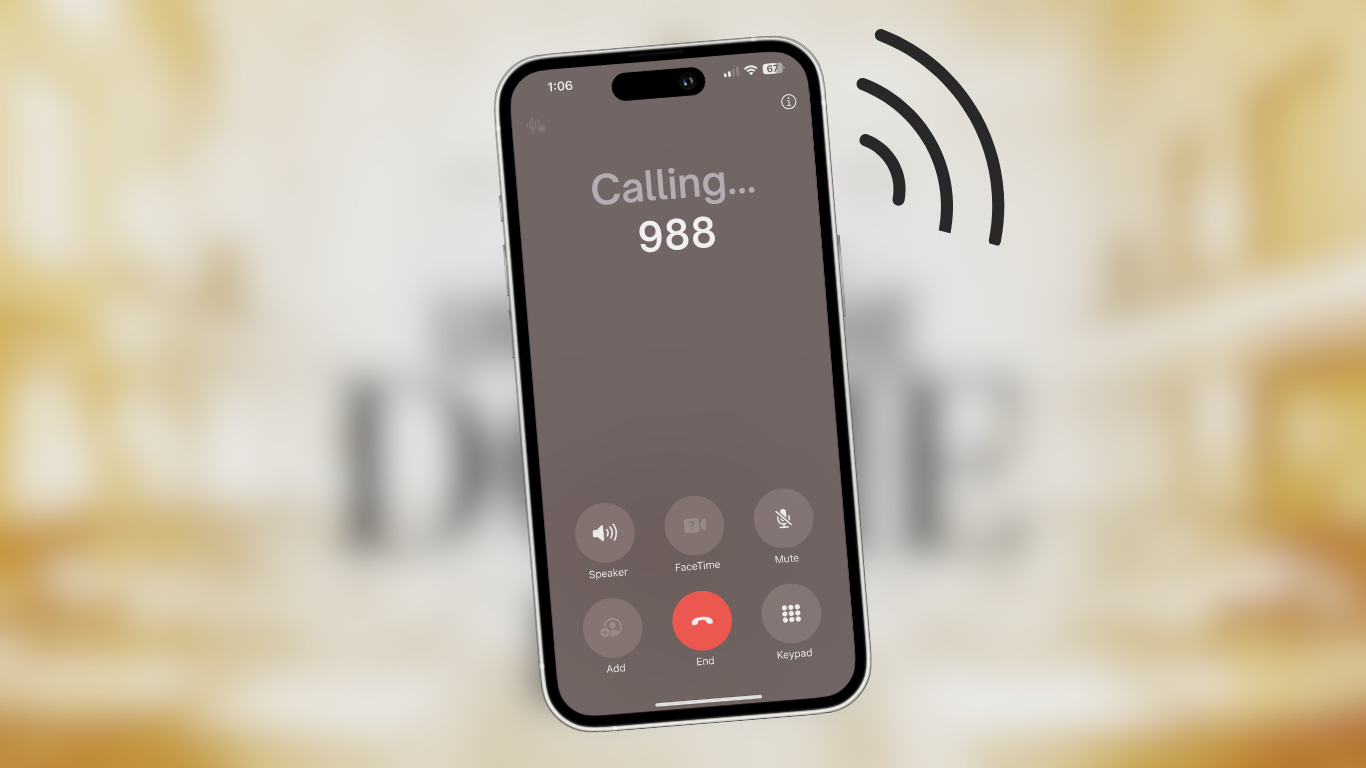
 As Gov. Mikie Sherrill prepares to introduce her first spending plan next week, the Legislature has yet to pass a bill that would add a 40-cent fee to each New Jersey telephone bill to fund the state’s 988 Suicide & Crisis hotline.
At the same time, New Jersey is seeing a tragic trend. More than 650 residents took their lives in 2025, according to provisional data from the state Department of Health. That marked at least 12 more than the prior year, and the first upward spike in such deaths since 2022, state data show.
The hotline, operating since 2022, offers counseling and mobile crisis teams. Plans call for treatment centers — the first is to open in the spring — as an alternative to emergency rooms, plus temporary housing.
“Having to advocate for that funding as a budget line item each and every year against other important competing interests is really unnecessary,” the bill’s sponsor, Sen. Joseph Vitale (D-Middlesex), chairman of the Senate Health, Human Services and Senior Citizens Committee, told NJ Spotlight News. “There’s only so much state capital available for all the programs that we have, and having to essentially fight for it every year doesn’t make sense when the outcome could be damaging to the program and to those who are served.”

Mental-health emergencies are at crisis levels nationally, particularly among youth, according to the Centers for Disease Control and Prevention. Though each state has a 988 line, last year President Donald Trump’s administration eliminated federal funding for the service’s “Press 3 option,” which provided specialized support to LGBTQ+ young people.
The New Jersey hotline logged 57,000 calls in its first year, according to Valerie Mielke, deputy commissioner for Health Services. Over six months in 2025, the hotline processed 62,000 calls, Mielke said.
The hotline is nothing short of lifesaving, according to mental-health advocates who testified during an Assembly Aging and Human Services Committee hearing in Trenton last month.
“Almost exactly 10 years ago, I had to call what is now known as 988. I didn’t see a way out of what I was going through,” Christie Schweighardt, an advocate with the New Jersey chapter of the American Foundation for Suicide Prevention, told the panel. “Thanks to this crisis service, I was immediately connected with someone who talked me down and helped me find behavioral health resources that saved my life.”
New Jersey 988 calls, texts and chats are answered by trained crisis counselors. As of last year, they have the ability to dispatch one of 62 local mobile response teams to assist in person. Those personnel have responded nearly 700 times, according to Mielke.
Vitale’s bill would generate $67.3 million annually, according to the state Office of Legislative Services. That would pay for the 988 hotline services, the mobile teams and treatment at stabilization centers as an alternative to hospital emergency rooms.
“We risk creating a system where the phone is answered, a mobile team may be dispatched (and) there is nowhere appropriate for someone to go next.”
The first such center will open in the spring and will be operated by Rutgers University Behavioral Health Care. New Jersey is expected to have five crisis centers and two diversion homes, which will serve as 30-day transitional housing. Not all those advanced services are funded, though, according to Lisa Lawson of the New Jersey Association of Mental Health and Addiction Agencies.
Sherrill is to give her budget speech on March 10. The state faces a $3 billion gap between projected revenue and planned spending, her administration said last week.
“Without sustainable investment, we risk creating a system where the phone is answered, a mobile team may be dispatched (and) there is nowhere appropriate for someone to go next,” Lawson told the Assembly panel.
The bill has received some pushback from Republican lawmakers, including Sen. Robert W. Singer (R-Monmouth), who has said that he is not against the hotline or permanently funding it through the state budget, but opposes more taxes.
This story is made possible in part by the Corporation for Public Broadcasting, a private corporation funded by the American people.