
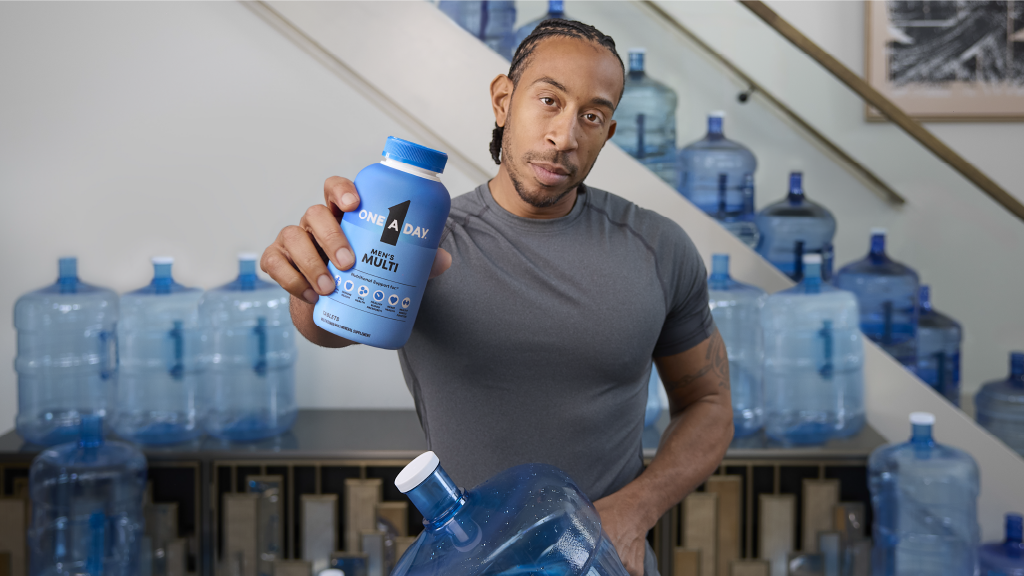
There’s no need to dive fast and furious into every single wellness trend, according to a Ludacris-fronted campaign from Bayer’s consumer health division.
The new ads for the company’s One A Day multivitamin brand play on the stage name of the rapper and actor, Christopher Bridges, to note that “Health Doesn’t Need to Be Ludacris.”
One video for the campaign starts with the star sharing that in an effort to take his health seriously this year, he wanted to “try it all.” A montage ensues, showing Ludacris making celery juice, loading himself down with heavy weights, hydrating, meditating and doing triple-duty by wearing a red light therapy mask while sitting in an ice bath in a sauna.
“Trying to keep up with my health got a little ludicrous,” he admits, as each scene ends in some sort of mishap. “Because trying it all doesn’t always add up.”
Not ludicrous, Ludacris concludes, are Bayer’s multivitamins.
The campaign will span several similarly lighthearted digital videos, all eschewing “over-the-top wellness trends” in favor of the simplicity of a daily vitamin, according to Bayer’s launch announcement this week.
“Consumers today are inundated with complicated wellness routines and ever-changing health trends that can make taking care of yourself feel overwhelming,” Lisa Perez, general manager of nutritionals for Bayer Consumer Health North America, said in the release. “With our ‘Health Doesn’t Need to Be Ludacris’ campaign, we wanted to have fun while reminding people that supporting your health doesn’t have to be complicated.”
Elsewhere on the marketing front, Bayer recently consolidated all of the consumer health division’s creative, production and media work under a single agency partner, Interpublic Group.
The Big Pharma touts the business—which is responsible for popular over-the-counter brands like Aspirin and Claritin, along with the multivitamin line, among others—as the third-biggest consumer health company in the world. In its full-year 2025 earnings report earlier this month, Bayer tallied steady year-over-year sales in its consumer health division, though the nutritionals segment dipped about 4%.



