
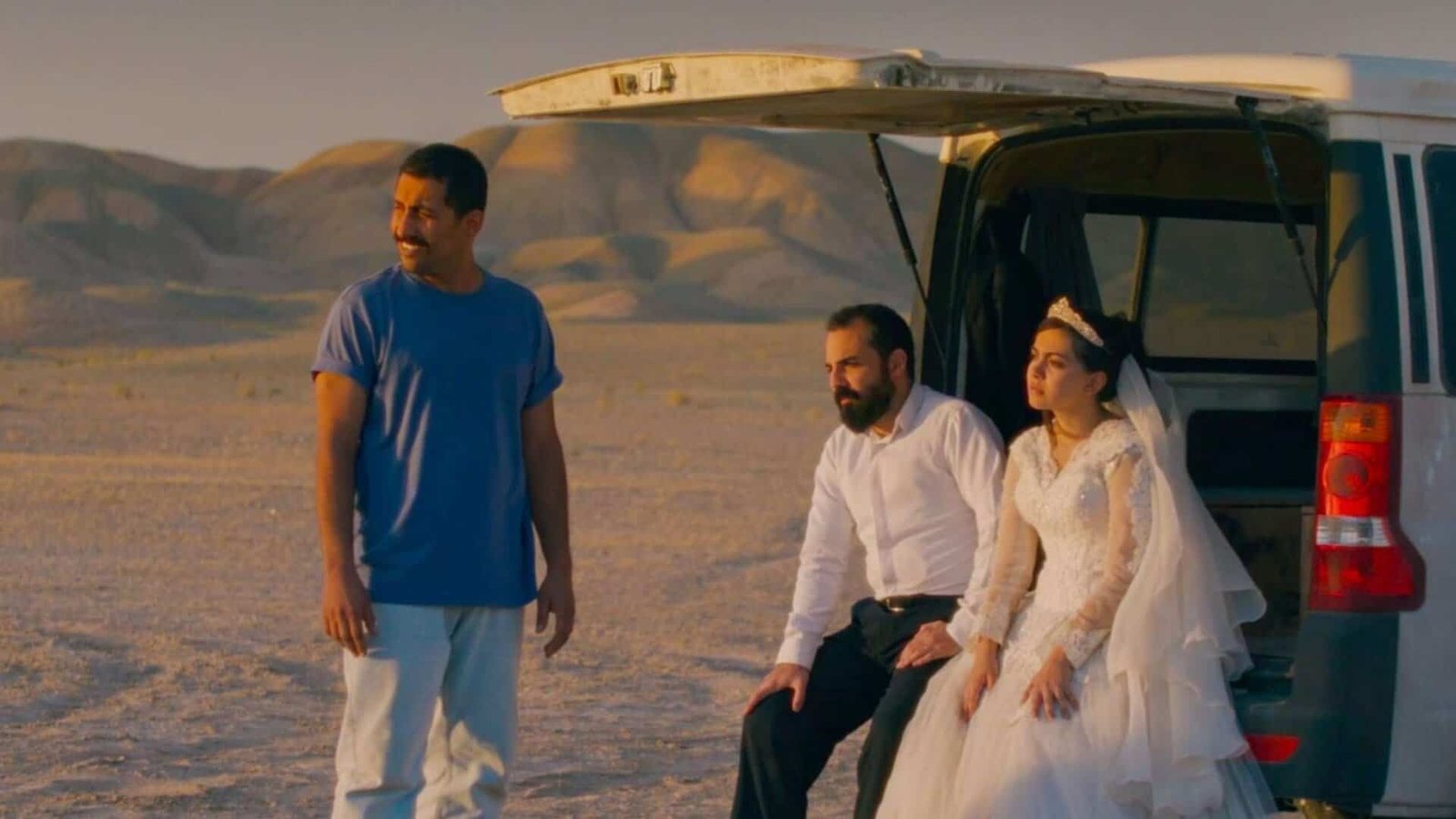
West and Central Asia, alongside parts of South and the Middle East, continue to assert themselves as some of the most politically and artistically charged regions in contemporary Asian cinema. Iran remains a dominant force, consistently producing works that combine formal ambition with urgent social commentary, even under increasingly restrictive conditions, while Iraq and Palestine emerge with titles that directly engage with history, memory, and state violence from perspectives rarely afforded international visibility. At the same time, Bangladesh’s steady rise is becoming impossible to ignore, with filmmakers experimenting confidently across genres and formats, while Saudi Arabia and Turkey continue to refine distinct cinematic voices that balance local specificity with broader accessibility.
Without further ado, here are the 20 films from the area that stood out, in reverse order. Some of them might have premiered in 2024, but since they mostly circulated in 2025, we decided to include them. Also note that essentially this is for us the ‘Rest of Asia’ list, while considering the difference of country and genre in terms of entries, this list could easily be quite different. The article also includes interviews we had with the cast and crew regarding their movies.
Although some minor inconsistencies in the script are present, “Once Upon a Time in Gaza” ultimately stands as an intelligent, sharply humorous, and deeply engaging work. (Panos Kotzathanasis)

With several standout entries and few weak points, “Dui Shaw” proves to be an impressive anthology with plenty to offer. (Don Anelli)

“The President’s Cake” highlights a promising independent voice in Middle Eastern cinema. Hadi manages to walk the fine line between excessive melodrama and the harsh realities of day-to-day life in Iraq around the turn-of-the-century, revealing a point of view that is rarely seen in North American cinemas today. (Grace Han)

“July 36: State vs. People” stands as a vital act of resistance, both cinematic and civic. By reclaiming history from state propaganda and amplifying the voices of those who dared to speak, Soumitra Dastidar captures a moment of reckoning for a nation fighting to redefine its destiny. (Panos Kotzathanasis)
16. I’m Here, I’m Fine (Emine Emel Balci, Turkey)

Through its assured direction, compelling visuals, and strong performances, it effectively communicates its social commentary while maintaining an accessible and consistently engaging tone from start to finish (Panos Kotzathanasis)

“Noor” emerges as an excellent documentary, successfully presenting and analyzing the icon that is Mohammed Noor while maintaining audience engagement from start to finish. (Panos Kotzathanasis)

“Cadet” does not reach the level of Yerzhanov’s previous works, but it is still a competent effor, which we expect the Kazakh to improve in case he decides to continue in the horror genre. (Panos Kotzathanasis)

“Palestine 36” stands as an outstanding achievement — both as a self-contained story and as an illuminating depiction of how the Palestinian issue emerged in modern times, showing with clarity and conviction how history continues to echo into the present. (Panos Kotzathanasis)

“And The Rest Will Follow” has the power to push you to explore history and literature, to talk to your friends and ask them how they are doing, to kick you in the ass for not reaching your life goals, or just make you love cinema more. It is a warm, demanding, and well-scripted movie. (Marina Richter)
11. My Daughter’s Hair (Hesam Farahmand, Iran)

All in all, “My Daughter’s Hair” is a film that undoubtedly deserves international attention, especially since Iranian films of this kind are almost always a worthwhile addition to festivals and arthouse cinemas. And we will certainly be hearing more from director Farahmand in the future. (Andreas Ungerbock)

“Black Rabbit, White Rabbit” may alienate viewers seeking simplicity and straightforward entertainment, but it is one of those works that lingers long after viewing, particularly for its boundless imagination and its intricate web of internal connections. (Panos Kotzathanasis)

Intelligent, well-executed, and unflinchingly brave work, one that uses realism with purpose and power. (Panos Kotzathanasis)

“Kurak” is a hard work, but its hardness is undeniably necessary. It stands as a realistic outcry against a system that seems barely to improve over the years. (Panos Kotzathanasis)

Khatami clearly possesses a wealth of ideas and executes most of them with confidence in “The Things You Kill”. Although some excess and minor inconsistencies keep it from achieving greatness, it remains a compelling and thought-provoking work that lingers long after it ends. (Panos Kotzathanasis)

Aside from some lagging near the end, “Burning” is a remarkable achievement, both as an exploration of subjective truth and as a socially charged entry in the horror genre. (Panos Kotzathanasis)

“Sand City” is a small arthouse delight with a pleasantly paced rhythm. (Marina Richter)

Overall, “Hijra” emerges as a well-crafted work, marked by strong direction, accomplished performances, and a layered approach that intertwines realism with symbolic meaning. (Panos Kotzathanasis)

Swinging between moments of hope and despair, “Cutting Through Rocks” offers a slice-of-life portrait of women’s lives in rural Iran. (Tobiasz Dunin)
2. IRKALLA: Dreams of Gilgamesh (Mohamed Jabarah Al-Daradji, Iraq)

With “Irkalla”, Mohamed Al Daradji and his collaborators present a project that merges mythology with contemporary reality, where Baghdad’s river becomes the spine of a story about memory, loss, and the stubborn endurance of humanity. (Panos Kotzathanasis)

Bluntly tackling themes of state violence, justice, and tyranny that coexist with normality, “It Was Just an Accident” is an engaging thriller that leaves viewers with questions rather than answers. Working (again) without a permit from the Islamic Republic, Panahi reaches the heights of his filmmaking skills and once more creates a humanistic and anti-totalitarian picture. (Tobiasz Dunin)



