TALLAHASSEE — Small autonomous or remotely operated personal delivery devices, used to carry food and small packages, would be allowed to operate on bike lanes and road shoulders under a transportation package approved by the Florida Senate on Wednesday.
However, those robotic devices would be prohibited under the measure (SB 1220) from making such deliveries in state parks, state forests and wildlife management areas. Additionally, the devices, along with unmanned drones, would be barred from flying over special districts and theme parks without their consent.
And that’s just a small part of multiple wide-ranging transportation packages that will have to be hammered out between the chambers with just over a week remaining in the regular session.
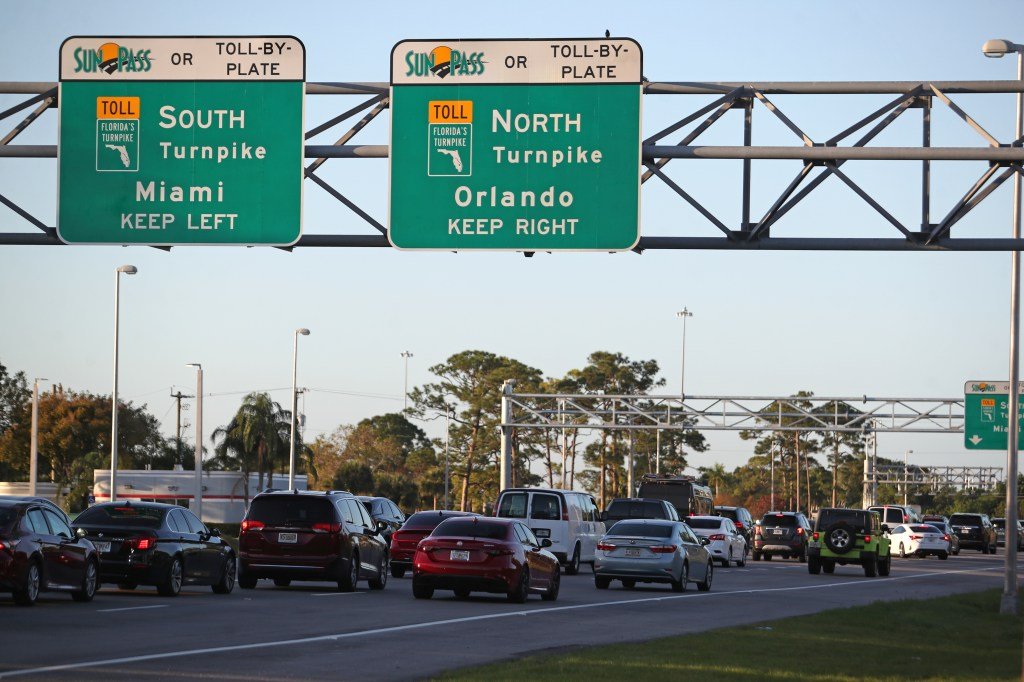
With little comment, the Senate voted 35-1 in support of the bill by Sen. Ralph Massulo, R-Lecanto, that also in part requires seaports to identify and prioritize key supply chain components, increases the percentage of Florida’s Turnpike tolls collected in Palm Beach, Broward and Miami-Dade counties that must be used for turnpike projects in those counties, and makes it a second degree felony to shoot into an unoccupied autonomous vehicle.
The companion measure in the House (HB 1233) awaits action on the chamber’s floor.
Meanwhile, the House on Wednesday also passed a separate transportation package (HB 543) in a 107-1 vote that requires seaports located in counties with spaceport facilities to annually outline steps taken to support the commercial space launch industry.
“This is a really good bill,” said bill sponsor Rep. Fiona McFarland, R-Sarasota. “Most of it isn’t perfect, but nothing that’s on the special calendar today, or tomorrow, or next week will be perfect either. It will just be mostly good, which is all we can hope.”
McFarland’s measure calls for the Florida Department of Transportation to increase by 0.4 seconds the minimum “perception-reaction time” of all steady yellow traffic signals in the state located at an intersection equipped with a red-light cameras.
Another part of the bill allows local governments to approve conditions, including signs, that allow golf carts to cross a highway at an intersection with a traffic signal.
The measure also clarifies a 2025 law regarding the visibility of license plates by stating that frames or drivers with decorative borders do not commit a criminal offense when they do not obscure the numbers and letters or the registration decal.
The measure also allows vehicles displaying valid disabled parking permits or plates to occupy more than one non-handicapped parking space.
Rep. Kelly Skidmore, D-Boca Raton, voted against the bill because she said the disabled parking space measure does not address the impact on handicapped spaces created by a 2025 state law that allowed pregnant women to use parking spaces reserved for people with disabilities.
“I know that this double-parking thing is meant to be helpful, but it is not helpful when we don’t know that those vehicles still won’t be towed,” Skidmore said. “People who are getting ticketed and towed will most likely still be getting ticketed and towed, specifically if they’re in a private lot.”
McFarland, who backed allowing pregnant women to use the handicapped space, said the state needs to address the proliferation of fraudulent handicapped placards, which she put at about 26 percent.
“Whether they’re issued by a doctor that doesn’t exist, or the doctor’s signature has been Xeroxed, or they’re being used by someone who is not the issued recipient, I would rather solve the 26 percent of fraud,” McFarland said.
The House transportation proposals are spread across several bills in the Senate, with less than two weeks remaining in the regular session.