
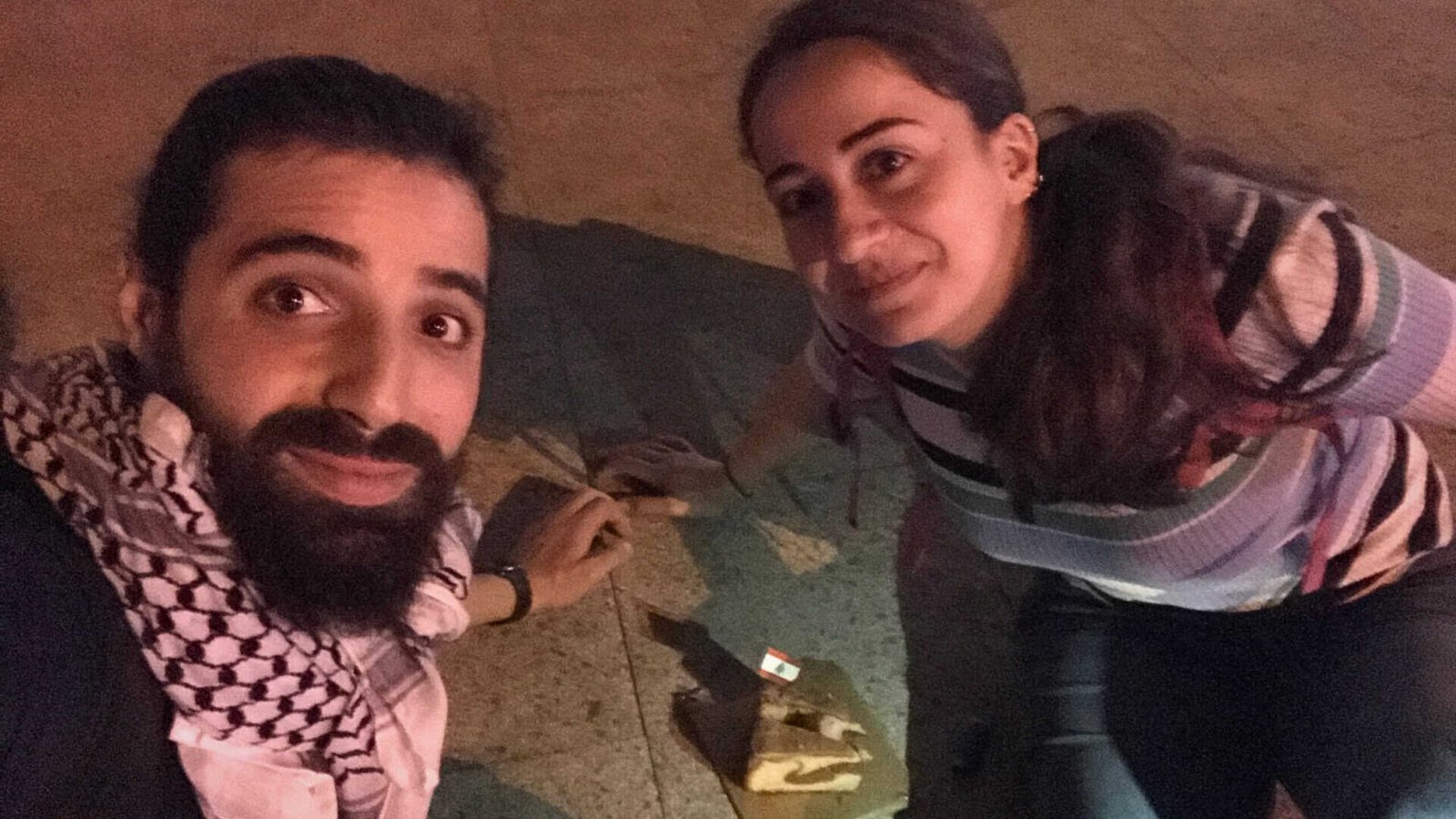
True love knows no limits, especially for journalists-turned-filmmakers, Janay Boulos and Abd Alkader Habak. The two self-described “Birds of War” competed with their autobiographical documentary in this year’s World Cinema Documentary competition at Sundance 2026, and walked home with the Special Jury Award for Journalistic Impact. Over the course of 85 minutes, Boulos and Habak unravel their epic romance stretching across continents, warzones, and religions, over the span of thirteen years.
Like many modern-day meetcutes, this love story begins online. in the early 2010s, Boulos, a London-based, Lebanese Christian correspondent for the BBC, requests on-the-ground footage of the Syrian Civil War (2011-2024) from Idlib/Aleppo-based Syrian Muslim cameraman and activist, Abd Alkader Habak. At first, their early digital exchanges are urgent, but are largely professional. As violent incidents in Syria increase, however, so too does the frequency of their messages. Emails devolve into voice notes; small check-ins become daily messages of encouragement. Empathetic iMessage texts and archived voice notes accompany smuggled video footage of bombings and bloodied bodies. When Habak finally asks why Boulos is so interested in his well-being, she simply replies, “Because you are more than a story to me.”
As romance blooms in between the lines of their iMessage conversation, the two realize that they must meet, no matter the cost. Instead of settling for a happy ending with their wedding, however, the film continues. In the second half of the movie, we watch the newlyweds restlessly grapple with their self-imposed exile. Despite their peaceful new life in London, they yearn to be part of the cause. As they bear witness to political unrest in Beirut in 2019, worldwide protests for Gaza in 2023, and the fall of the Assad regime in December 2024 from afar, the two lovebirds find that they cannot bear it any longer. It is high time, they decide, to get back on the ground.
Personally, I found that the latter half’s focus on the couple’s competing convictions to be the most compelling part of the film. Instead of framing our two director-protagonists as noble heroes selflessly dedicated to each other or a cause, “Birds of War” makes room for complexity. Sometimes, the love between one’s country and one’s person does not always align – and that, “Birds of War” assures us, is okay.
As a result, “Birds of War” is unlike the average war documentary. The film does not drown in moralistic messaging or violent footage, or even a call to action. Instead, it leads by example. Habak and Boulos’ dedication to activism and journalism, respectively, is not merely a performative additive to their day-to-day routine; rather, it defines who they are and informs who they want to be. Instead of demanding sympathy or over-explaining various war zones in the Middle East, the movie shines through centering the story on its two protagonists. For the lovelorn and the lost, “Birds of War” assures its viewers of the resilience of the heart.



