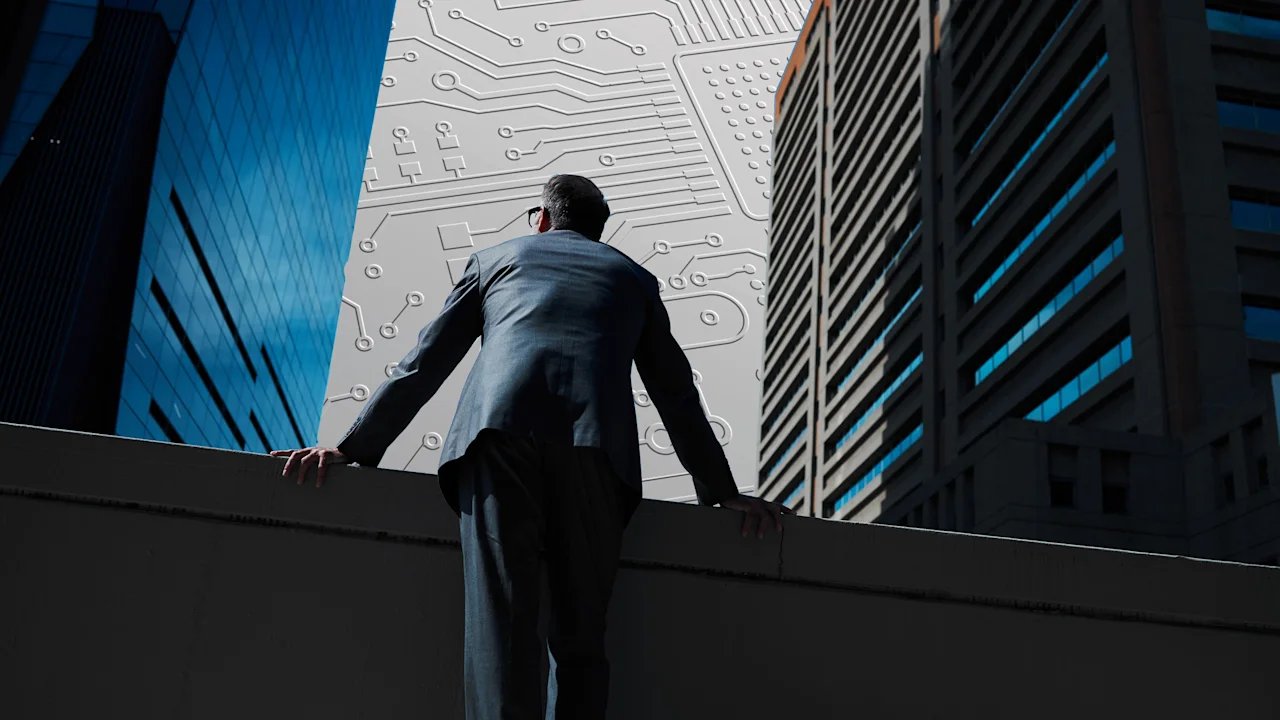
The public outcry over artificial intelligence has largely focused on what it could mean for the average worker. Entry-level jobs in sectors like tech and finance have already been impacted by the rise of AI. And while economists have said the claims of workforce disruption are overblown at the moment, some companies are, in fact, making major cuts to their workforces in the name of AI. Just this week, Block CEO Jack Dorsey cut 40% of head count at the fintech company, citing efficiency gains from its adoption of AI tools.
But it’s not just rank-and-file workers whose jobs may be on the line. As CEOs tout the vast potential of AI—and make cuts to their workforces accordingly—many of them have suggested that they could be out of work soon, too.
In a podcast interview this week, Uber CEO Dara Khosrowshahi disclosed that some of his employees had built what they called “Dara AI,” an AI-generated approximation of their boss. “They basically make the presentation to the Dara AI as a prep for making a presentation to me,” Khosrowshahi shared on entrepreneur Steven Bartlett’s podcast The Diary of a CEO.
“Are you concerned they might show Dara AI to the board?” Bartlett quipped. To which Khosrowshahi laughed and argued that AI was still “missing a beat” and could not yet replicate the “ability to learn in real time.” But when that changes, he said, “that is the point at which I’m going to think, yeah, we are all replaceable.”
Khosrowshahi might not be convinced that AI can supplant him just yet—but he’s not the only CEO who sees a future where that might be the case.
“Shame on me if OpenAI is not the first big company run by an AI CEO,” Sam Altman said on the Conversations with Tyler podcast last year. He claimed to often think about what would enable an AI CEO “to do a much, much better job of running OpenAI than me?” At a conference last week, Altman doubled down on this idea. “AI superintelligence at some point on its development curve would be capable of doing a better job being the CEO of a major company than any executive—certainly me,” he said at the AI Impact Summit in New Delhi.
Alphabet CEO Sundar Pichai has suggested a CEO’s job might be relatively simple in the hands of AI. “I think what a CEO does is maybe one of the easier things maybe for an AI to do one day,” he told the BBC a few months ago. Within the next year, Pichai said, AI will be able to perform more complex tasks autonomously.
It’s not clear whether CEOs genuinely believe that their jobs could be replaced in the near future, or if this is largely another attempt to convince workers that it’s time to get on board with AI. After all, there is a huge disconnect between how tech leaders and CEOs talk about AI and what workers seem to feel: In 2025, a report from the Pew Research Center found that only about 17% of Americans expected AI to have a positive effect overall, while 43% said they anticipated being personally harmed by the technology.
Then again—it may not be an easy adjustment for every CEO, even among the most vocal AI evangelists. Klarna CEO Sebastian Siemiatkowski has been outspoken about AI adoption and has cut his company’s workforce in half over the last three years, in part by relying more heavily on AI (to varying results). He was less optimistic, however, about a world in which his role might cease to exist.
“To me, AI is capable of doing all our jobs, my own included,” he said in a post on X last year. “I am not necessarily super excited about this. On the contrary, my work to me is a super important part of who I am, and realizing it might become unnecessary is gloomy. But I also believe we need to be honest with what we think will happen.”