
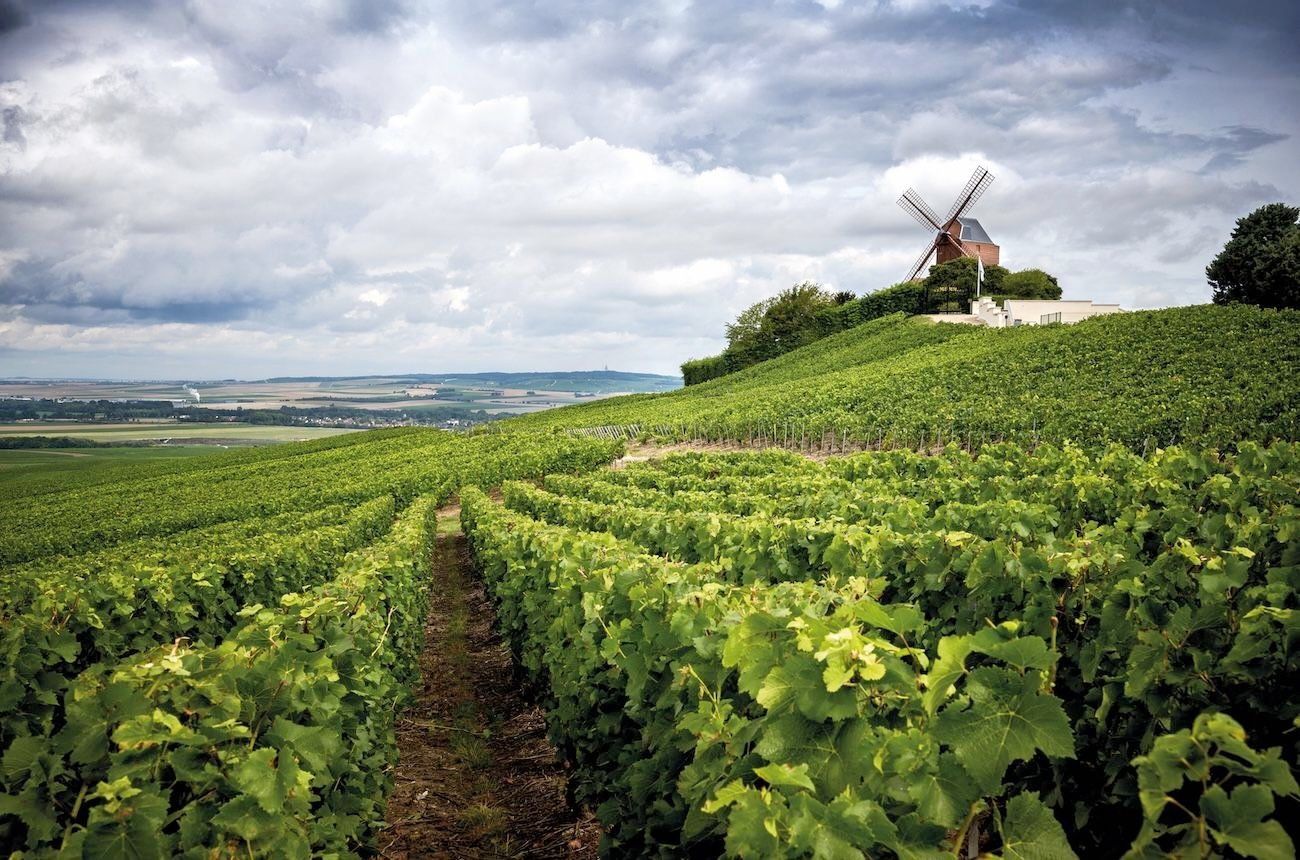
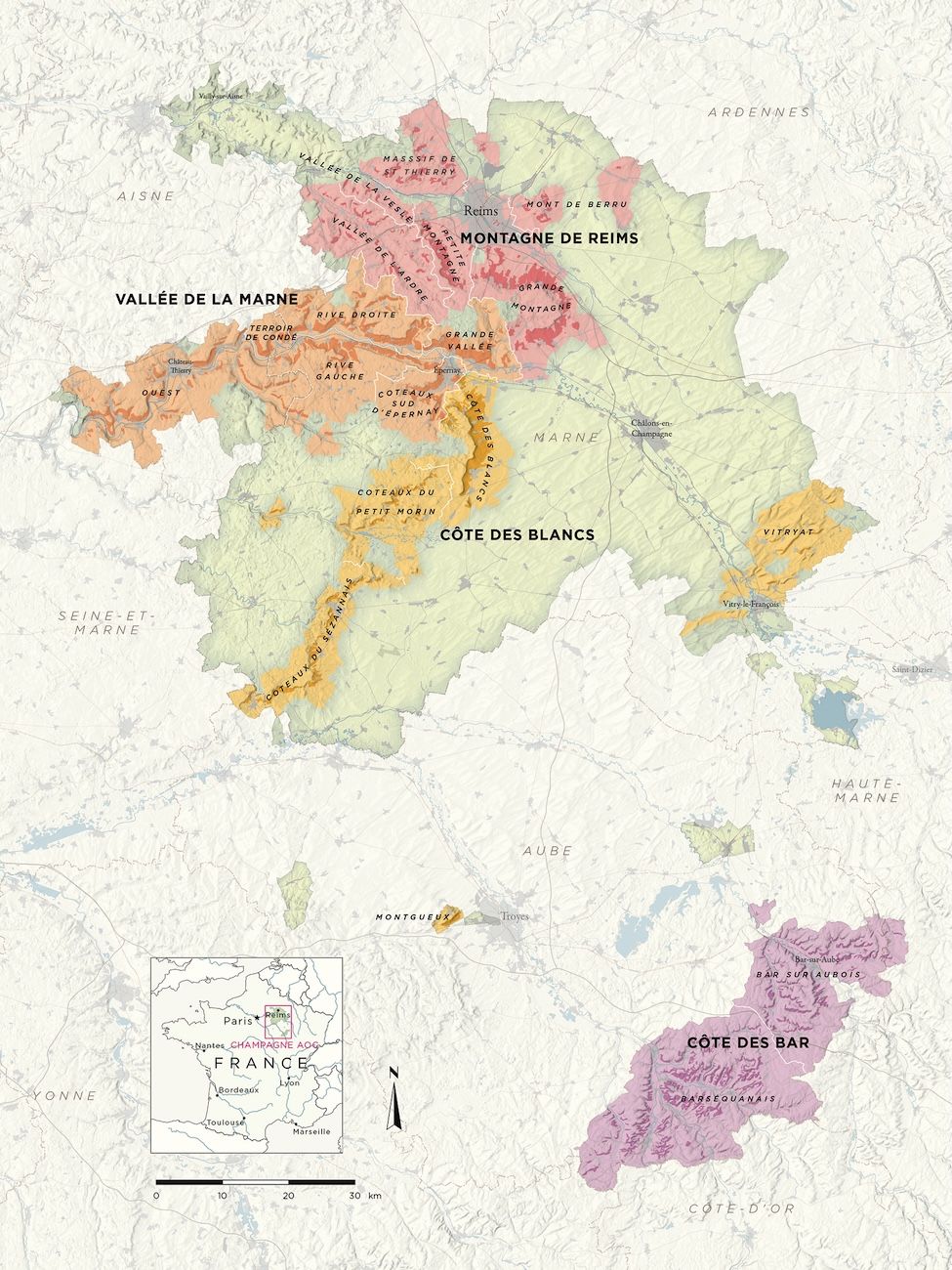
The low-slung chalky slopes to the south of Champagne’s capital city Reims are known simply as the Montagne de Reims.
It’s Champagne’s most northerly sub-region, but it has such a range of soil types and vineyard exposures that attempting to define any particular style is rather difficult.
As I sit in the tasting room at Huré Frères in chilly Ludes, a village a little southeast of the city of Reims, on the north face of the massif, the sun barely inches around the crest of the hill behind us to clear the January mid-morning fog; it becomes clear that this sweep of vineyard villages is a world within a world.
‘There’s nothing that sums it up better than the “opposite” villages of Ludes and Bouzy,’ says François Huré of Huré Frères contrasting his village with the famous grand cru located just 12km away on the Montagne’s south face.
‘Bouzy is one of the first places to ripen in Champagne, and Ludes is one of the last,’ he says.
The north face: Purity, patience & poise
(Image credit: Agence Discovery)
Why have the famous villages of Mailly, Verzenay and Verzy historically been rated grand cru, despite their unfavourable northern exposure (orientation of the vineyards)?
Paul Froissart of Lafalise Froissart in Verzenay points out that the Montagne itself, a 30km-long wooded plateau standing at up to 298m, protects the vineyards (although he jokes that his visitors from Colorado and Canada ‘seem disappointed by’ its modest height).
‘When the vine is green, the storms come from the southwest, and the Montagne protects the grands crus of Mailly, Verzenay and Verzy from the huge atmospheric depressions,’ he explains.
Perhaps the people who set the vineyards here on their path to fame – from the monks of the Abbaye St-Basle de Verzy to the Marquis de Sillery in the 18th century – understood just how important it is to take shelter in this most northerly wine-growing climate?
Jean-Baptiste Lécaillon of Louis Roederer, which claims to be the second largest owner of vineyards in Verzenay, refers to the village as the Chambertin of Champagne, due to its wines being ‘structured, round in texture and saline’.
He says it’s ‘completely different’ from Verzy, which is ‘more delicate’ and sharper in profile, thanks to the chalky soil and the impact of the forest that encroaches on the vineyard.
Next door in Mailly, dominated by one of Champagne’s oldest and highest-quality cooperatives, Mailly Grand Cru, the exposure shifts a little to the west and we find ourselves in one of the latest-ripening villages in all of Champagne, famed for its taut, energetic Pinot Noir.
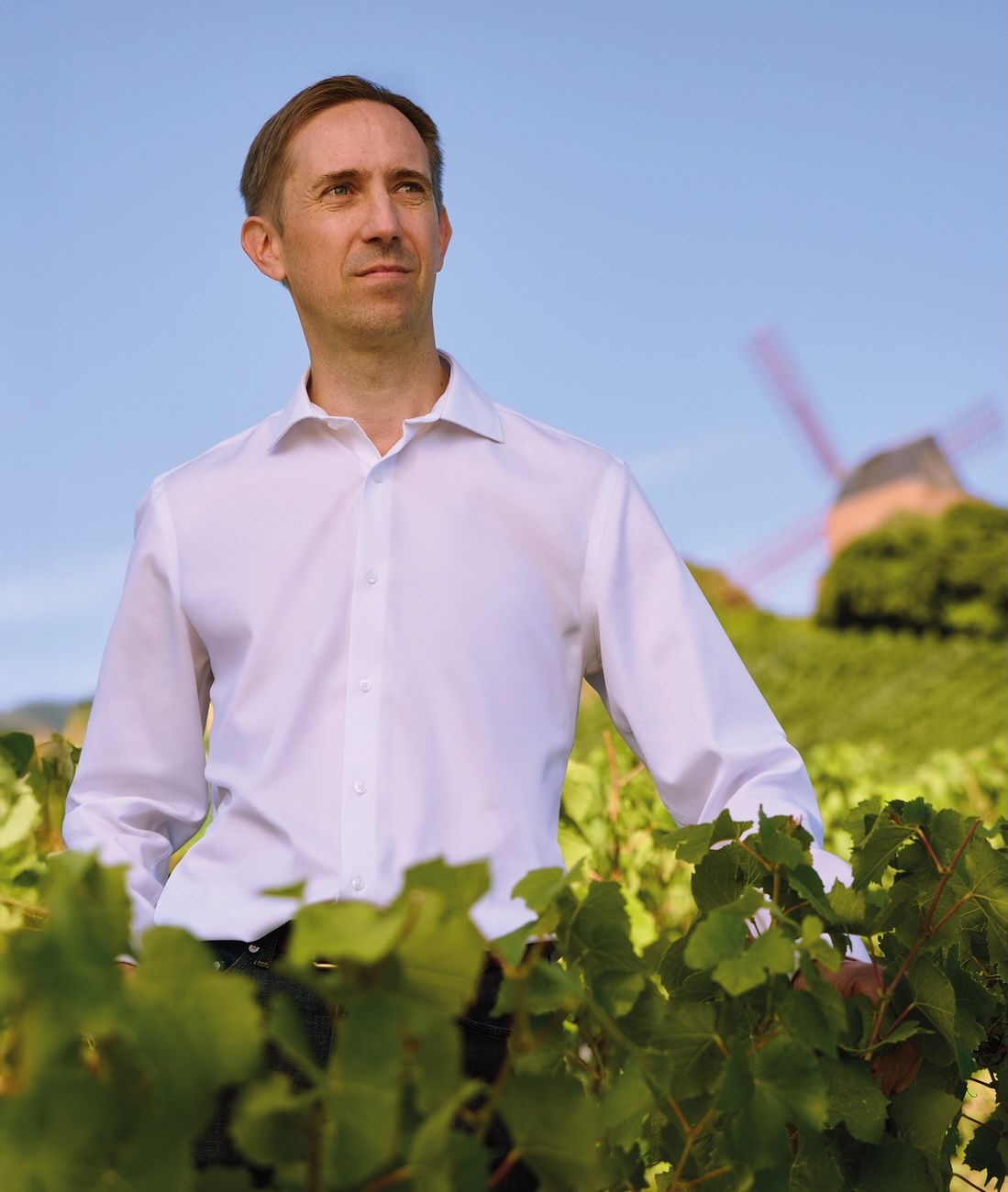
GH Mumm, which today owns Verzenay’s famous windmill, has significant historical vineyard holdings here, and there is evidence of the company placing orders for wines from the village dating back to 1727.
Cellar master Yann Munier points out the great value of the cooler north face today: ‘The villages allow us to retain a lot of elegance and ageability in the era of climate change.’
He chooses Pinot from Verzenay exclusively for the house’s RSRV Blanc de Noirs
The south: Generosity & power
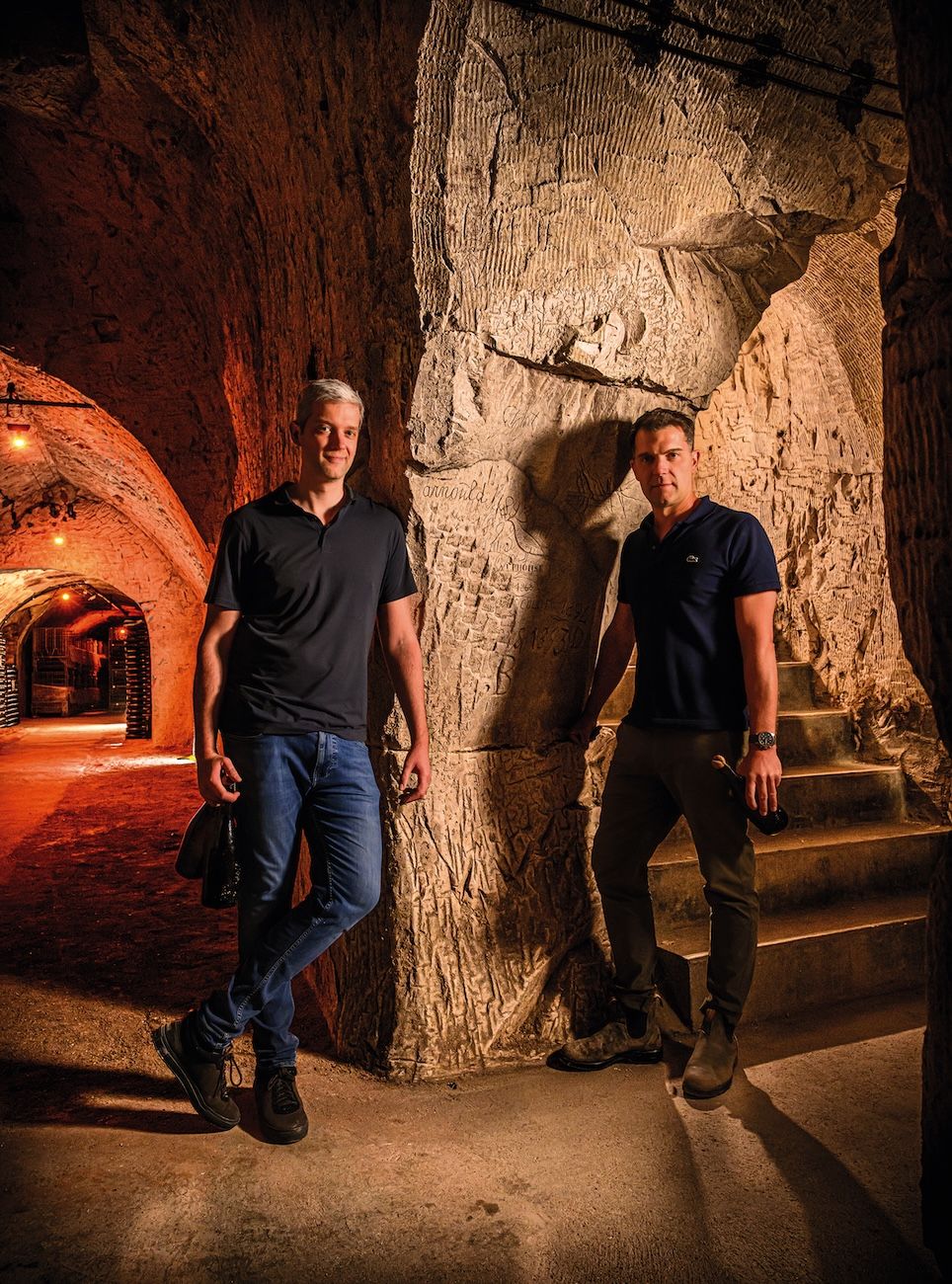
Brothers Quentin (l) and Antoine Paillard at Champagne Pierre Paillard in Bouzy
(Image credit: Leif Carlsson)
In the era of climate chaos, the flipside is that the sunny, quick-drying, chalky south-facing villages of Montagne de Reims are some of the most charmed places in the region when the summer weather wreaks havoc – as it did in 2021 and 2024.
‘There was a strong sense of north versus south in 2021,’ says Quentin Paillard of Champagne Pierre Paillard in south-facing Bouzy.
‘When the sun rises at 6:45am here, the north has to wait until 7.30am,’ he says, explaining how Bouzy is able to dry off and warm up faster than the north when rain and cold strike.
The challenge here is more about taming the power of the south in hot vintages. This is something the top growers have long realised they can achieve in the vineyards through selection of the best vine material, better management of the soil and more attentive viticulture.
It’s not something that these traditionally profitable vineyards, dominated by the houses and cooperatives, have always prioritised, but even Ambonnay’s biodynamic pioneer Benoît Marguet admits that ‘things are changing’ when it comes to quality viticulture.
There’s one area, though, where power is the order of the day: reds and rosés. Bouzy and Ambonnay are the traditional homes of red Pinot Noir, either for still Coteaux Champenois wines – used for blending into rosé Champagnes – or indeed for deep maceration-style rosés such as that from Eric Rodez,
More than Pinot Noir
(Image credit: GH Mumm)
If the grand cru sites grab the headlines for Pinot Noir, the eastern-flank villages of Trépail and Villers-Marmery are – thanks to their exposure being similar to that of the famous Côte des Blancs – home to fine Chardonnay that still goes ‘underappreciated’, according to Mathilde Margaine of A Margaine in Villers-Marmery.
The fact that prestige cuvées such as Dom Ruinart and Rare go hunting for these Chardonnays (which Champagne Palmer’s Rémi Vervier describes as the ‘Meursault to the Chassagne of the Côte des Blancs’, thanks to their relative generosity) is testament enough to their quality.
Lastly, the cooler parts of the Montagne’s chalkier terroirs, specifically around Ludes, Chigny-les-Roses and Rilly-la-Montagne along the north face, west of Mailly, yield a must-try rarity in Champagne: Meunier.
Here it is not grown on the rich clays or sands, as it is in the Marne valley (the extensive sub-region running to the south and west of the Montagne) and Petite Montagne (west/southwest of Reims city), but on the same chalk of the grands and premiers crus.
According to François Huré, this brings more freshness to the grapes.
They’re certainly wines worth trying for anyone convinced that Meunier is simple, fruity, or unable to age.
Montagne de Reims vintages
(Image credit: Steve de Long)
The north/south split means that, even in Champagne’s increasingly yo-yo vintage pattern of extreme weather, there’s always someone on the Montagne that’s performing well.
Chardonnay is a little more steady in character, but when it comes to the south face it can be a fruitful strategy to look for cooler or simply more classically balanced vintages such as 2012, 2013, 2014, 2016, 2019 and 2021.
As far as the north face is concerned, the wines of the top producers here stand apart with their energy and freshness in the sort of heatwave vintages that can push the limits elsewhere, such as 2015, 2018 and 2020 (as well the forthcoming 2022).
The wines are often a little more angular in difficult years such as 2017 and 2021, but can be beautiful in clean, cool years such as 2013 and 2016, too.
On both sides of Montagne de Reims there’s one vintage to look out for above all others, though: 2019.
‘You could tell there was something special in the fruit,’ says Quentin Paillard, who remembers tasting the juices out of the presses at harvest time. ‘It’s an emotion we’ve never quite had since.’
North & south: Hewson’s pick of 30 Montagne de Reims Champagnes
Related articles
Explore More



