
Two local hospitals last month took steps to advance children’s health.
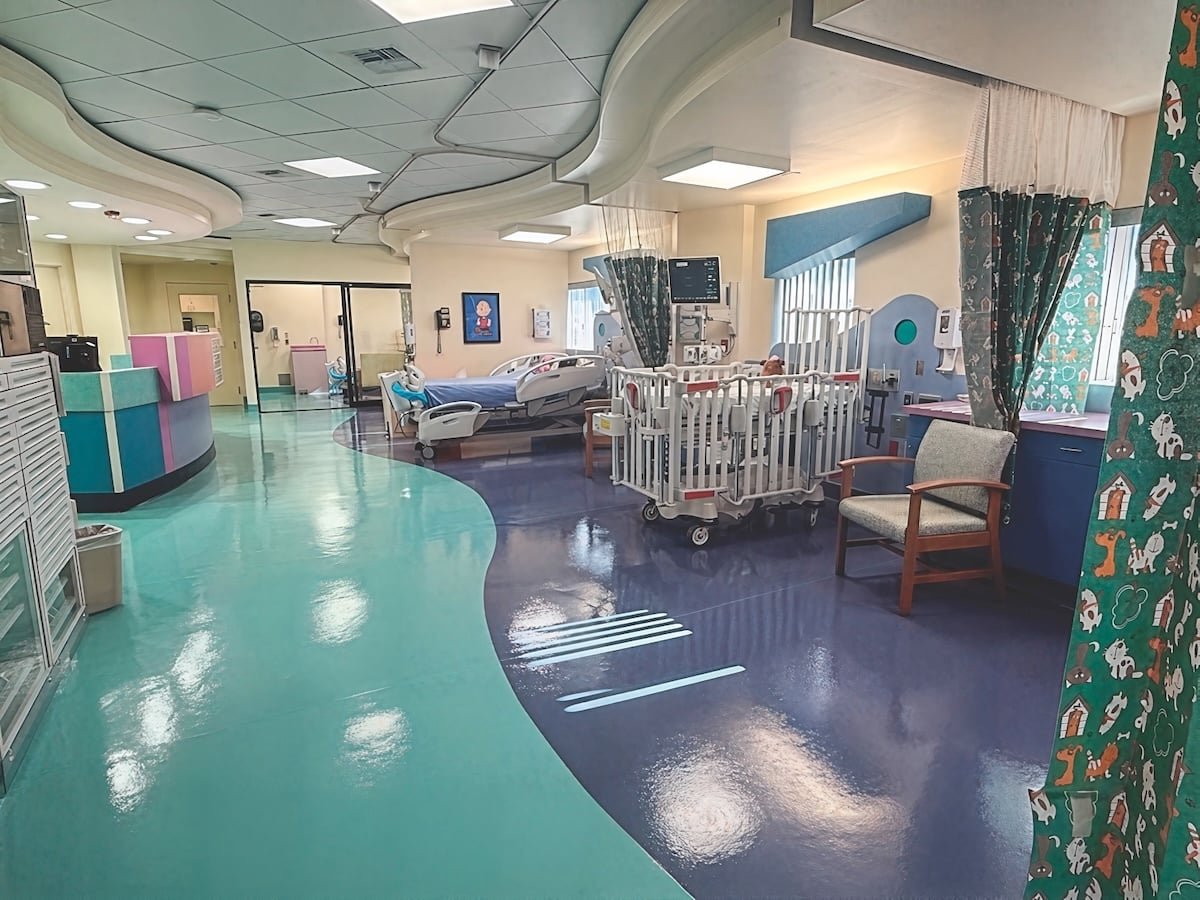
Antelope Valley Medical Center, a 420-bed hospital in Lancaster, on Jan. 13 opened a pediatric intensive care unit. The expansion will allow the hospital to treat more complex cases, reducing the need to transfer pediatric patients to hospitals in the Los Angeles basin.
The following week, Beverly Grove-based Cedars-Sinai Medical Center announced that its Cedars-Sinai Guerin Children’s center and two other international research institutions have been awarded $5.3 million in grants from the Wellcome Trust, a London-based charitable foundation. The grants are for an eight-year study of genome sequencing data to enhance the understanding and prediction of health and education outcomes for high-risk babies.
Antelope Valley Medical Center’s pediatric intensive care unit is part of the longstanding 22-bed pediatric unit. In 2016, pediatric unit physicians, nurses and staff partnered with UCLA Health to provide expanded care to ill children in the Antelope Valley cities of Lancaster and Palmdale and surrounding communities. However, many critically ill patients still had to be rushed via ambulance or air transport to hospitals outside the Antelope Valley – at great cost in both time and dollars.
The new pediatric intensive care unit is fully integrated into Antelope Valley Medical Center’s operations, ensuring collaboration with emergency services and surgical teams, along with radiology and pharmacy services.
At Cedars-Sinai, the research team at Guerin Children’s center was one of three teams to win the $5.3 million grant from the Wellcome Trust. The other two were from the University of Cambridge in the United Kingdom and the Agency for Science, Technology and Research in Singapore.
The eight-year study launched last year with the goal of recruiting about 1,000 infants admitted to neonatal intensive care units at Cedars and at three hospitals in the United Kingdom’s National Health System network.
Using genomics to address urgent health needs of the sickest, most vulnerable babies in the neonatal intensive care units, the research aims to predict future health complications that might affect children’s school readiness by age 5.



