
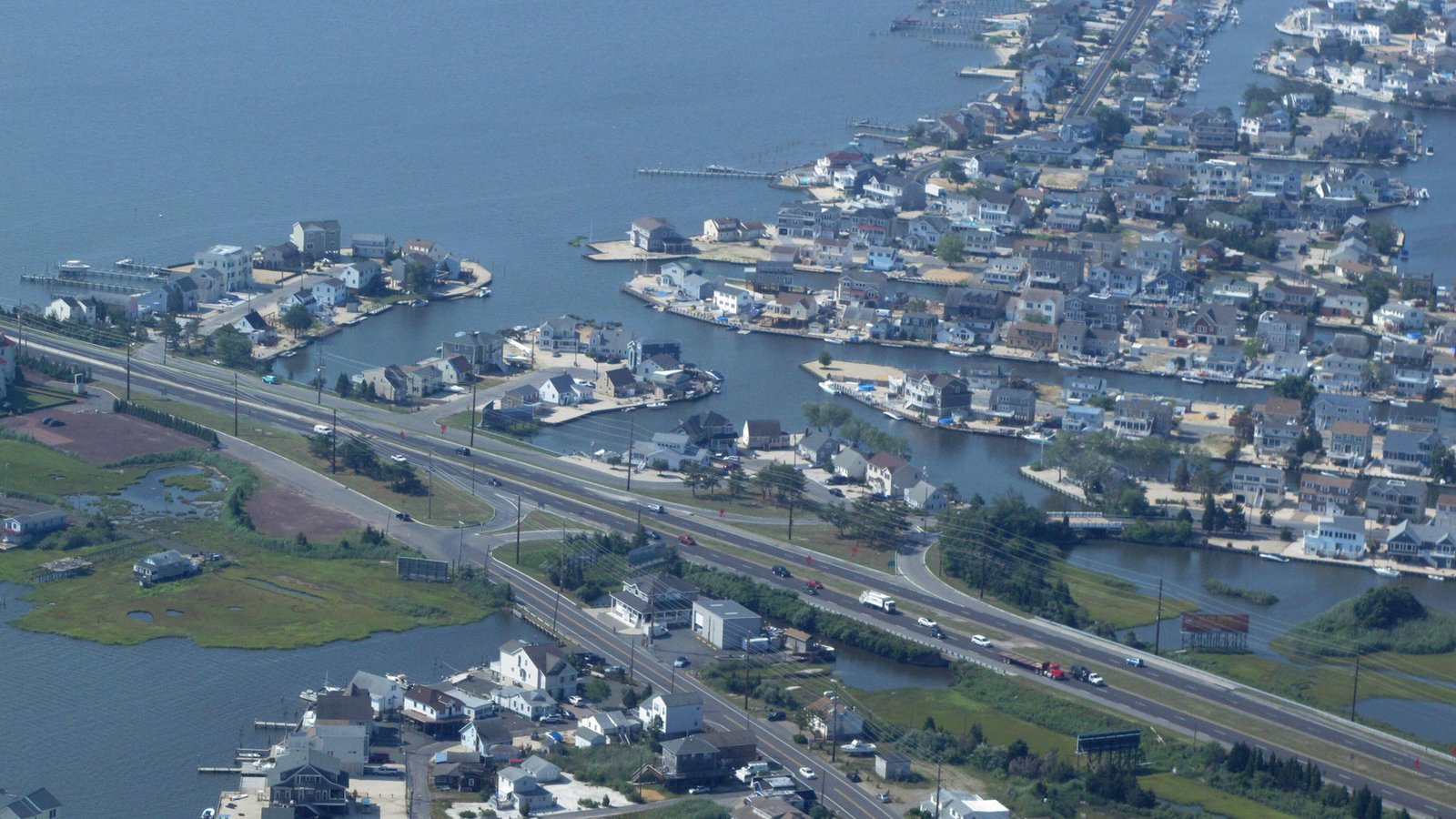
The state’s Resilient Environments and Landscapes, or REAL, rules are designed to protect coastal communities from sea level rise and major flooding. The rules, adopted by the Department of Environmental Protection on the final day of Gov. Phil Murphy’s term, set new flood zone development standards. One mandates that new and rehabilitated buildings be built four feet higher than flood projections set by the Federal Emergency Management Agency.
However, Senate President Nicholas Scutari (D-Union) introduced a concurrent resolution on Feb. 24 that said the adopted rules “are inconsistent with legislative intent” and gave the DEP 30 days to amend or withdraw the rules.
Now, a bipartisan group of state and local officials, including Manasquan Mayor Mike Mangan and Assemblyman Paul Kanitra (R-Ocean), are supporting that move, saying the rules should be halted “until legislative action is taken.” This interview has been lightly edited.
Joanna Gagis, anchor: These REAL rules have allowed you both to cross the political divide and come together. Mayor, you are a Democrat. Assemblyman, you are a Republican. What is it that you don’t like about these rules?
Mayor Mike Mangan: They’re not necessary. New Jersey is going above and beyond what FEMA has called for in its projections, and the impacts of this are devastating. And Manasquan believes, along with a lot of other shore communities, there’s a better way to deal with coastal resilience.
I’ve lived in Manasquan my whole life. I know what flooding can do firsthand. But this proposal is not the right answer. It puts a huge onus on the back of homeowners, it wildly disrupts planning for building and, in the end, doesn’t achieve the goal that we’re looking to achieve, which is to increase coastal resilience.
Myself and a lot of other local mayors are proposing other ideas and really asking the state of New Jersey to take another look at what it’s doing, because this will have devastating impacts to not just Manasquan, but all communities up and down the coastline, as well as any towns along rivers.
Assemblyman Paul Kanitra: We were all here for Sandy. We were here for other storms. The levels that these houses are getting proposed to get built to simply is not realistic. The data is not showing that. And we’re on very small lot sizes here, too. It’s almost impossible to accomplish what the state is looking for.
If you saw the video that we put out on social media, which was the mayor’s family’s house, it’s already 16-20 steps to get in the front door. That’s not even taking into account if you need a wheelchair ramp, which is physically impossible on a 50-by-100-foot lot.
What we think is happening here is simply ideology is superseding common sense.
JG: Let me ask you this, Assemblyman, because you say that it’s four feet higher than what the requirement already is. It’s actually hard to figure out what the FEMA requirements are, right? It’s the base flood elevation for your region. Can you tell me what the average is in Point Pleasant, where you were formerly the mayor?
PK: It depends on which side of the tracks that you’re on. I just wound up redoing my house and I can tell you that I have 18 steps to the front door. We are about six additional feet over what we need to be.
I think an important component that we need to tackle is how many new areas are going into flood zones and how many new people now have to worry about this calculation. Manasquan is a perfect example. Right now, the mayor’s only got maybe a seventh or an eighth of his town in a flood zone. A third of Manasquan is going to be in a flood zone when this comes through. I have towns like Lavallette and Bay Head and Mantoloking where almost 100% of those towns are now going to be in flood zones.
And it doesn’t just affect the shore. You go inland where you’re looking at rivers and lakes and people that are living five, six, seven blocks away and have never even thought that they’re in a flood zone. Now they’re going to have to deal with the restrictions put on this as well.

JG: Mayor, do you dispute the sea level rise that DEP says New Jersey towns will face, or is it that you think raising houses isn’t the answer?
MM: It’s actually a little bit of both.
We know that sea level rise is a real thing; I’ve seen that over the course of my lifetime. But the reality is — and FEMA is looking at the data now — we have not seen the acceleration in the rate of sea level rise that was originally predicted.
JG: To be fair, DEP did scale that back, right? Because DEP said originally it’d be five feet. Then they said, “Hey, actually it has slowed. Now the recommendation is four feet.” You dispute the four feet?
MM: It’s not the four feet; it’s the fact that the acceleration is slow. That’s why they lowered it.
If DEP waits another year or two when this data is actually collected — which is when FEMA is going to be looking at these maps again — there’s a lot of people in the community, myself included, who believe that that rate of acceleration is not going to change. The maps that we have now may be good for another couple of decades, but FEMA is going to make that determination, and that’s the crux of the argument here. We don’t think the state of New Jersey should be out in front of something that is clearly going to be affecting the entire country at some point.
We have completely unaddressed our public infrastructure in this conversation. I’ve talked about this before. This rule goes exclusively to private homes. It exempts governments for roads, curbs and sidewalks.
Now Manasquan has a plan to address those, to raise those elements out of the water. But one of the major problems with this policy is if you raise it to deal with floodwaters but the road out front is still covered in water, you can’t get in and out of that building — it doesn’t matter. So we believe, in Manasquan and a bunch of other towns, that the state has to take a pivot here and start talking about public infrastructure, because as we’ve seen over the years, private infrastructure has been raised in accordance with FEMA maps and will keep doing that. If the rate of rise does change, FEMA will capture that in its maps and New Jersey, like every other state, will be subject to that.
New Jersey going out on its own to make these maps more aggressive on what, I will say, is ever-changing science — and what we’re talking about is the rate of rise. As these things continue to change, we just don’t think that we should be putting New Jersey homeowners on the front lines of a conversation that is nowhere near settled.
JG: Assemblyman, process here, you are supportive of a bill, it’s a continuing resolution proposed by Senate President Nick Scutari that really says the Legislature could step in here, based on their constitutional authority to undo these DEP rules. Do you believe that bill will pass? You support that bill, yes?
PK: Of course I support that bill. And I can tell you that the bipartisanship in terms of support for that bill is continuing to grow. We just had a resolution from the entire Ocean County Mayors Association — that’s every mayor in Ocean County who is looking for either a pause from the DEP or passage of that bill to get us where we need to be.
Because while you certainly can debate the science, common sense prevails in the mayor’s arguments about FEMA and waiting for the federal government to do its thing is the most salient point of all.



