
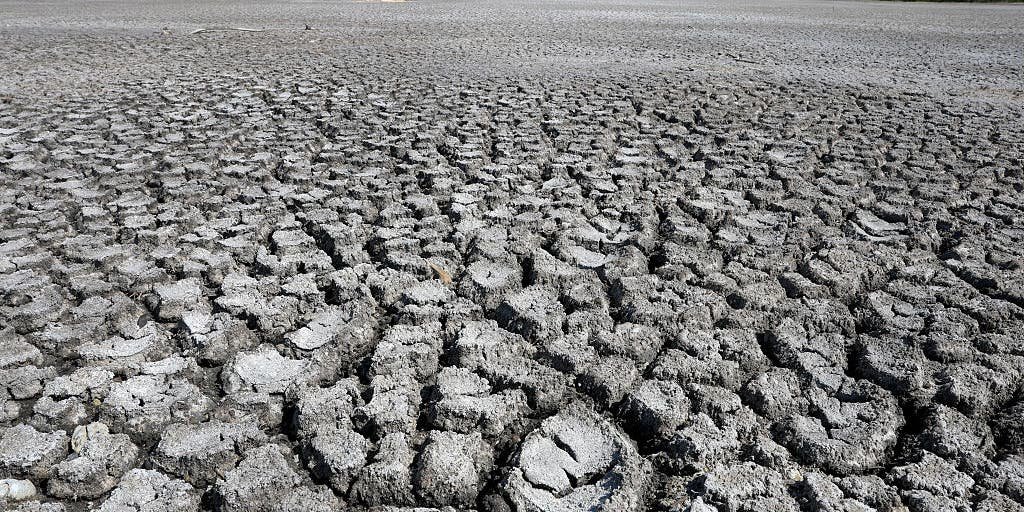
Although there’s limited short-term relief expected for Florida’s ongoing drought, the worst since 2001, a brewing El Niño could intensify the state’s wet season sometime this summer.
TALLAHASSEE, Fla. — Although there’s limited short-term relief expected for Florida’s ongoing drought, the worst since 2001, a brewing El Niño could intensify the state’s wet season sometime this summer.
NEW FLORIDA WATER RESTRICTIONS ISSUED AS HISTORIC DROUGHT INTENSIFIES, WITH LITTLE RELIEF EXPECTED
The latest long-range climate forecast models produced in part by the National Oceanic and Atmospheric Administration (NOAA) show the growing chance for strong, and maybe even Super El Niño conditions to develop sometime this summer, during hurricane season.
According to the FOX Forecast Center, El Niño conditions typically bring increased rain from California to the Southeast, including Florida.
El Niño is one of three climatological phases of the El Niño-Southern Oscillation (ENSO) that describe natural changes in Pacific Ocean temperatures and atmospheric circulation that can greatly influence global weather.
ATLANTIC 2026 HURRICANE SEASON COULD SEE MAJOR IMPACTS FROM POTENTIALLY STRONG EL NIÑO
El Niño describes warmer conditions, while La Niña describes colder conditions, and ENSO neutral refers to a state where temperatures are close to average.
(FOX Weather)
According to the U.S. Drought Monitor, 99 percent of the Sunshine State is experiencing some level of drought, with over 70 percent under Extreme Drought conditions.
WATCH: DEPUTIES RESCUE 11 PASSENGERS AFTER BOAT CAPSIZES OFF FLORIDA BEACH, 2 WITH MINOR INJURIES
Extreme Drought is characterized by widespread crop losses and widespread water shortages.
Florida Governor Ron DeSantis signed an emergency proclamation in February to address the impact the historic drought crop harvests as well as its role in increasing the state’s wildfire threat.
Pictured are the the ongoing drought conditions affecting the Everglades and nearby reserves, March 4, 2026.
((Carl Juste/Miami Herald/Tribune News Service via Getty Images) / Getty Images)
The state’s five water protection districts are implementing water conservation efforts, with the Southwest Florida Water Management District set to limit lawn watering and other outdoor water use to just one day a week, beginning on April 3.
This is Florida’s worst drought in the last 25 years, driven by a prolonged dry pattern since the 2025 hurricane season, which saw no landfalling tropical systems in the state.

(FOX Weather)
Since Aug. 1, 2025, Tallahassee is more than 17 inches below its average rainfall, with Jacksonville not far behind at more than 15 inches below normal over the same period.
Tampa and even Miami are also more than half a foot below average.
(FOX Weather)
Currently, there is no meaningful drought relief on the horizon until the beginning of Florida’s rainy season in mid-May — exactly when NOAA’s Climate Prediction Center expects rain to finally return to the Southeast.
However, with many parts of Florida running such large rain deficits, typical wet-season rain may not be enough to completely bust the drought.
Fortunately, a strong El Niño may provide additional relief if those conditions are able to take hold early enough this summer.
(FOX Weather)
El Niño typically strengthens the Pacific jet stream, bringing wetter conditions across the southern U.S. The jet stream acts as an atmospheric conveyor belt for storms and is usually pushed over the country’s southern tier.
WHAT IS THE JET STREAM?
According to the FOX Forecast Center, Florida typically receives about 54 inches of rainfall. During strong El Niño years, that total increases to around 59 inches, roughly 5 inches above average.
Historically, Central and South Florida typically receive nearly 70 percent of their annual rainfall from May through October.



